Today, we continued to have heavy rain due to the typhoon. Also, last night, a fairly large earthquake occurred with its epicenter in the prefecture next to ours, so we spent an uneasy night. The typhoon is expected to come closest to our area tonight, and the news is also saying that we should stay alert. I came to the workshop in the afternoon today. As with yesterday, the humidity was very high, and it was not a good condition for making boxes, so I could not continue working on the boxes currently in production. When I arrived at the workshop, I was surprised to find that the wood materials stacked inside had collapsed and were scattered around. The workshop is closer to the earthquake’s epicenter than my home, so it must have shaken more strongly here. I started by cleaning that up. Fortunately, although there were some parts currently in production, they were not damaged. Parts such as sliding keys are especially troublesome if they collapse after being made, because the patterns can get mixed up. It would be difficult to put them back in the correct order. In that case, it would probably be faster to make them again than to match and repair each pattern one by one. I was very lucky that this did not happen.
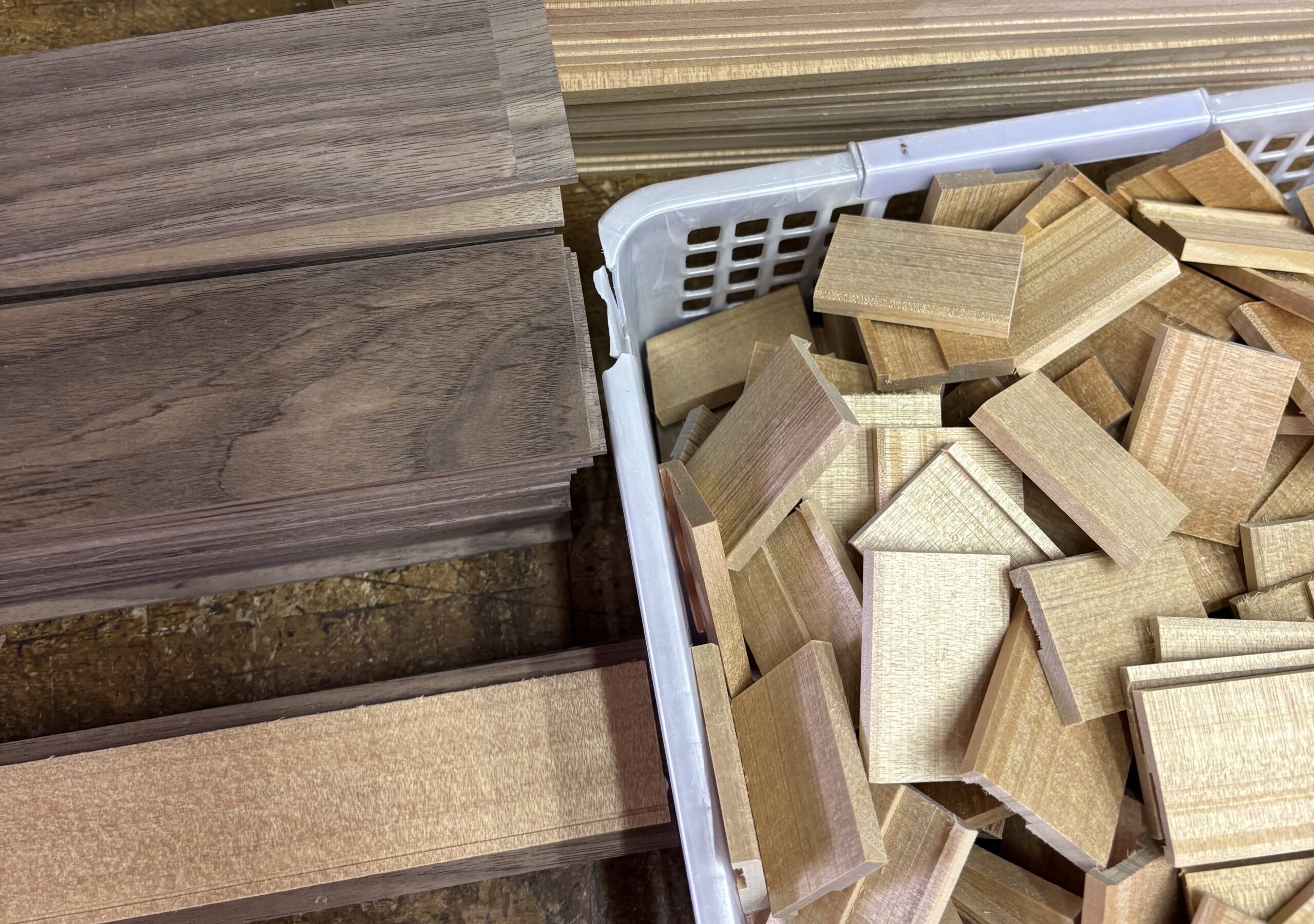
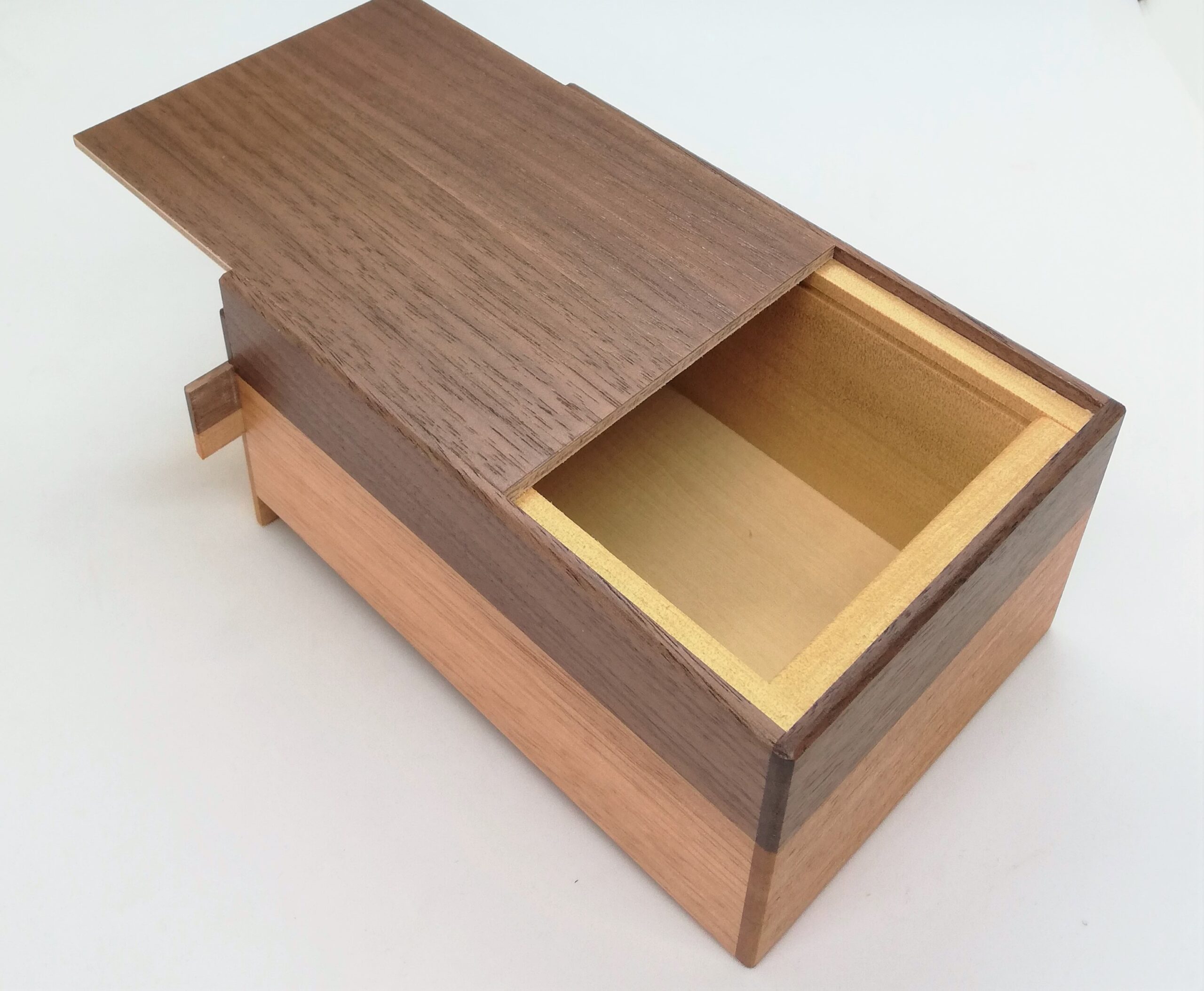
While doing some office work, I was thinking about what I should do next. I could have continued making the side panels for the 3-sun boxes, but I decided to leave them as they were and start preparing for another new job. I began preparing the 5-sun boxes with a walnut and agathis wood design, which I had planned to include in next month’s production. These boxes will be made for an order, but I will also make a few extra pieces for stock. However, I only have enough walnut sheets (top/bottom panels) for the ordered boxes, so for the stock pieces, I plan to make the top and bottom panels with rosewood sheets. Both walnut and rosewood are popular woods because of their rich, deep colors.
The top and bottom panels of this box are made with walnut. However, agathis is used for part of the side panels, giving the box a different look compared to one made entirely with walnut. Especially when viewed from the top panel side, the walnut also comes to the edges of the side panels, so it has the solid, rich look of a one-color walnut design. However, when the box is turned over and viewed from the bottom panel side, the agathis comes to the edges, so you can enjoy the contrast between the two colors. In this way, the atmosphere of the box is different depending on whether you look at it from the top or the bottom. Because this is a 7-step box, the price can be kept relatively reasonable. It also has a large interior space, so it is a popular puzzle box because something can actually be placed inside. There is also strong demand for this box from people who want a Japanese puzzle box that is not made with traditional Yosegi. Since it has a 7-step mechanism, some people choose it as a gift for someone who is seeing a Japanese puzzle box for the first time.
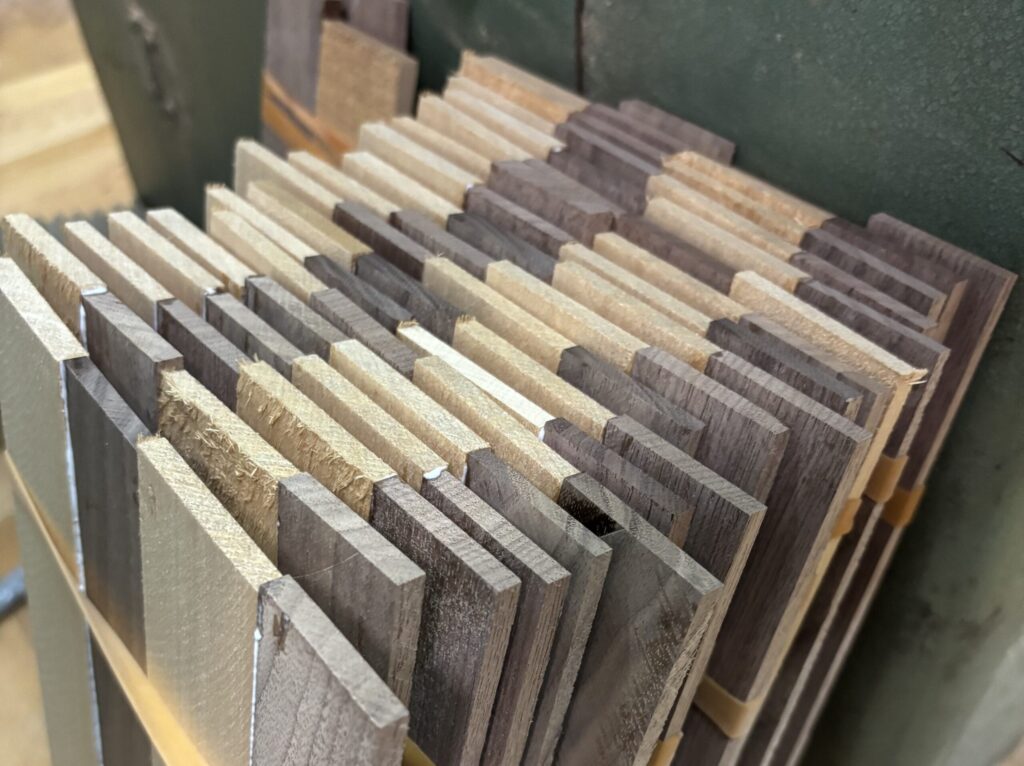
Today, as preparation work, I prepared the top, bottom, and side panels. Once this work is done, I can start making the internal structure of the boxes. For the top and bottom panels, sliced walnut and rosewood sheets are attached to MDF boards. Unlike Yosegi, I use a special type of glue for this, so it does not need to dry for a long time. The side panels use two different kinds of wood, so as preparation, I joined the two woods together. You can see this in the photo. When making a large quantity, I usually glue each wood together while they are still thick blocks, and then cut them into thin boards later. However, this time I am not making so many boxes, so I joined the boards one by one. There are about 40 boards in total. The typhoon is expected to pass by tomorrow, but it seems that the rain will continue. I will decide which work to continue depending on the conditions at that time.