Today the sky is a little cloudy, and I wonder if we are already starting to feel the effects of the typhoon that is expected to arrive this week. According to the forecast, it may pass through our area around Wednesday, so people are a bit concerned. I wonder if this is also related to climate change. It is quite unusual for a typhoon to come this close this early in the season.
This morning, my wife and I went to help an elderly neighbor with some cleaning and organizing. I wrote about her in an earlier article. A company is coming tomorrow to collect some large items from her house, so we helped move a few heavy things outside. There were many pieces of furniture and other belongings that had been used when her family was still living with her. Since she now lives alone and no longer uses those things, she and the local authorities decided that it would be best to dispose of some of them. She is quite elderly now and is no longer able to do that kind of work by herself. After we finished helping with the cleanup, I came to my workshop in the afternoon.
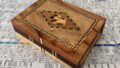
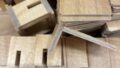
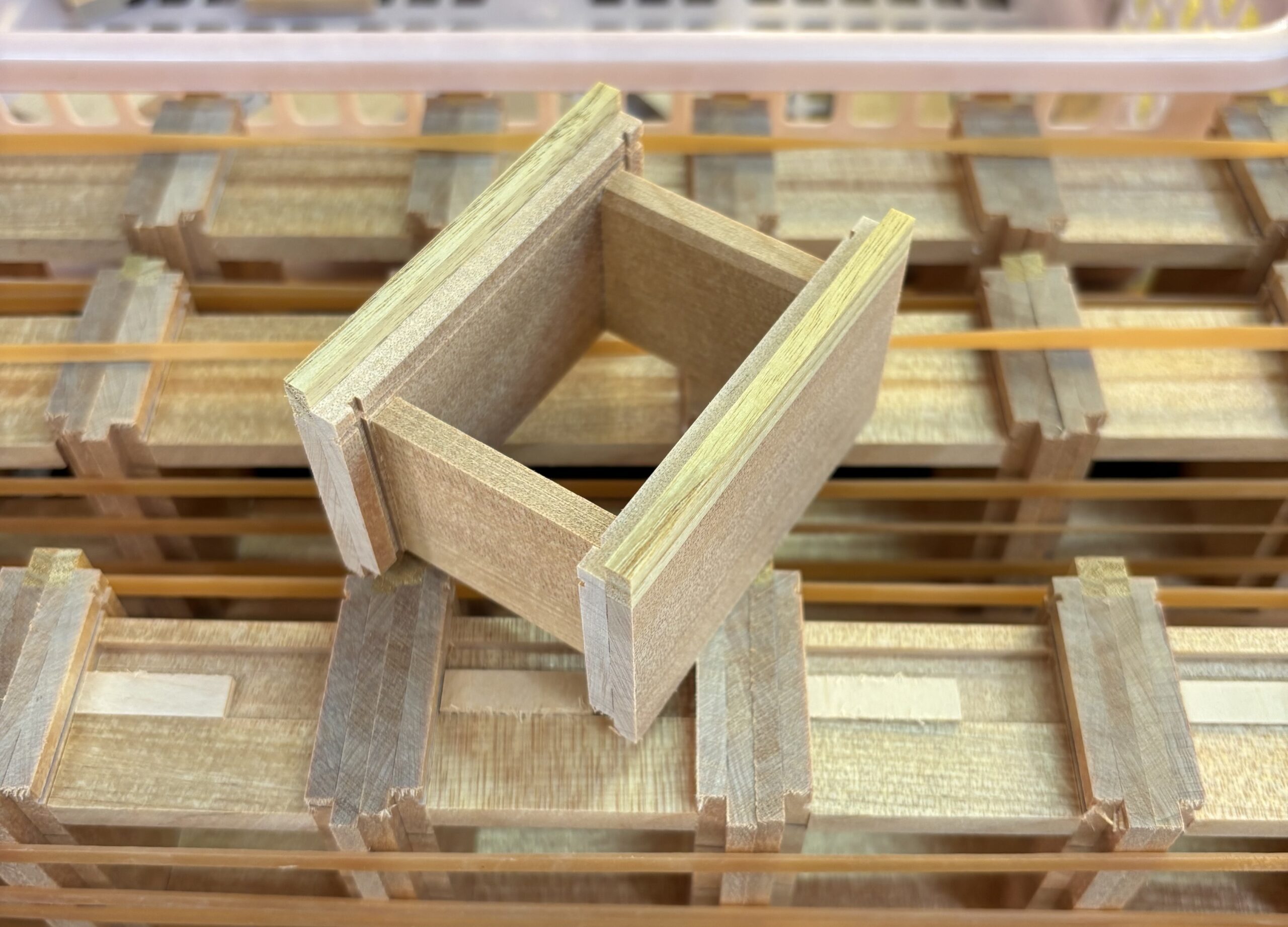
I did not do a lot of work today, but I assembled the frame panels and attached the parts for a 2.5-sun 5-steps puzzle box that I could not finish yesterday. The mechanism of this box is actually very simple. It has only one small square part attached inside. Since it is a 5-steps puzzle box, it does have a sliding key, but that movement is only one step. Together with the downward movement of the Aruki panel, that makes just two steps. The remaining steps come from the combination of the top panel and another Aruki panel, creating a total of five steps to open the box. Although the mechanism is simple, this is one of my favorite boxes, both in terms of its mechanism and its construction. Its appeal is not only that it is one of the boxes included in the nested set of Mame puzzle boxes. It is an attractive box in its own right. The reason is that the structure of this box is very stable.
It has long been said that the traditional shapes of 4-sun and 5-sun puzzle boxes are ideal for allowing the mechanisms to move smoothly and reliably. After much experimentation, the rectangular shape we know today was probably developed for that reason. When you make many different shapes of puzzle boxes, you begin to notice that some shapes work better than others, not only in terms of ease of construction but also in how smoothly the mechanisms move once the Aruki panels are installed. The difference is not usually dramatic. Even small changes in the dimensions can affect how well the mechanism works. I believe I wrote about this last year, but I feel that some of the boxes currently made in the standard 4-sun size have been simplified a little too much, and as a result, the stability of the mechanism has been reduced. In other words, it is not only the overall size of the box that matters. The thickness of the panels and other structural details also seem to play an important role. This simplification happened because makers had to work within various constraints and focused on reducing costs.
The differences are small, but the stability is definitely there. It seems to depend not only on the proportions of the structure—the length, width, and height—but also on the thickness of the panels and the positions where the mechanism parts are attached. By the position of the parts, I mean things such as how far a sliding key on the side of the box is placed from the top panel. That position determines the location of the internal parts, which in turn determines the position of the notches in the Aruki panels that hold the small internal wooden pieces.
For example, the hexagonal box I made recently takes a long time to build and is a difficult box overall, but it is actually very easy to install the Aruki panels. That is because the box has a structure that allows the Aruki sliding panels to move very smoothly. In the case of this box, the angles are different from those of other boxes, so the direction of the wood grain changes as well. It is a subtle difference, but I feel that it helps the panels move more smoothly. That was a rather long introduction! 🤣 What I wanted to say is that this 2.5-sun puzzle box feels especially stable in its movement, and that gives me confidence when making it. I think this has to do with the size of the box, the length of the Aruki panels, and the amount of movement required by the mechanism. I do not make small puzzle boxes as often as I used to, but I still make this 2.5-sun puzzle box every year. I feel that the reason is not only that it can be used as part of a nested set of boxes, but also because its stability gives me confidence when making it.