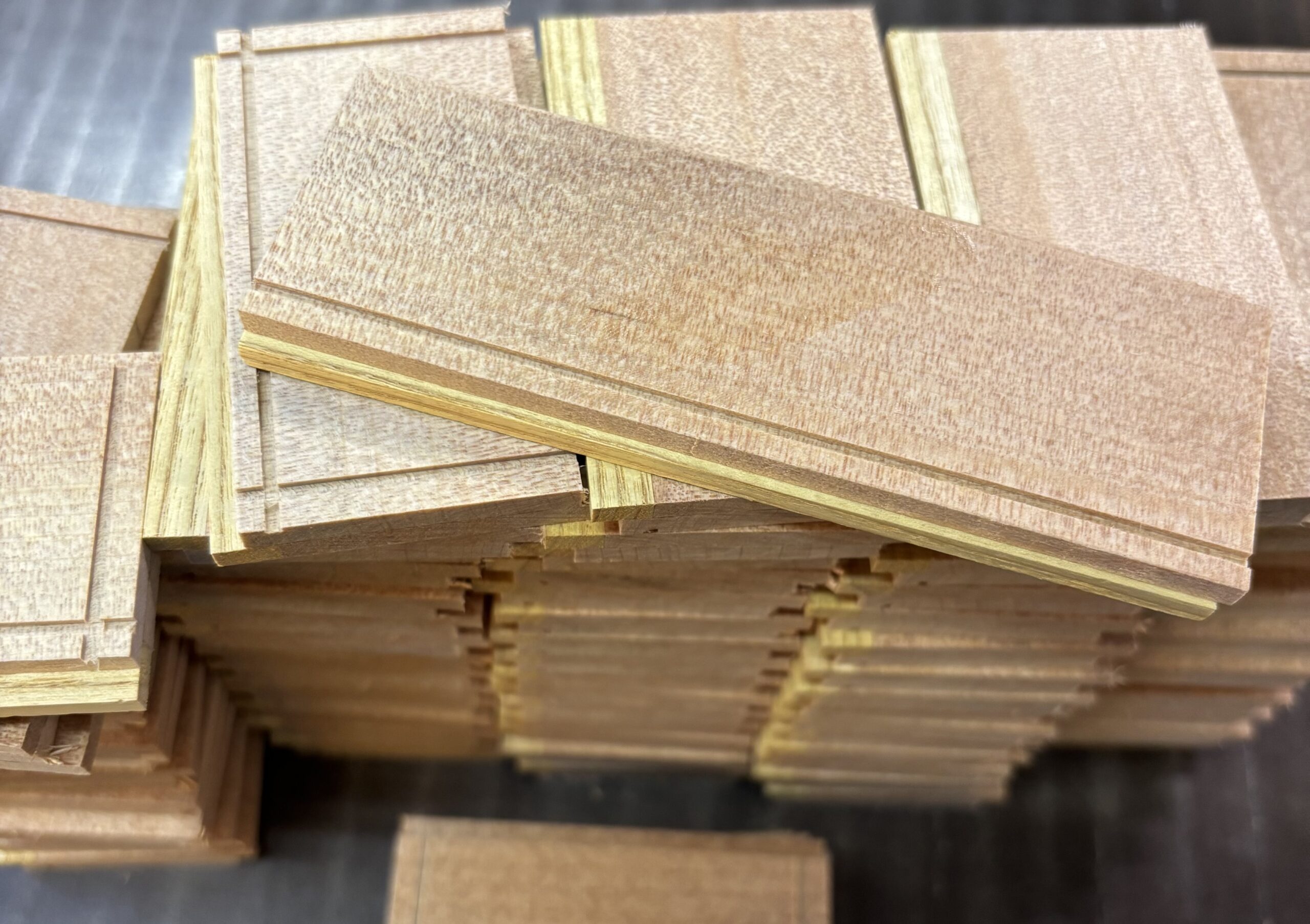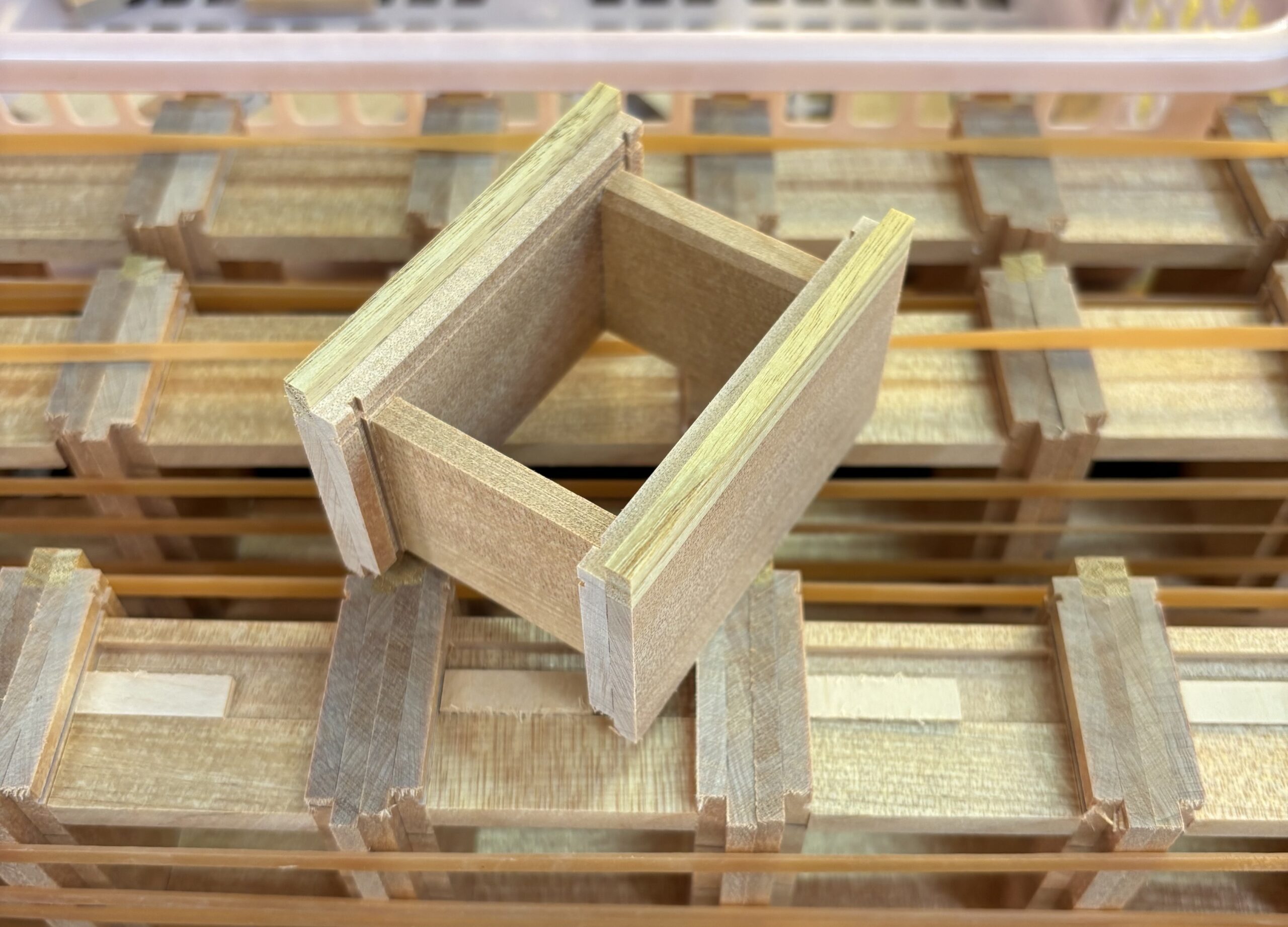
It was a beautiful weekend day with clear skies from the morning. The temperature rose to around 27°C, but the humidity was not very high, so it felt quite comfortable. I came to the workshop again this afternoon and did a little work. I glued the side panels for a special custom-order box for Hakone, for which I had prepared the parts yesterday. I also assembled the frame panels for 2.5-sun puzzle boxes. Other than that, I spent some time cleaning up and organizing the workshop.
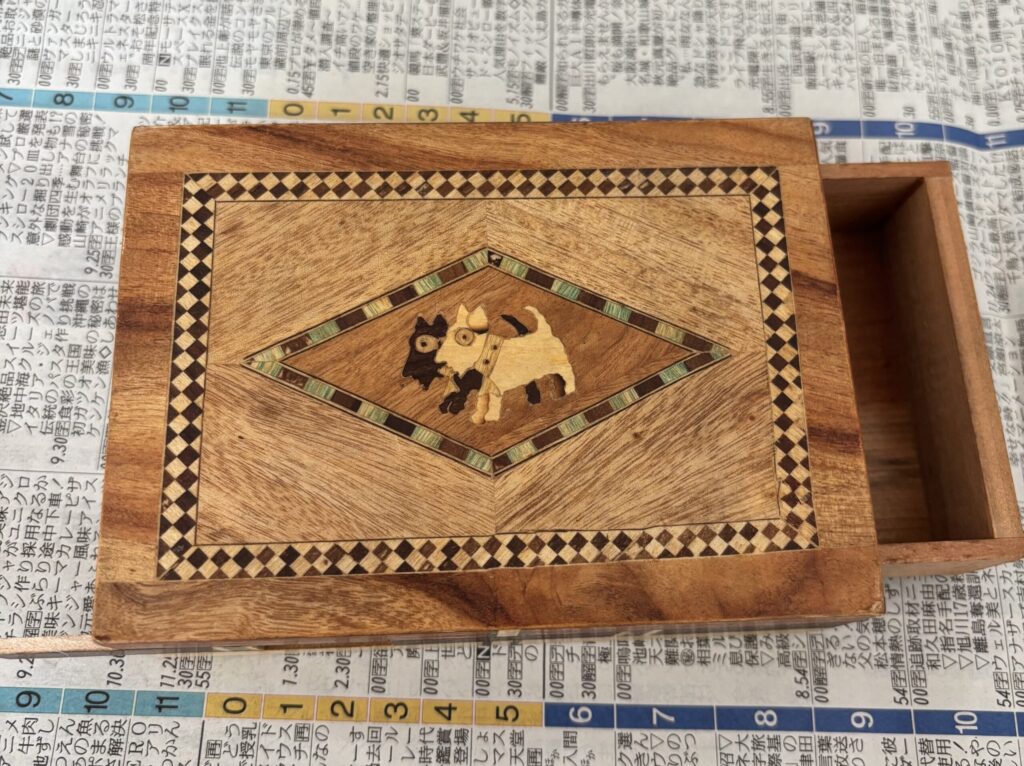
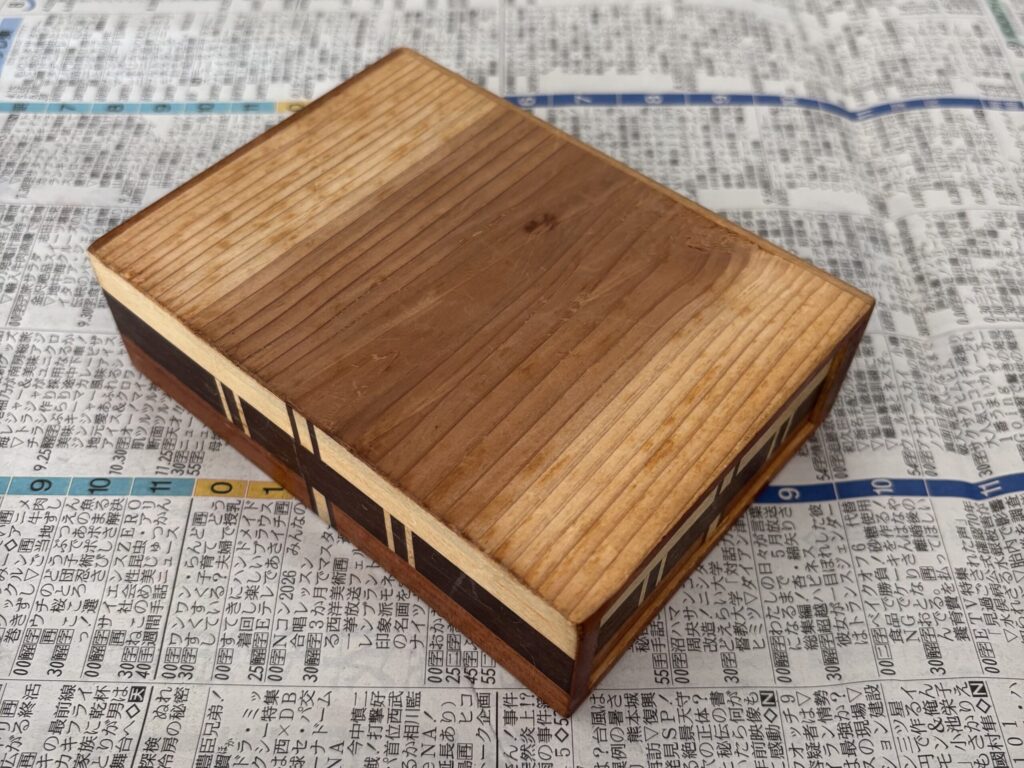
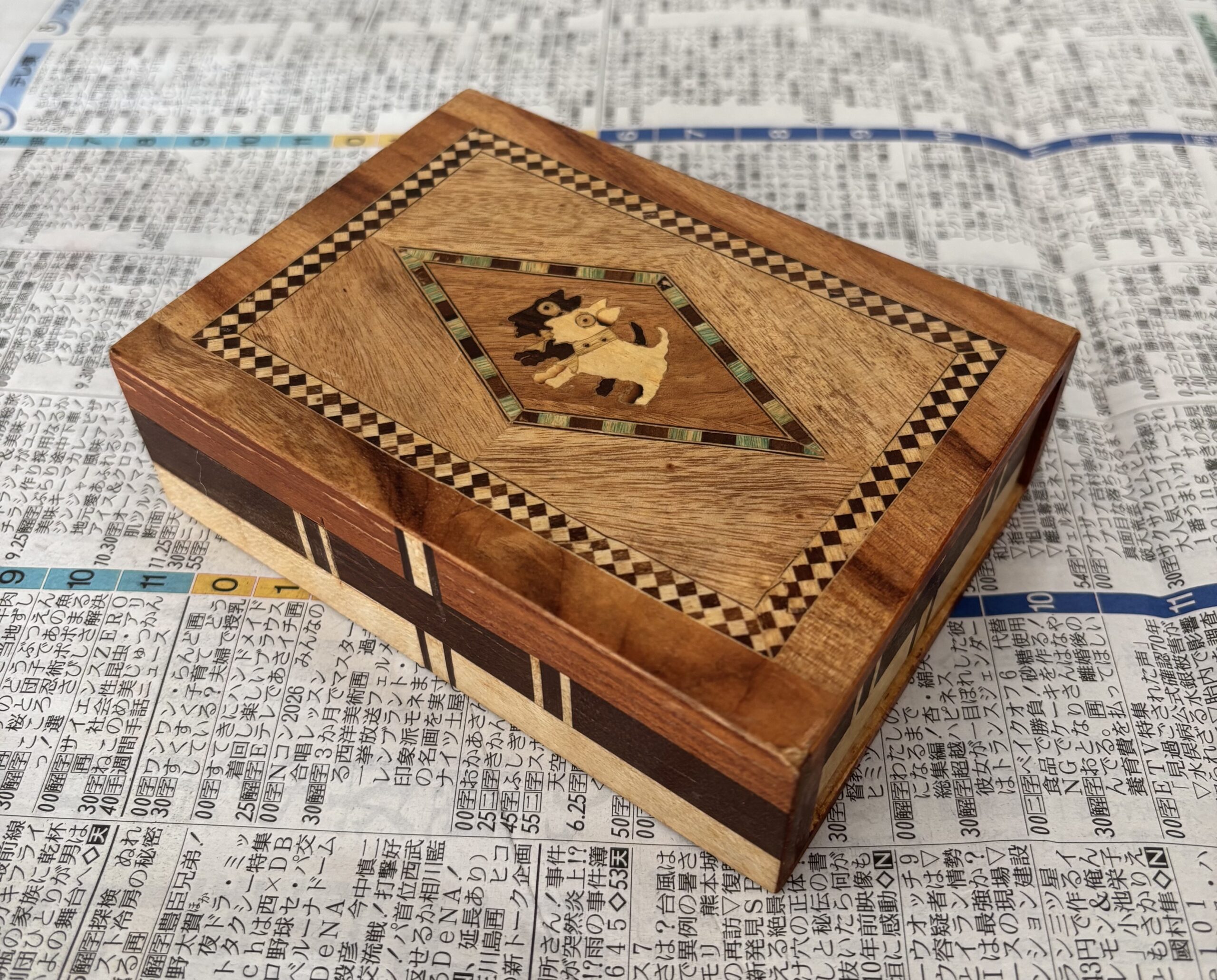
Today I would like to introduce another interesting antique box (drawer), from the past. Recently, a Facebook post by a customer friend of mine from France, who is also a collector of Japanese puzzle boxes and Yosegi Zaiku, was shared again in a puzzle group. Because of that, I would like to show a box of the same type from my own collection, but with a different design. This type is commonly called a “Tobidashi” (jump-out box). When a certain action is performed, the drawer suddenly springs out with surprising force. At that time, boxes that used mechanisms different from traditional Japanese puzzle boxes were known locally as “trick boxes.” The group that now makes modern Karakuri Boxes did not yet exist, so boxes like this one, as well as the Magic Boxes I wrote about before, seem to have been called trick boxes. Of course, I was either not born yet or still a child at that time, so this is something I learned later from people who were there. The collector’s example shown in the Facebook post is a very beautiful piece and appears to be in excellent condition. My own example shows its age a bit more. The bottom panel, in particular, has suffered quite a lot of wear over the years. Both the collector’s box and mine are made from similar softwood species for bottom panel, probably pine or cedar. Like other trick boxes and traditional Japanese puzzle boxes from that time, the main body is made from katsura wood.
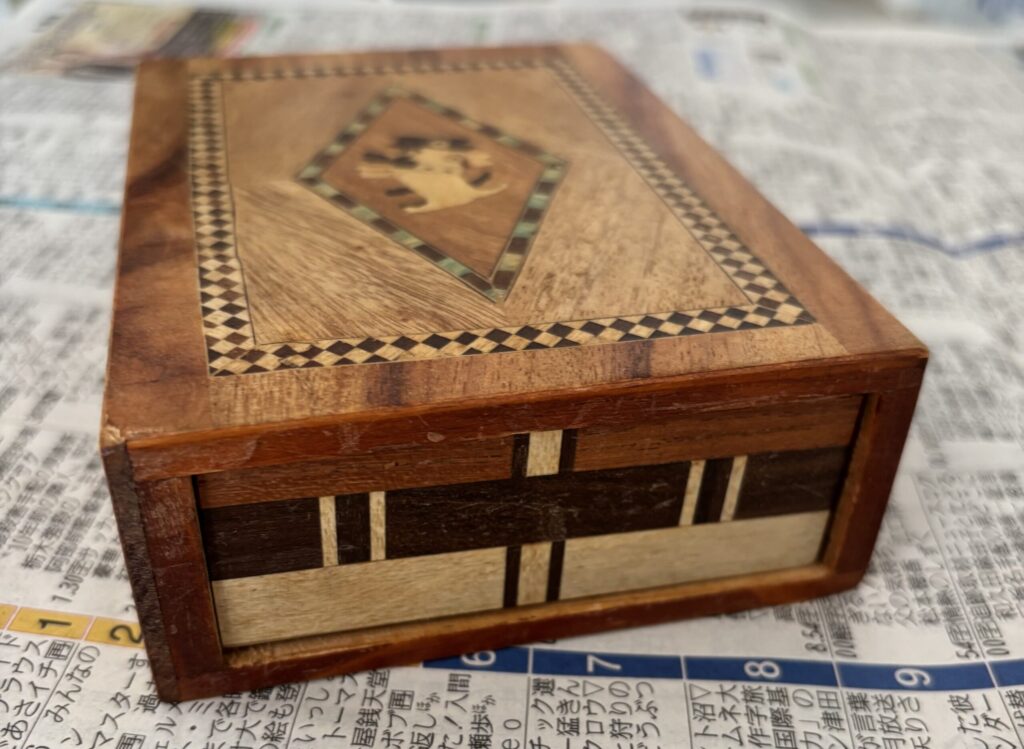
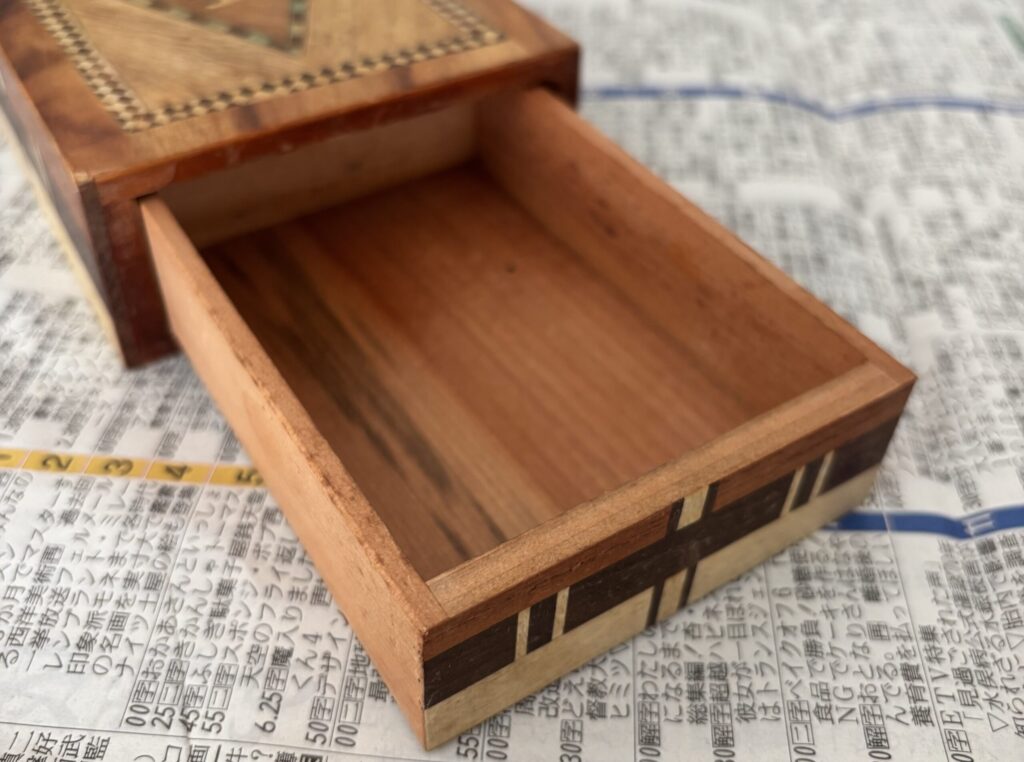
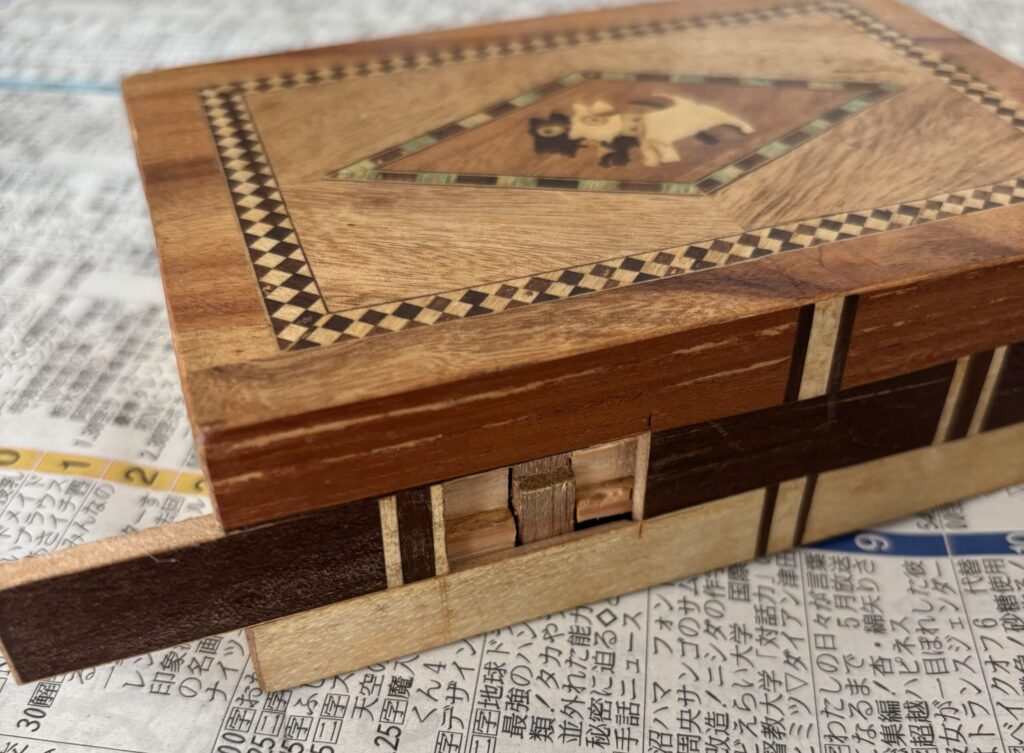
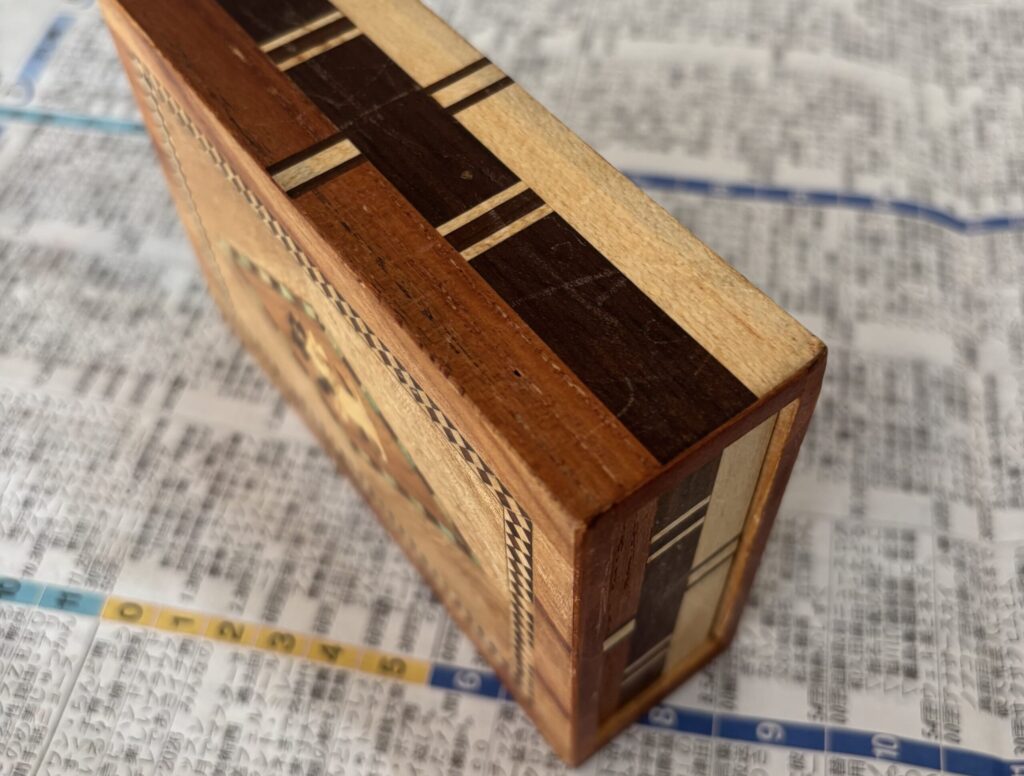
The top of the box features a wooden inlay of two terriers (dog), a design that truly symbolizes this period (The collector’s example features a kokeshi doll wooden inlay.) During this era, many Japanese puzzle boxes were decorated with terrier wooden inlays on their surfaces. Surrounding the dogs is a diamond-shaped marquetry border, another characteristic design often seen on boxes from this time. One particularly notable feature of this drawer is the Yosegi work on the sides. Boxes from this period, especially trick boxes, were often made with an incredible amount of care and attention to detail. Decorative Yosegi patterns were applied in many places, often in ways that were both beautiful and highly effective in enhancing the overall design. If I may add one slightly negative observation, it seems that many craftsmen of that era took great pride in their work—perhaps too much at times. In other words, they often put more effort into a piece than was financially practical. Because of this, it seems that relatively few craftsmen were rewarded financially in proportion to the amount of work they put into their creations. The Yosegi panels on the sides of this box were also made specifically for this design. One part of the mechanism is hidden within the pattern, and it is concealed remarkably well. The craftsman blended it so naturally into the Yosegi work that it is very difficult to notice. The drawer is located on the front of the box, but it is intentionally set slightly below the surface. Because of this, there is no way to grip it with your fingers, making it impossible to pull the drawer out by hand. This means the mechanism must be used to open it, which adds to the cleverness of the design.
After moving the hidden panel and pushing down a small lever inside, which acts like a switch, the internal catch is released and the drawer shoots out with surprising force. Like some old Japanese toys from the same period, this box has a mechanism that might be considered a little dangerous by today’s standards. The drawer comes out quite powerfully. If it were made today, it might be sent back for redesign because of safety concerns. So please don’t look directly into it while opening it! 🤣 Inside the box is a spring that powers the mechanism, and when it is released, the drawer jumps out with exactly the kind of force that earned this box its nickname, Tobidashi (Jump-out)!
I think the colors and decoration of these side panels beautifully capture the simple charm of old Japan. They have a sense of style that feels unique to that particular era. There is something calm and gentle about the overall design that I find very appealing. I do not know how much this box originally sold for, but I may ask someone who is knowledgeable about the history of Hakone. Unfortunately, there are not many people from that generation still around. Those who are still active in the craft today were probably students or just starting their careers when boxes like this were being sold. For reference, the dimensions of this box are 12.9 × 9.4 × 3.9 cm (about 5.08 × 3.70 × 1.54 inches). It weighs 110 grams (about 3.9 ounces). It is probably just a little heavier than a typical 3-sun Japanese puzzle box. As I have mentioned before, this light weight is part of its charm. It gives the box a simple, unpretentious feeling that reflects the character of the era in which it was made 😊