Today was cloudy from the morning, and since the temperature was not very high, it was quite comfortable. However, it looked like it might rain at any time. The humidity was not too high, so it may have been a good day for workshop work. This morning, I worked on the final finishing of the 2.5-sun puzzle boxes and was able to complete the undercoat without any problems. Because these are small boxes, finishing the side panels is not a particularly time-consuming task. For puzzle boxes with solid wood side panels, the panels need to be thoroughly polished by machine at this stage. When the boxes are larger, this can be quite demanding. Recently, I have not made many 5-sun puzzle boxes or large cube puzzle boxes with solid wood panels, so I have not had to do this work very often. However, solid wood is easily scratched, so it always needs to be inspected carefully.
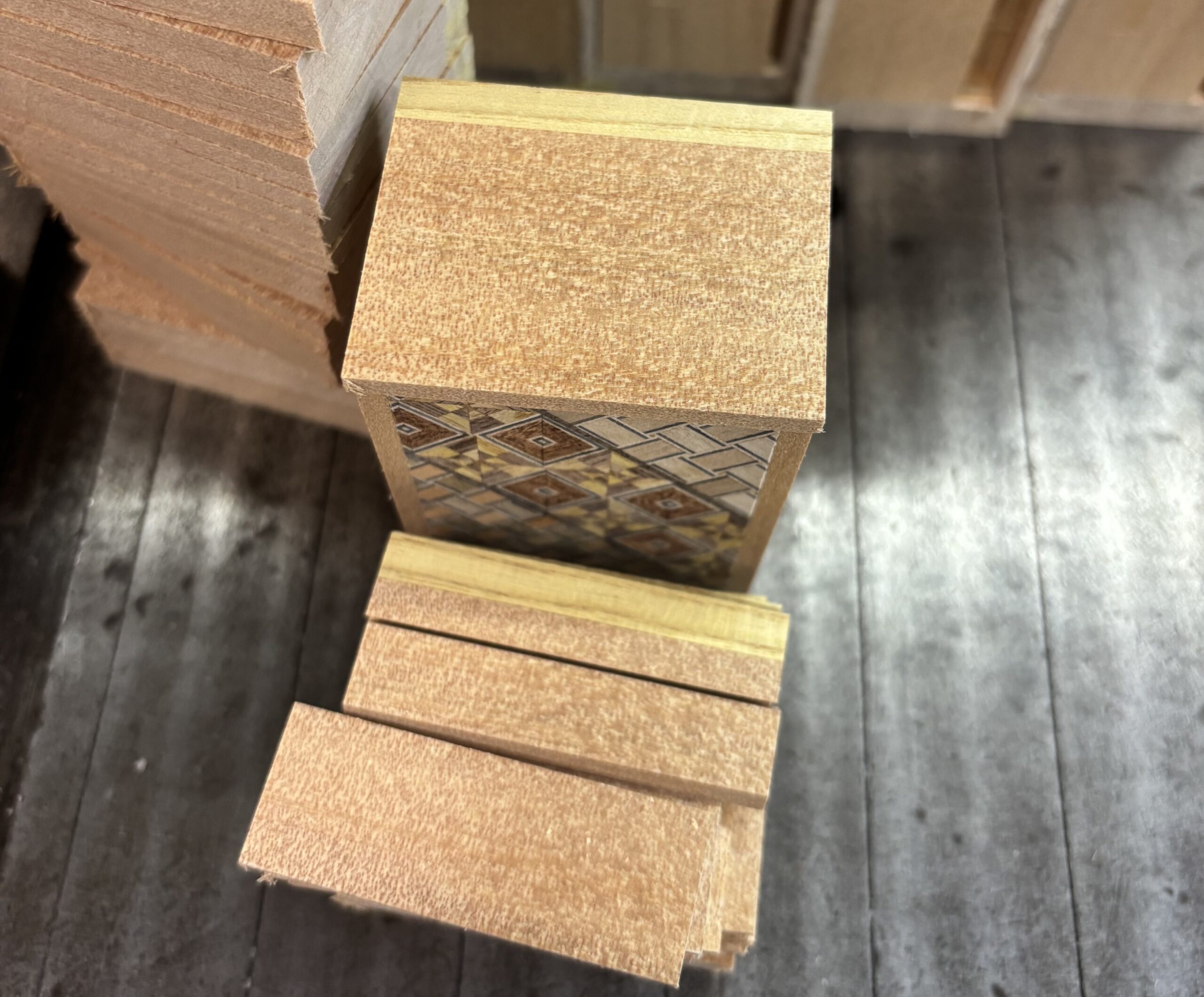
After that, I worked on making the side panels for a custom puzzle box that is being made for a customer in Japan. The panels have been clamped for nearly a week now, so I think they have become quite stable. With smaller puzzle boxes, I sometimes use the panels soon after gluing them together. However, since this is a relatively large box, I took plenty of time. After the initial preparation of the side panels, where two boards are glued together, there is always a possibility that the wood may move or warp slightly. Because of this, it is better to let them rest for a while before continuing. The glue introduces moisture into the wood, which can cause the boards to begin warping. The idea is to wait until the wood settles down and stabilizes before moving on to the next stage of the work.
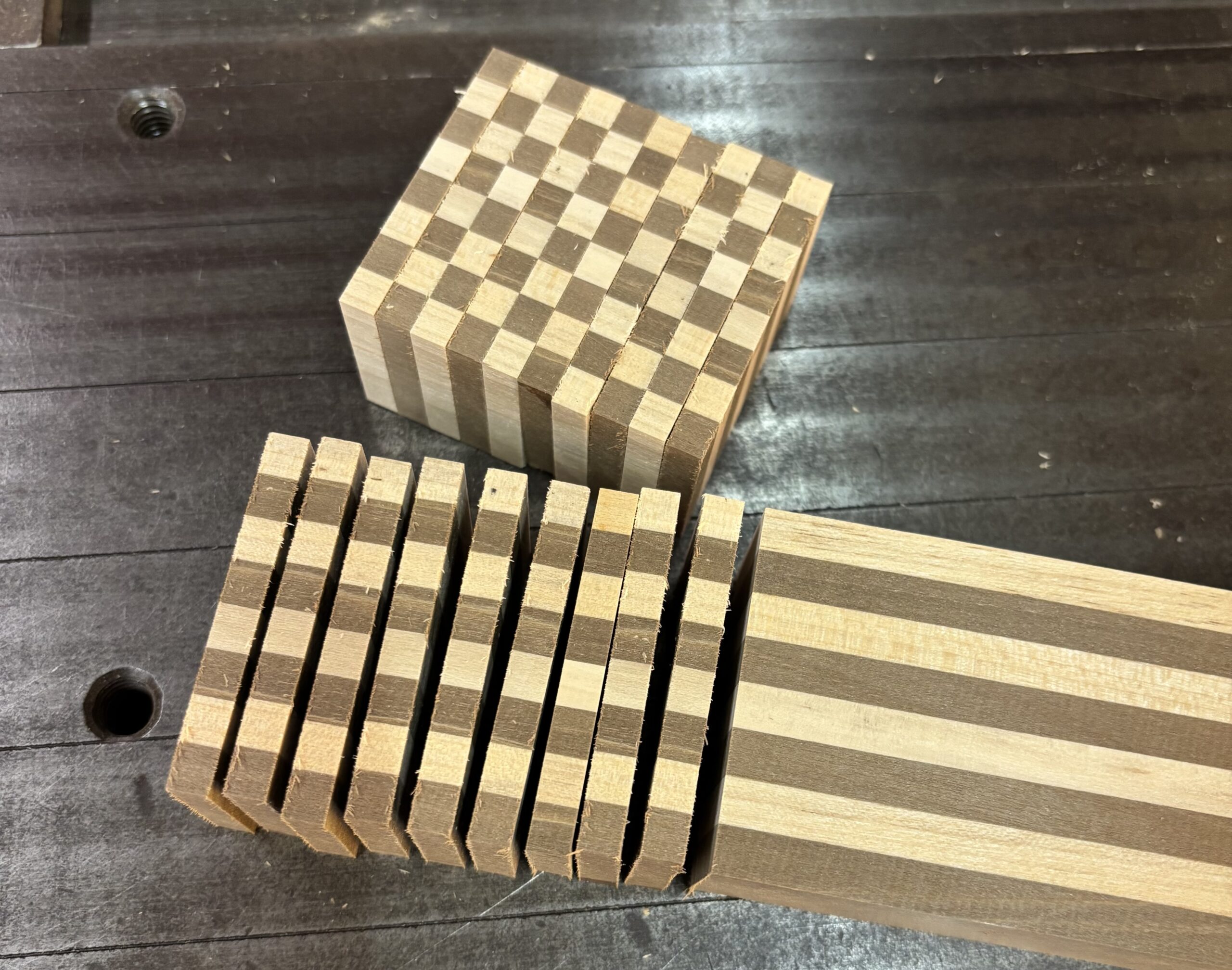
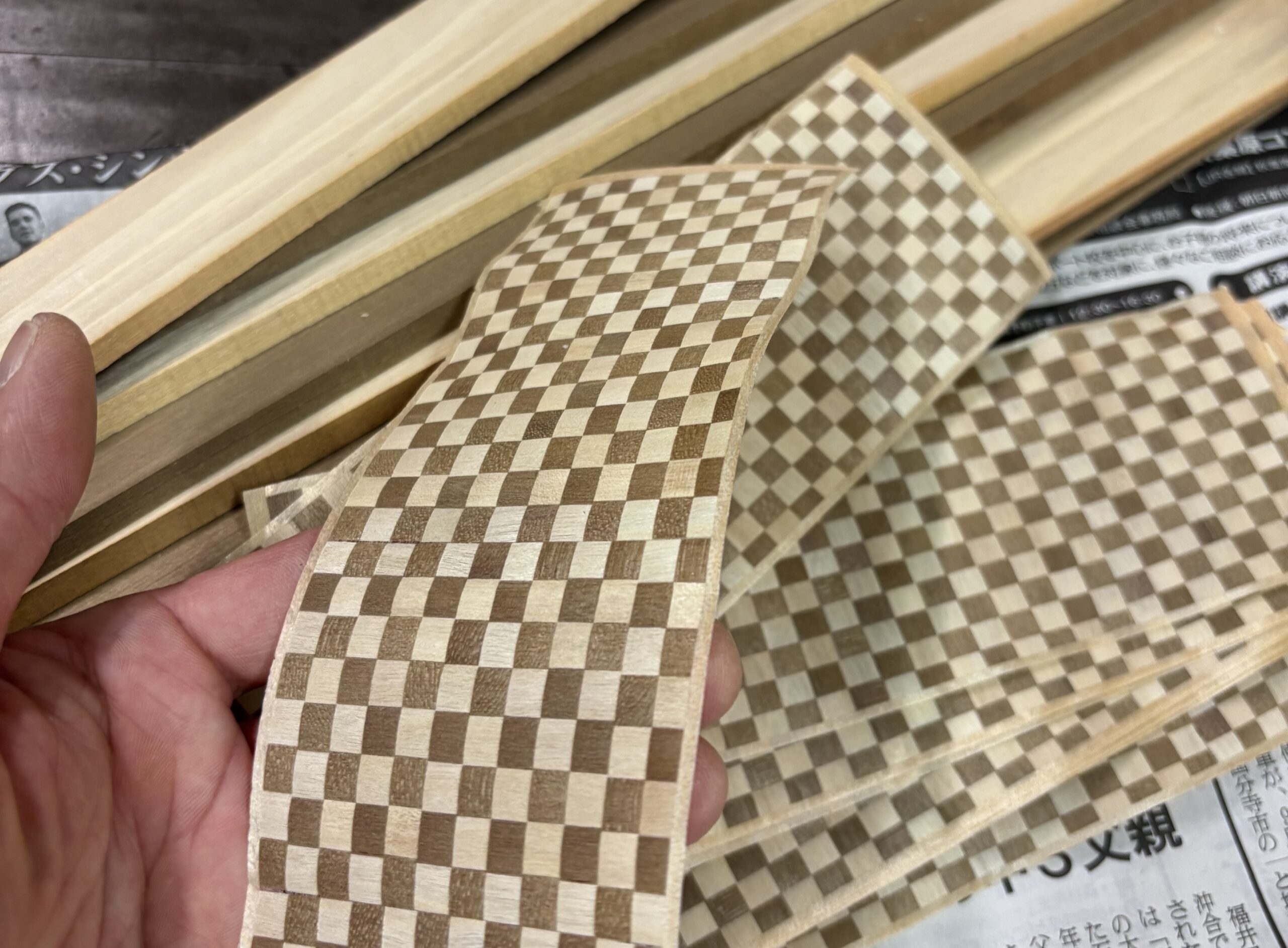
One more thing I worked on today was preparing the checkered yosegi for the side panels of the 4-sun 4-compartment puzzle boxes that I plan to make this month. This time, I decided to use a two-color checkered pattern that I have used before. The photo shows some leftover checkered yosegi that I made previously. It is a very simple design, but I actually prefer it to the usual four-color version. 😄 You can tell by touching this sheet that it is quite soft. Even when wood is made into a very thin sheet like this, its natural characteristics still remain. In this case, the two woods are Mizuki and Ho, both of which are naturally smooth and fine-grained materials. Because of this, the sheet remains soft and easy to handle. On the other hand, if woods such as Walnut or Rengas are made into sheets like this, they become much stiffer and rougher. Using them for the top and bottom panels is usually not a problem, but I am a little cautious about using them for side panels. The reason is that side panels often undergo additional machining later in the process. The corners are rounded, and the center is cut to create the sliding keys. Since side panels often undergo further cutting and shaping after the veneer sheet has been attached, harder woods tend to leave rougher cut surfaces. As part of the preparation work today, I first prepared the two types of wood, planed them to the required thickness, and then glued them together in alternating layers to create a striped pattern.
I hope you have a good weekend!