When I woke up this morning, it was raining. The forecast had said the rain would start tonight, but it seems to have arrived earlier in some areas. With the rainy season just around the corner, I suppose that is not too surprising. This afternoon, I went to the workshop again and spent some time working and taking care of a few routine tasks.
People who read this blog or follow my social media sometimes say, “You’re always at the workshop.” And to be honest, that is pretty much true these days. I am not there all day, every day, but I almost always stop by. Of course, one reason is the production of Japanese puzzle boxes. I make them by myself. My wife occasionally comes to the workshop to help with various tasks, but I am the only one making the boxes. Because of that, I have to handle all of the different steps myself, and many of them take time. As a result, there is always something that needs to be done at the workshop.
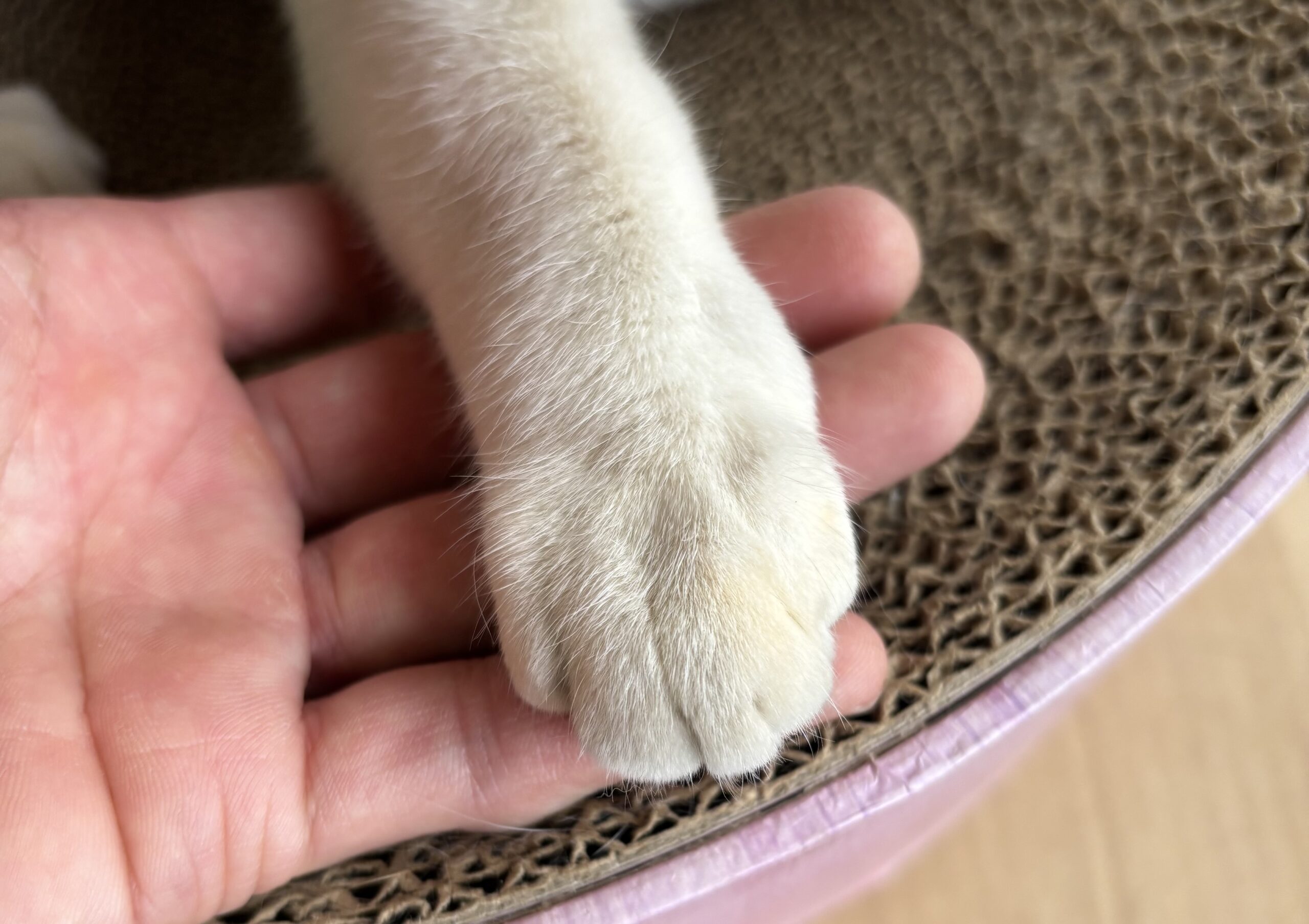
It would be nice if dedication to the craft were the only reason I visit the workshop so often, but there is another reason as well. In the past, I did not go to the workshop every day and would sometimes take a day off. Now, however, there is a reason why I need to visit every day. That reason is that there are two cats living at the workshop. They have been living at my workshop for about two years now. Originally, they were stray cats that came from somewhere nearby. The mother cat appeared first, and we started taking care of her. Later, she brought two young cats with her. When we asked a veterinarian about them, we were told that they were about one year old at the time and were likely the mother cat’s own kittens, making them brother and sister. One is male and the other is female. After a while, the mother cat left and never returned to stay. At first, she would occasionally come back to check on them, sometimes once every few weeks or months. However, she has not been seen for more than a year now. Perhaps she decided that this was a good place for her kittens to live. Cats often separate themselves from their grown kittens in this way. Of those two young cats, the female has become a full-time resident of my workshop. Even among siblings, cats tend to establish their own territories, so they often do not stay in the same place. The male cat, however, seems to live somewhere nearby. He visits the workshop several times a week, eats a meal, and then heads off again. Each time he comes by, the female cat seems very happy to see him. They spend time playing together before he leaves again.
I have already taken these cats to the veterinarian, where they received vaccinations and other necessary care. They are still only about three years old, so I was told that they are healthy and full of energy. In Japan, taking care of cats that were originally strays is often referred to as “community cat activities“. These cats are commonly known as “sakura cats“. Depending on the local government, financial support is sometimes available for these efforts. Cats reproduce quickly, and stray cat populations can grow rapidly. Because of this, community cat activities have become much more common in Japan in recent years. Many volunteer groups have been formed, and television programs on this topic have also become more common. In the past, large numbers of cats were euthanized, but in many areas these activities have greatly reduced or even eliminated that practice. Compared with many other countries, Japan was relatively slow to develop this kind of animal welfare movement. However, many dedicated people are now working to change the situation. Government support may still have a long way to go, but positive changes are gradually taking place.
I have provided a place for the cats to live at the workshop, but there is no one else to feed them regularly, so I go there every day. Sometimes people from the neighborhood also bring food for them. I have considered bringing them home, but the area around the workshop is surrounded by nature, with very few houses or people nearby. Since they already have a safe place to sleep, I sometimes think they may be happier there than living entirely indoors. Whenever I see them outside, they are usually exploring, playing, or simply enjoying their surroundings. When I am at the workshop, they are usually inside, sleeping peacefully. As they get older, I may need to reconsider what is best for them and think about a different living arrangement. Of course, my work is one reason I go to the workshop every day, but these cats are another important reason as well 😺.