The typhoon seems to be getting closer at last. The wind has been strong since this morning, and the weather is getting worse. It was not raining in the morning, but the rain started in the afternoon. Before the rain began, the humidity was still not very high, so I hurried to continue yesterday’s work and attached the panels to the Square puzzle boxes and the 5-sun puzzle boxes. The humidity will probably rise because of the rain, so I am now keeping them in a humidity-controlled case.
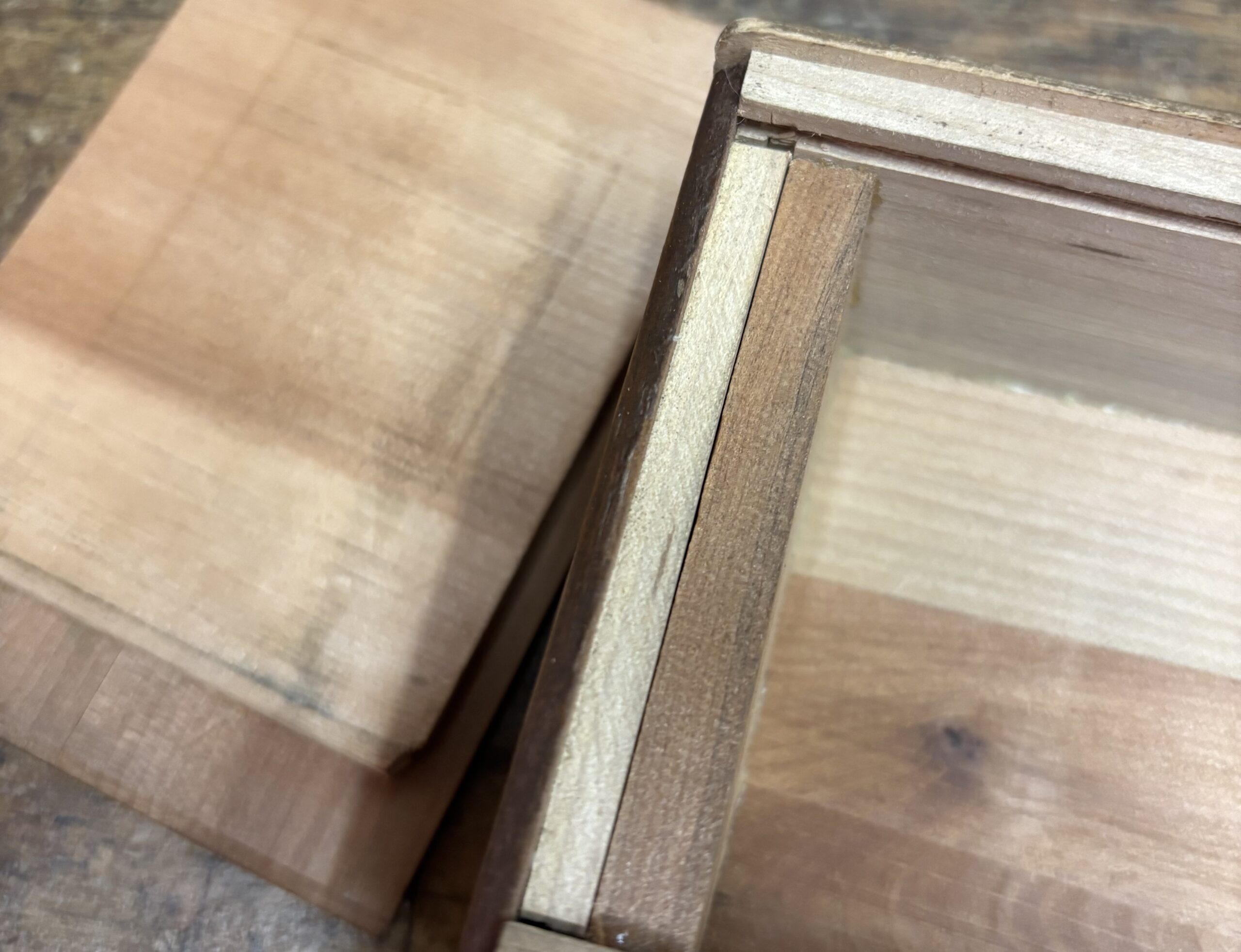
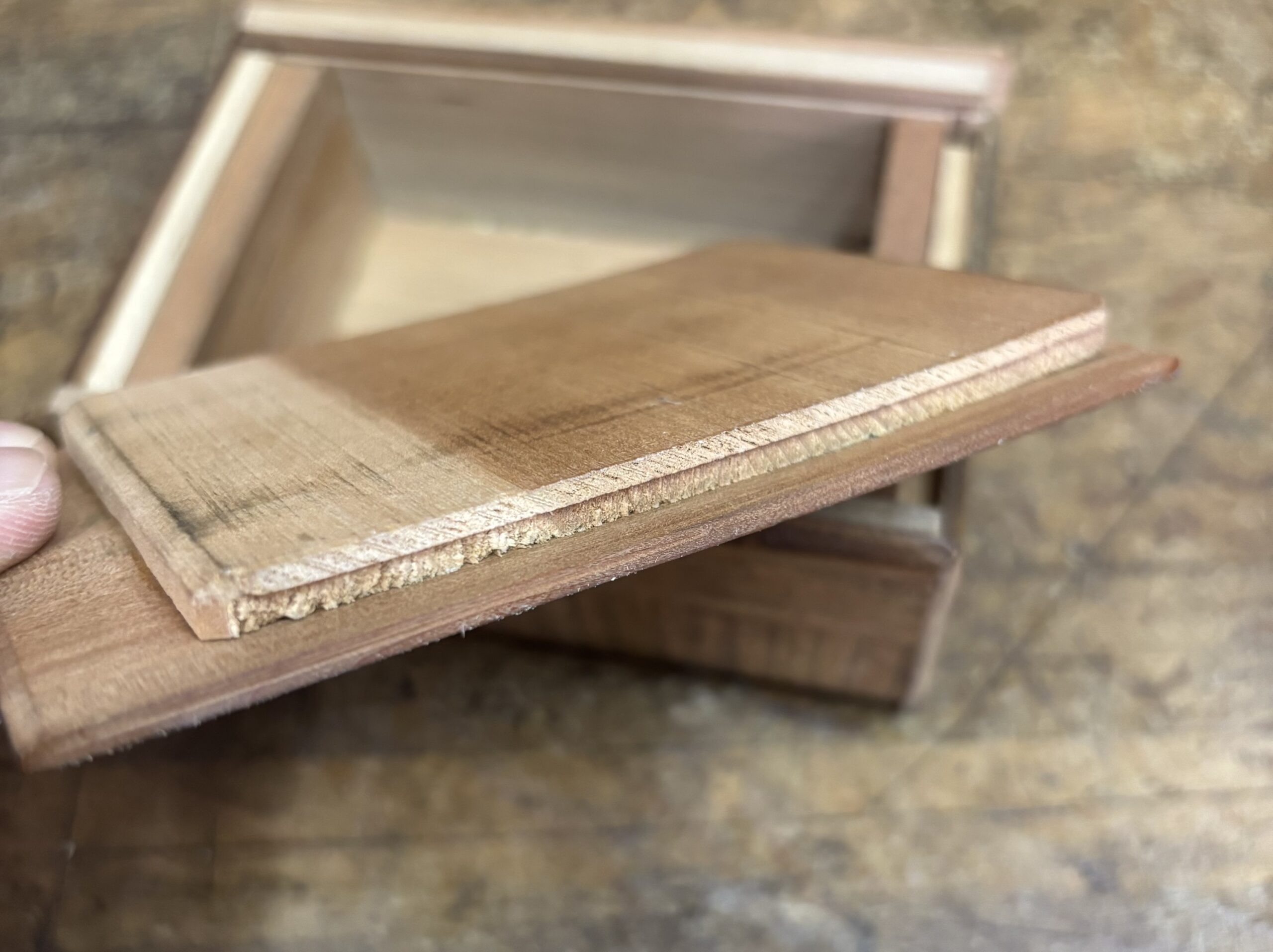
The photo I am showing today is of a slightly old Japanese puzzle box. It was probably made around 50 to 60 years ago. This is a panel from a 4-sun 4-step puzzle box. On humid days like today, I worry about changes in the size and shape of the panels. As you can see in the photo, on many old Japanese puzzle boxes, both the Aruki panel and the outer decorative panel, such as Yosegi or wood inlay, are often warped like this. I think this is mainly caused by drying. Wood is always taking in and releasing moisture, but these two are not always balanced. In many cases, the wood releases more moisture than it takes in, so the amount of moisture inside the wood gradually decreases. In other words, the wood becomes drier over time. Perhaps this could be called the natural life of wood. It may be something like the wood slowly drying and withering over the years. After all, we do not often see old, dried wood or withered flowers that are still full of moisture. In this panel, the inner surface is exposed to the air and continues to release moisture. However, the other side is in contact with the top panel, so it is not exposed to the air and releases less moisture. A wooden board tends to bend toward the drier side, which is why the panel has warped into the shape shown in the photo.
It is very difficult to prevent this over many years. Even so, several methods have been used to reduce it. First, a finish is applied to the outer surface of the box. This creates a film over the wood and slows the release of moisture. A thicker film can reduce moisture loss more effectively, but for several reasons, it is difficult to make it too thick. Many old Japanese puzzle boxes have only a thin finish. The craftsmen probably wanted to avoid a thick coating because it could cause the moving parts to stick together. In even earlier times, wax was often used instead of a painted finish. This method is called “Rōbiki,” or a wax finish. It protected the surface from dirt, gave the box a shine, and also seems to have helped the mechanism move smoothly. However, I think it offered very little protection against moisture moving in and out of the wood. As a result, we can still find old Japanese puzzle boxes with panels that have warped badly like this.
Another method is to cross the direction of the wood grain in the panel structure to help reduce warping. In the photo, the grain of the inner Aruki panel runs across the direction in which the mechanism moves. The grain of the outer Yosegi panel runs at a 90-degree angle to it. However, the main reason for this grain direction is not to prevent warping, but to keep the size of the Aruki panel from changing too much. The direction of the grain affects how the wood shrinks. If the panel were not made this way, the Aruki panel could shrink and come out of the rail of the mechanism. Crossing the grain is much more effective when three layers are placed in different directions, as with plywood. With only two layers, the effect is not very strong. Because plywood is very good at reducing warping, I now use Shina plywood or MDF for the outer panel to help control the warping of the Aruki panel underneath.
I think cost was also a major reason, but these panels seem too thin. Since this is a 4-step puzzle box, perhaps the panels were made even thinner. The side Aruki panels are also quite thin. Labor costs were low at that time, so perhaps the panels gradually became thinner in order to save wood. However, I often notice that the side panels of old Japanese puzzle boxes are much less warped than the top panels. I think this may be mainly because they used good-quality, well-dried wood and traditional animal glue called Nikawa. Changes in humidity can make the panels harder to move, but the movement of the mechanism can also become worse when the panels dry out and warp like this. The average humidity in Japan is around 60%, so keeping the box at about this level may be a good way to keep it in good condition.