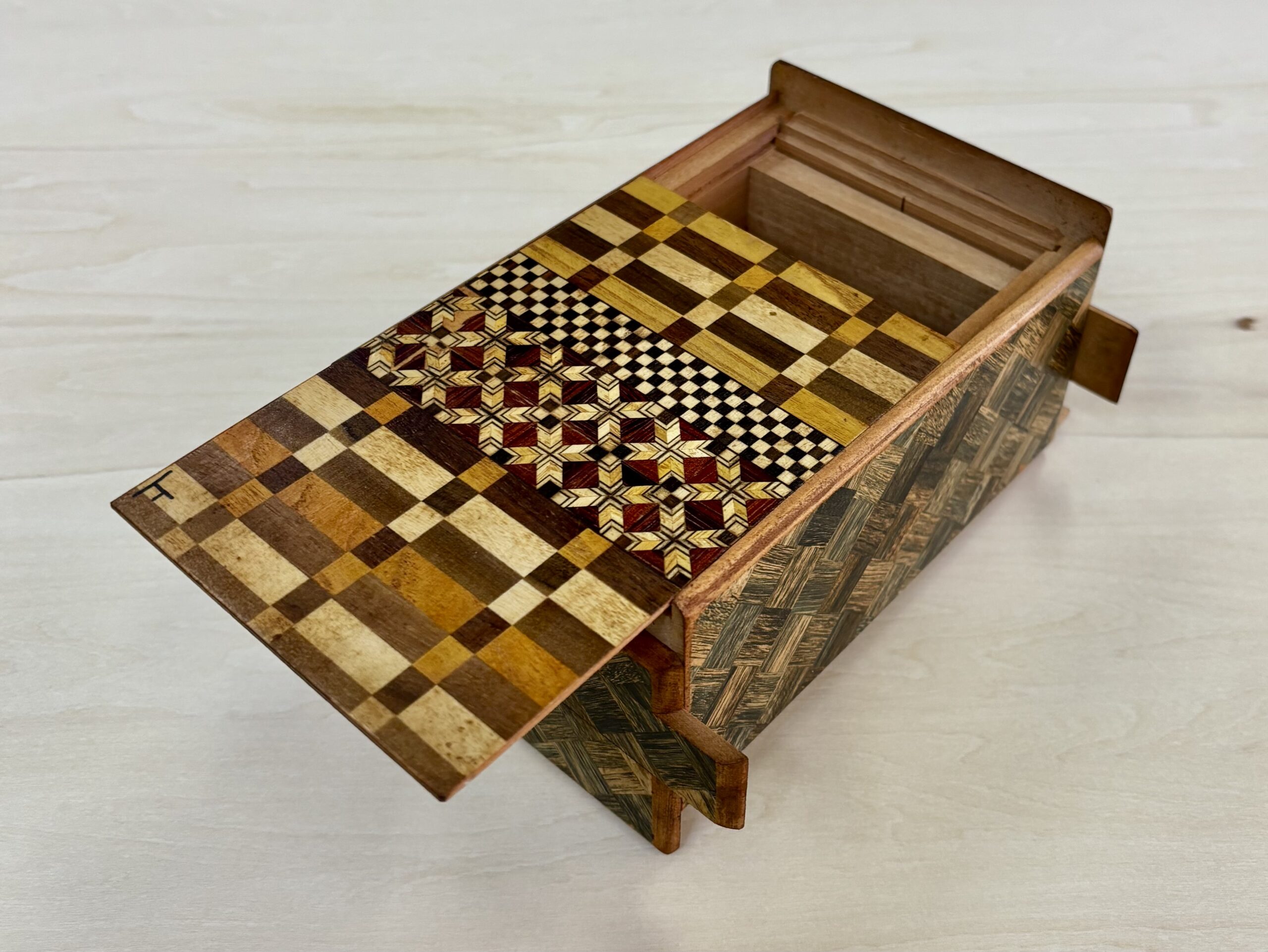
It was another very cool morning today, making it feel like a true autumn day. The rice harvest around my workshop has now completely finished, which makes the change of season even more noticeable. In Japan, we have a custom called koromogae, which means changing clothes for the new season. From October, school uniforms and other uniforms change to their autumn and winter versions. Many families also change their bedding and clothes for the cooler seasons around this time. With the cool weather of the past few days, I can certainly feel that October has arrived and the season has changed.
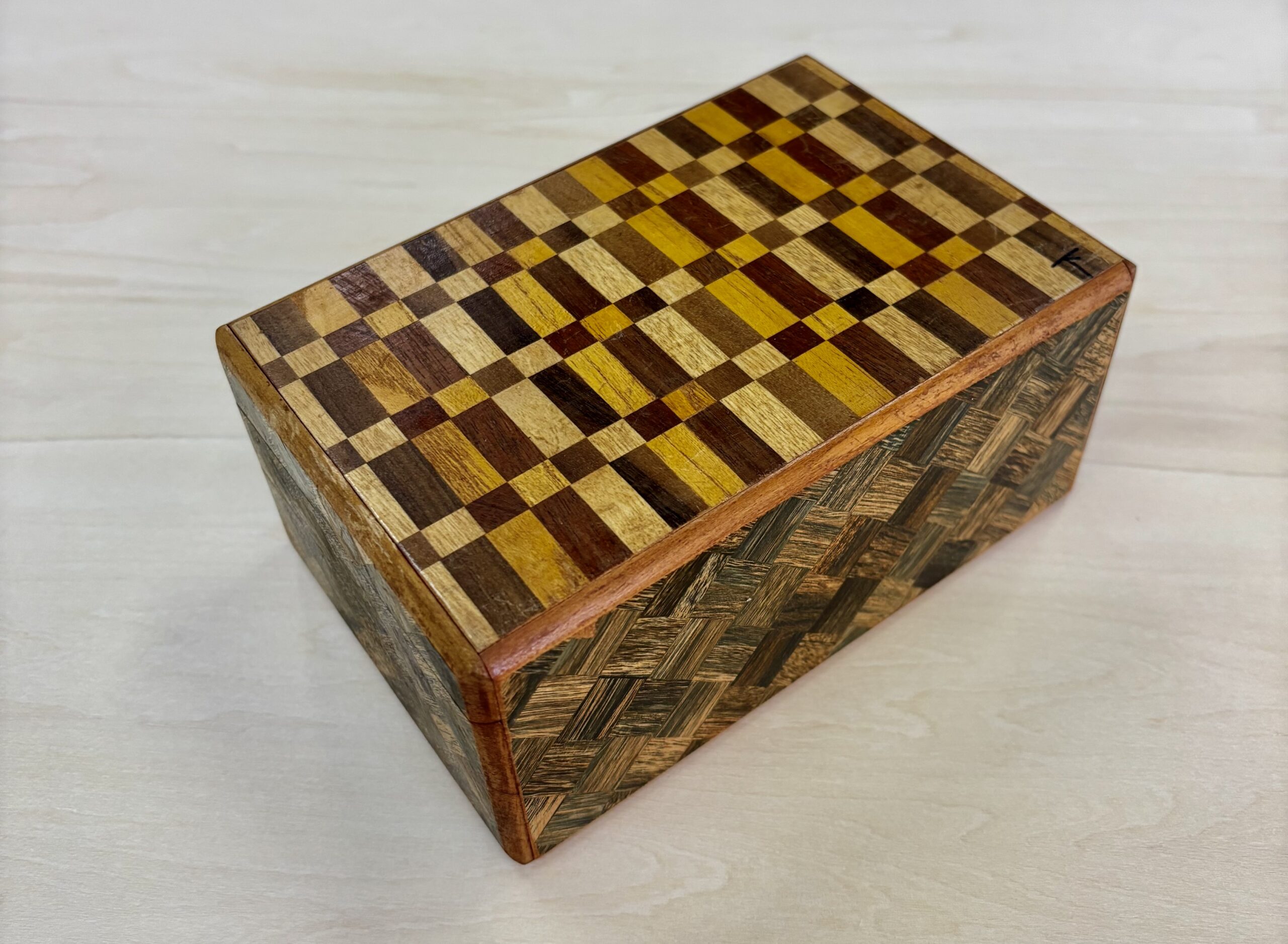
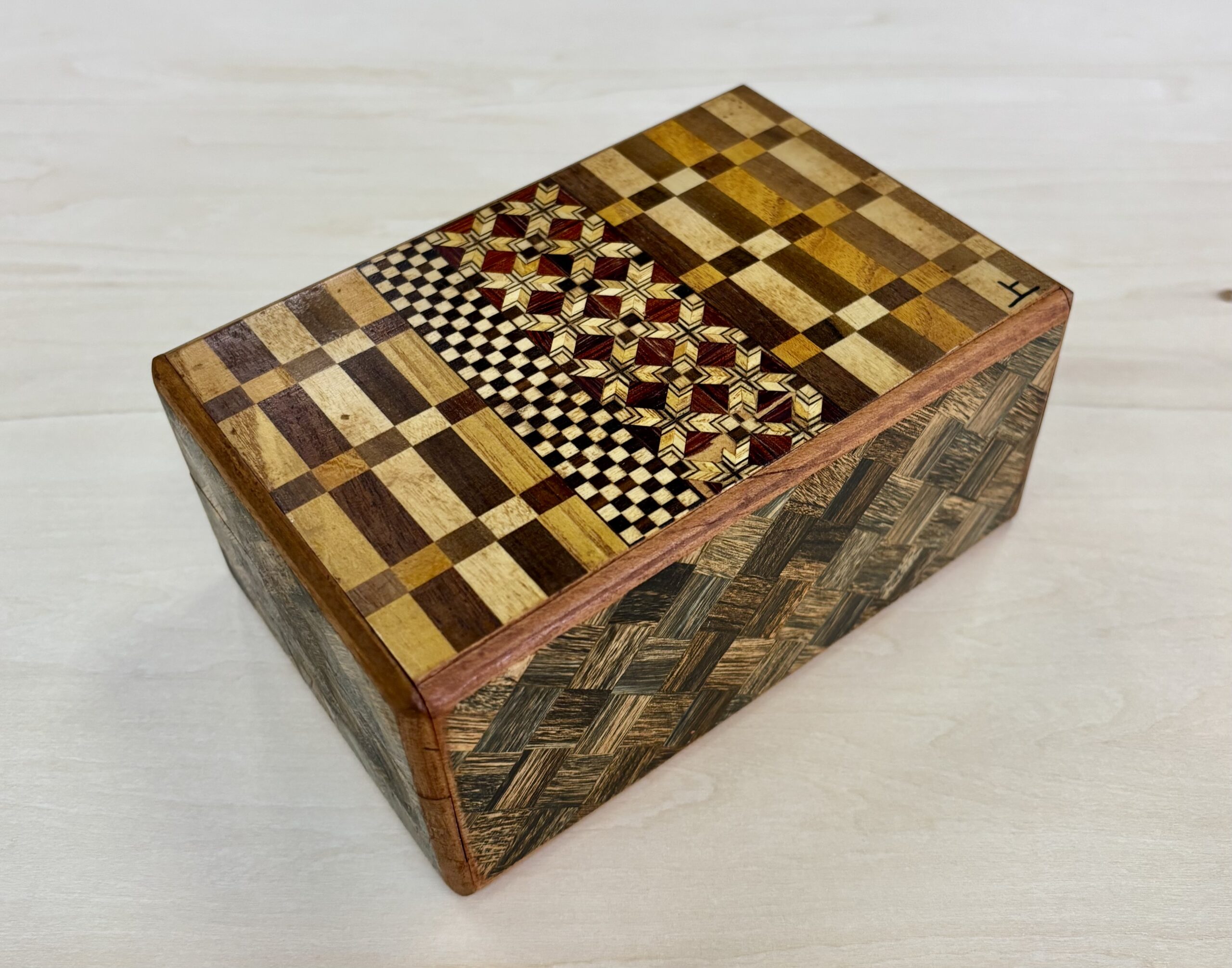
Today, I would like to introduce a slightly old 5-sun 21-step Japanese puzzle box. The first thing that catches the eye is its unusual design. Instead of traditional Yosegi, it uses a simple and modern block-pattern Yosegi. I think this was probably a limited or specially made model rather than a regular product. Judging from the size of the Yosegi pattern, it does not seem to have been made for another product and then reused. It fits this puzzle box so perfectly that it was probably designed especially for this box. Even today, puzzle boxes are sometimes made using leftover Yosegi sheets from other projects, especially smaller boxes. It is also common for a shop or dealer to bring a Yosegi sheet they already have and ask a craftsman to make a puzzle box with it. However, although the Yosegi on this box is rather unusual, I feel that the sheet was designed from the beginning specifically for this puzzle box. The side panels have a checkered pattern that was typical of that period. This also suggests that the box is quite old, probably around 40 to 60 years old.
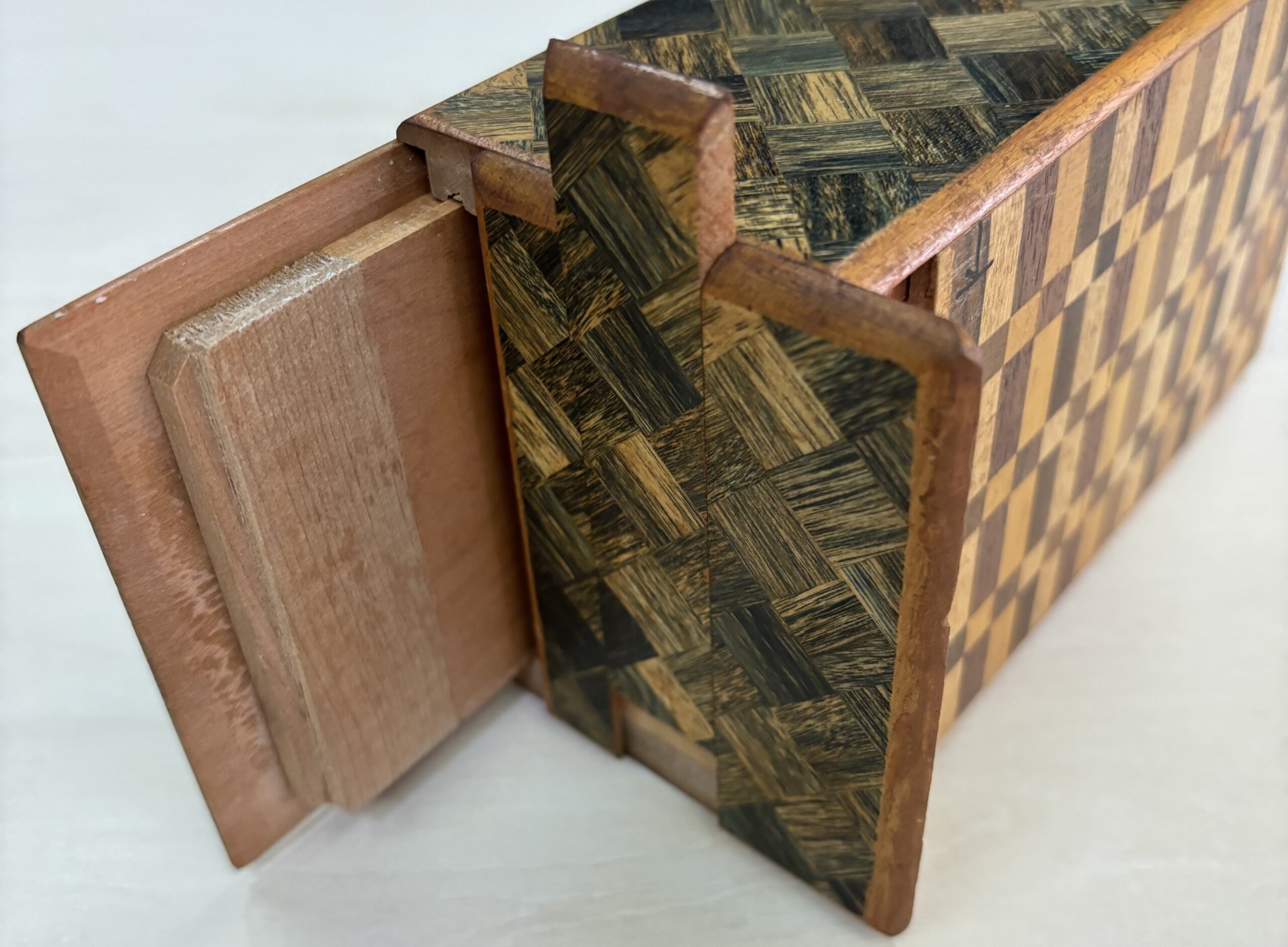
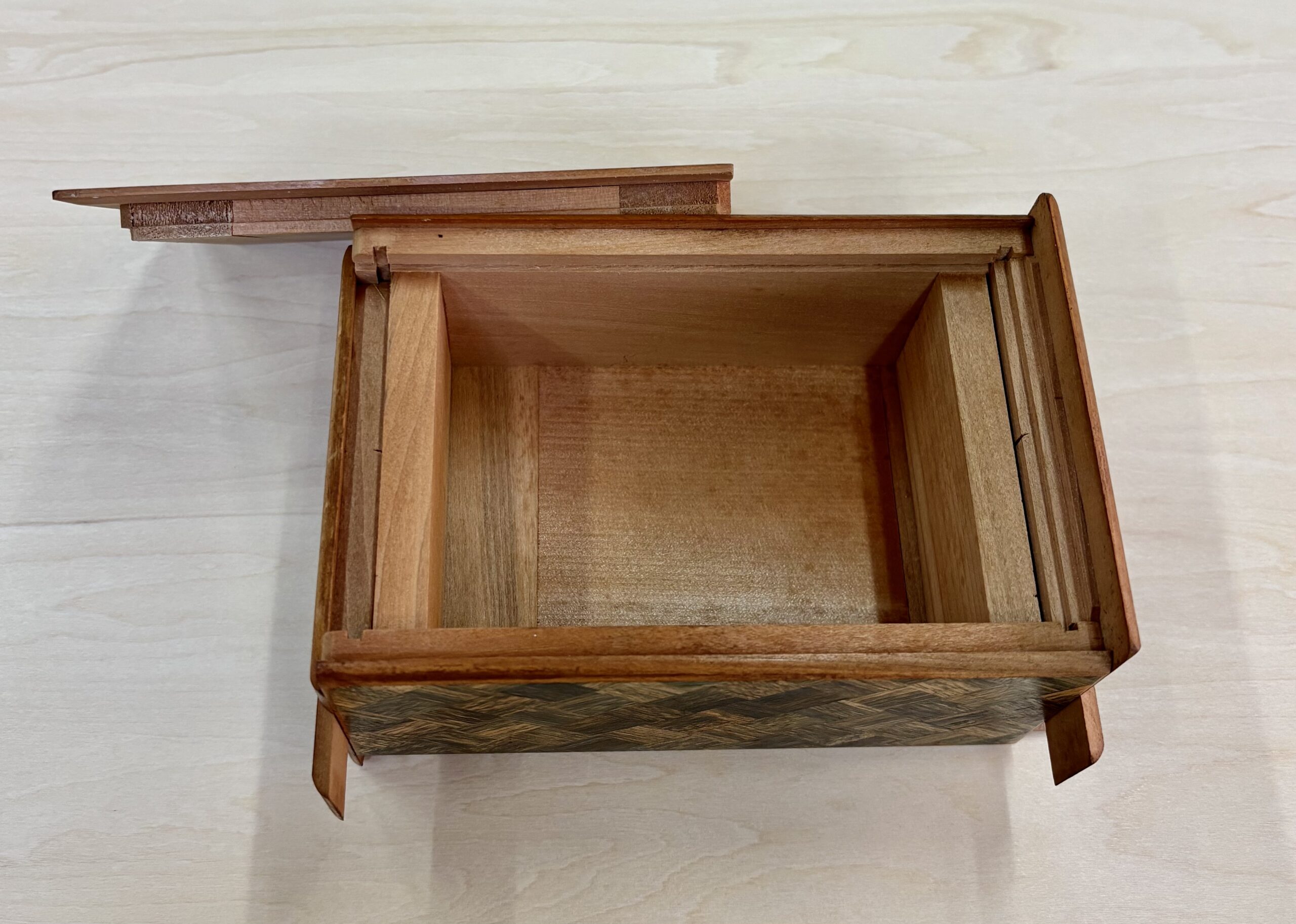
The mechanism requires 21 steps and includes two reverse movement. Surprisingly, it still moves smoothly today, although the movement has become slightly loose. Rather than becoming stiff, it seems that the wood of the Aruki sliding panels has worn down over time and made the movement looser. This is partly because of the skill with which it was made, but I also think the high-quality wood and the careful storage by its previous owner helped to keep it in such good condition. This 21-step mechanism includes a reverse movement called Kaeshi, in which the sliding key moves back inward during the opening sequence. In my own 21-step puzzle box, the Kaeshi comes at the end. In this old box, however, the sliding key moves outward again after the Kaeshi. This is a traditional movement that makes the box more difficult to solve. I would like to use this movement in one of my own puzzle boxes someday. However, introducing a new mechanism into regular production requires a great deal of time and energy, so I have not yet been able to do it.
Another reason this box still opens smoothly may be that it was not opened and closed very often. It seems to have been opened only occasionally, and there is no visible damage to the parts inside the mechanism. In puzzle boxes from this period, the stepped grooves inside the mechanism were usually carved directly into the Axis panels. These panels were often made from Japanese Katsura wood, which is soft and can be damaged easily. When the small wooden pieces inside, called Bocchi, repeatedly hit the corners of these steps, the corners gradually become rounded. Since this kind of wear has not occurred in this box, it may have been left unopened for long periods.
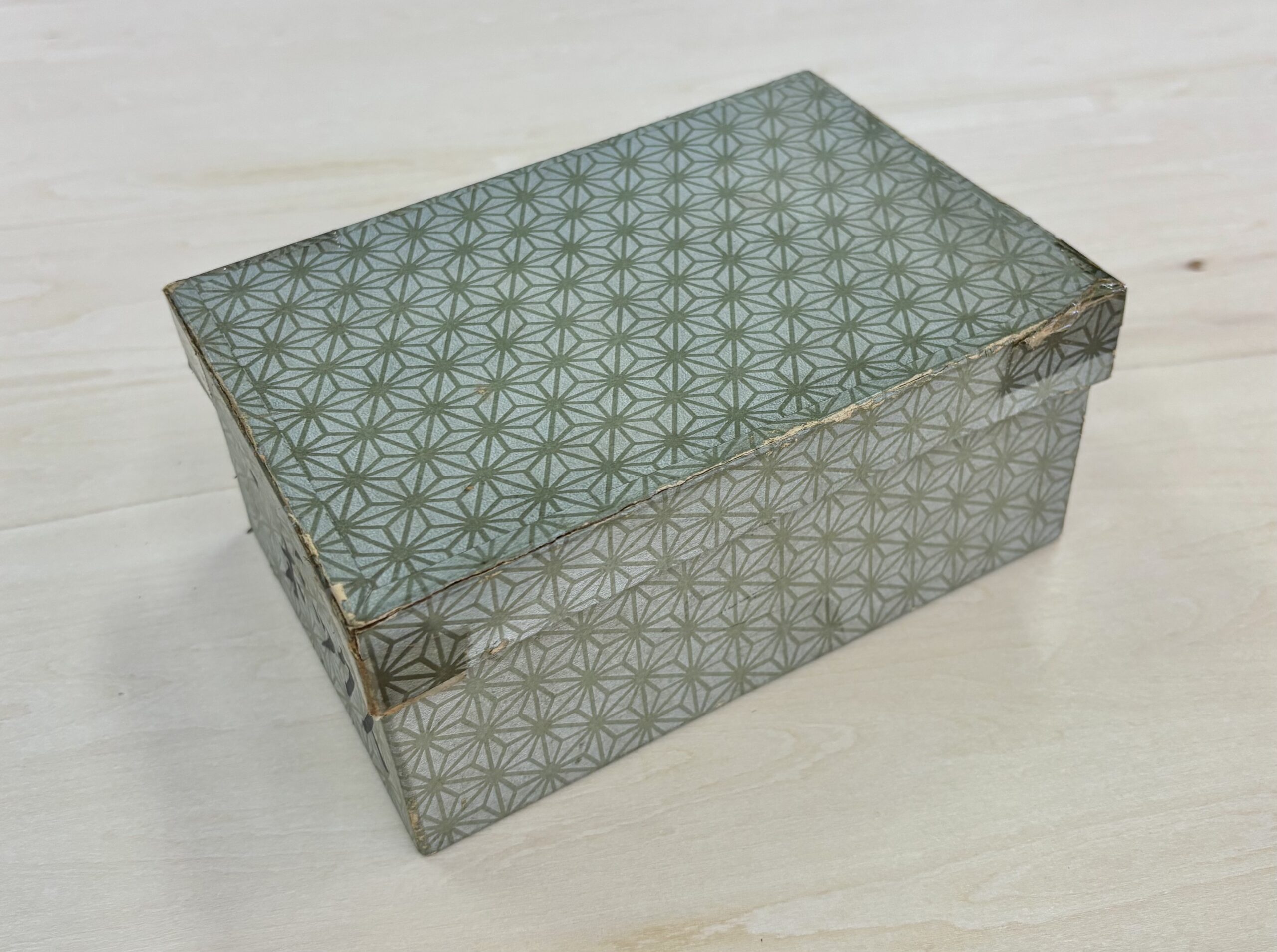
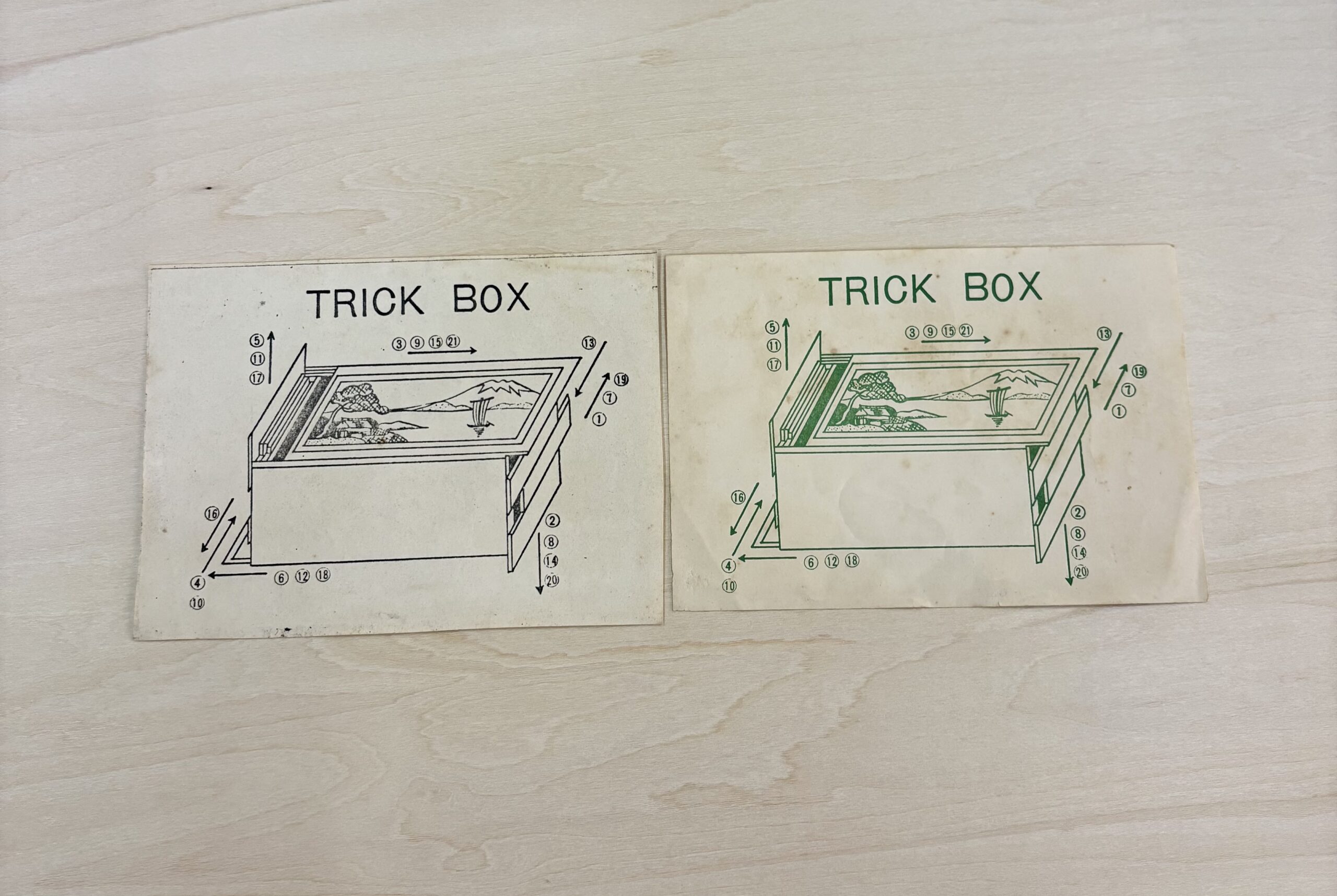
The finish was applied with a brush using varnish. This also shows that the box was made in an earlier period, before spray finishing became common. The original presentation box is also included. It is covered with an old Asanoha, or hemp-leaf, patterned paper that is no longer produced. I still saw this type of paper when I first entered this field, and it also gives us a sense of the period in which the box was made. The box also comes with an illustrated opening guide, which was commonly included with puzzle boxes at that time. Wood inlay designs called Sansui, showing traditional mountain and water scenery, were very popular then, so the same type of picture was also used on the instruction sheet. Finally, here are the dimensions:
Dimensions: 15 × 10 × 6.8 cm (5.91 × 3.94 × 2.68 inches)
Weight: 260 g (0.57 lb)