It had been raining since this morning, but the rain was not very heavy. It seems that the typhoon is approaching a little more slowly than expected. Heavy rain is forecast for tomorrow, and it may cause various problems. I had some errands to take care of today, but I canceled them and decided to work in the workshop instead. I finished the work on the Square puzzle boxes and the 5-sun puzzle boxes that I have been making over the past several days. I thought I might miss the chance to do this work once the heavy rain begins. Of course, I was planning to come to the workshop for a short time anyway to check on the cat. I started this work in the afternoon. It took a little longer than expected, but I was able to finish it by the evening.
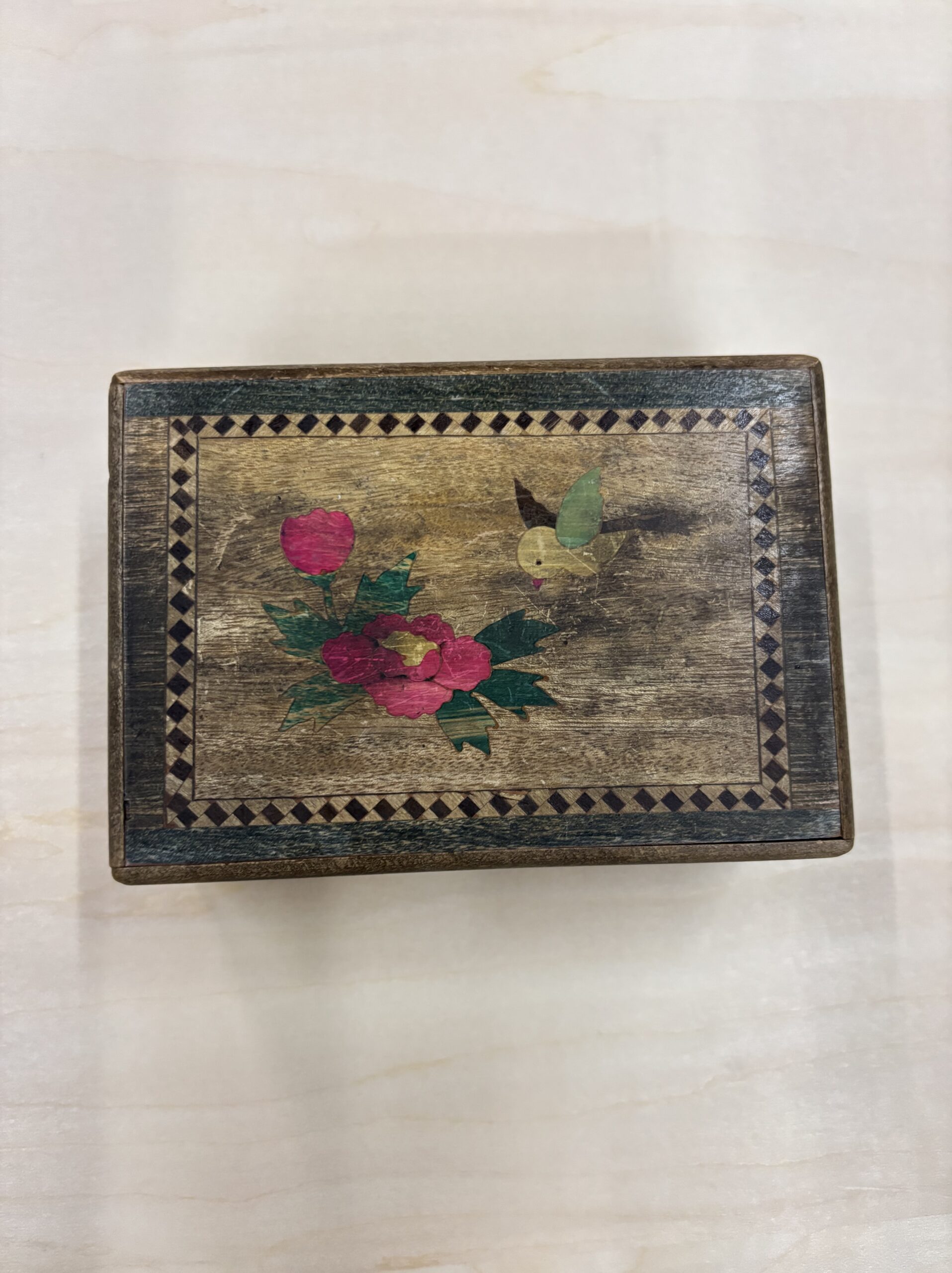
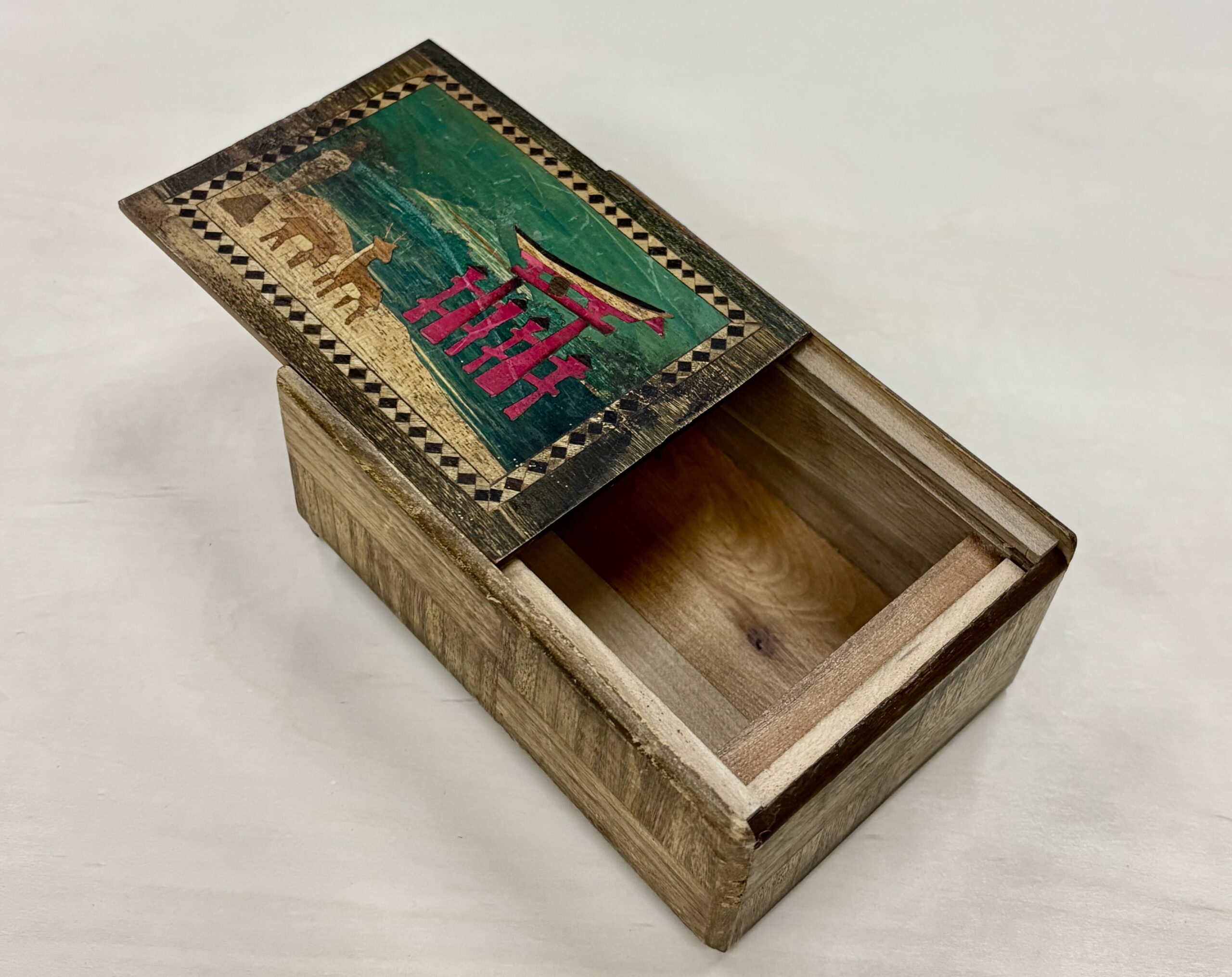
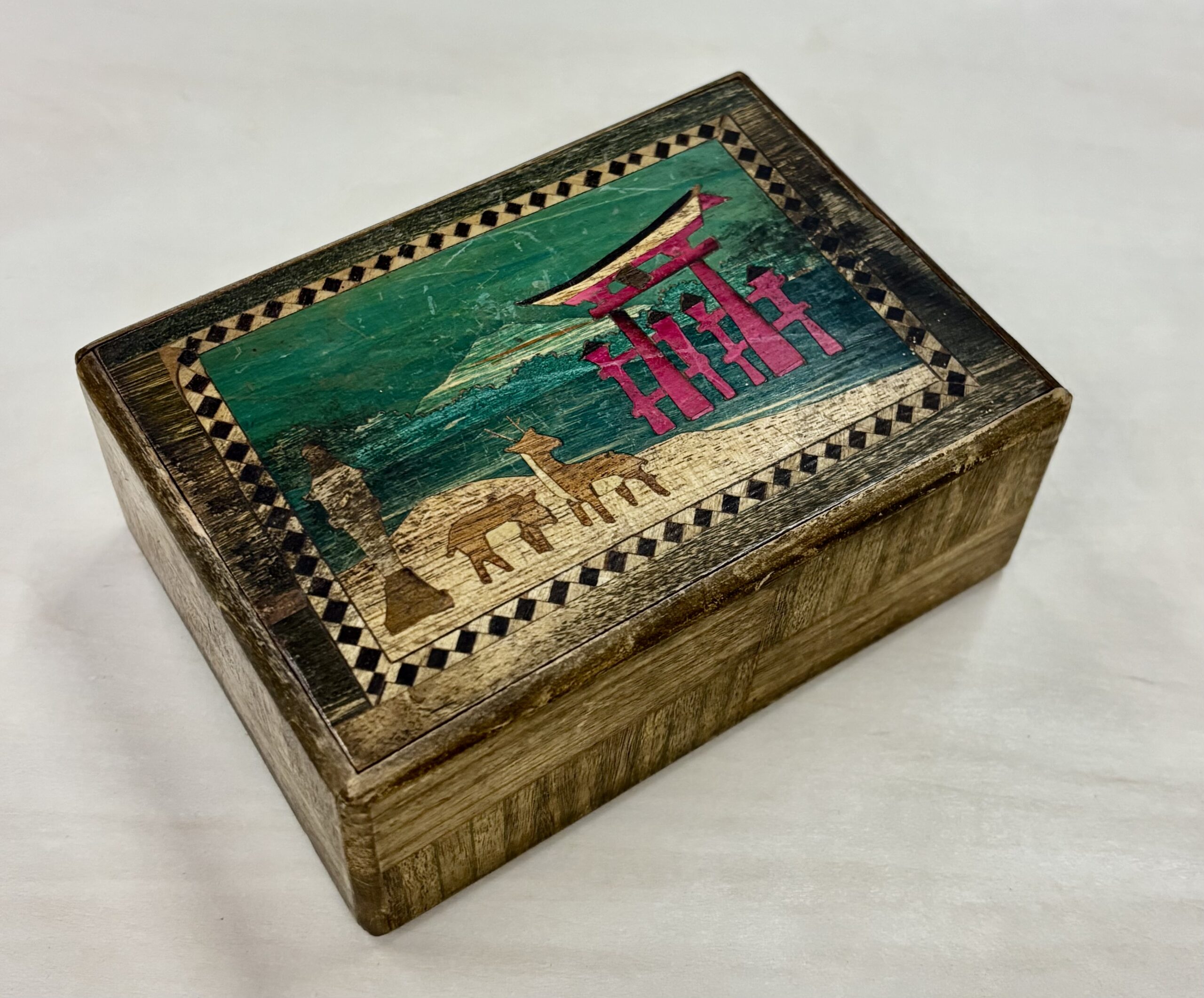
Yesterday, I wrote about the warping of a puzzle box panel. Today’s photo shows the box to which that panel is attached. It is a little old and quite dirty, but it is a rare box. Yesterday, I wrote that it was probably 50 to 60 years old, but it may actually be around 70 years old. During the Showa 30s, from 1955 to 1964, many puzzle boxes decorated with this kind of wood inlay seem to have been made for sale at tourist destinations in other parts of Japan. This model features a wood inlay design of Itsukushima Shrine, a famous shrine in Hiroshima Prefecture. Like the Nikko model I introduced recently, this was a special model made to be sold at that location.
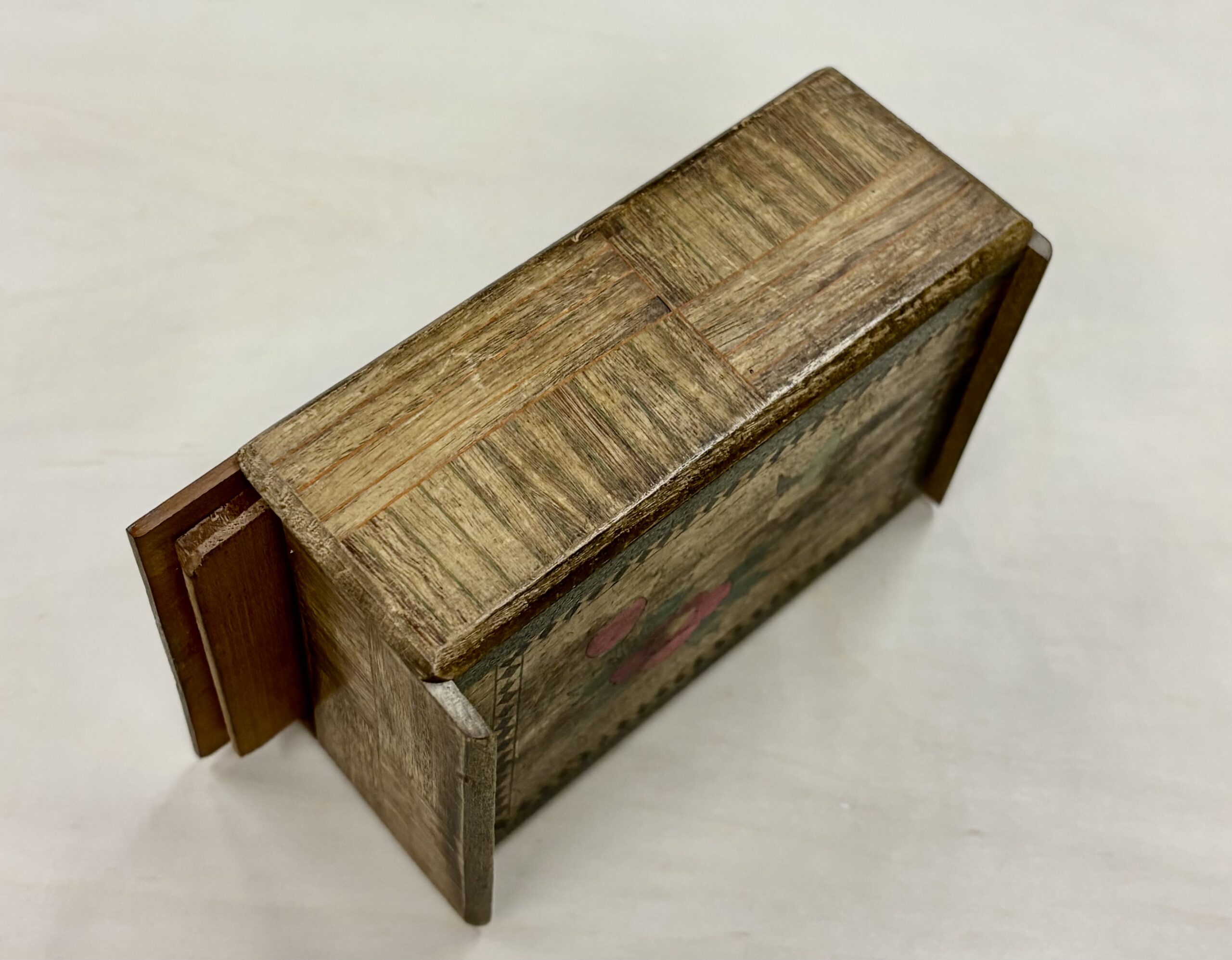
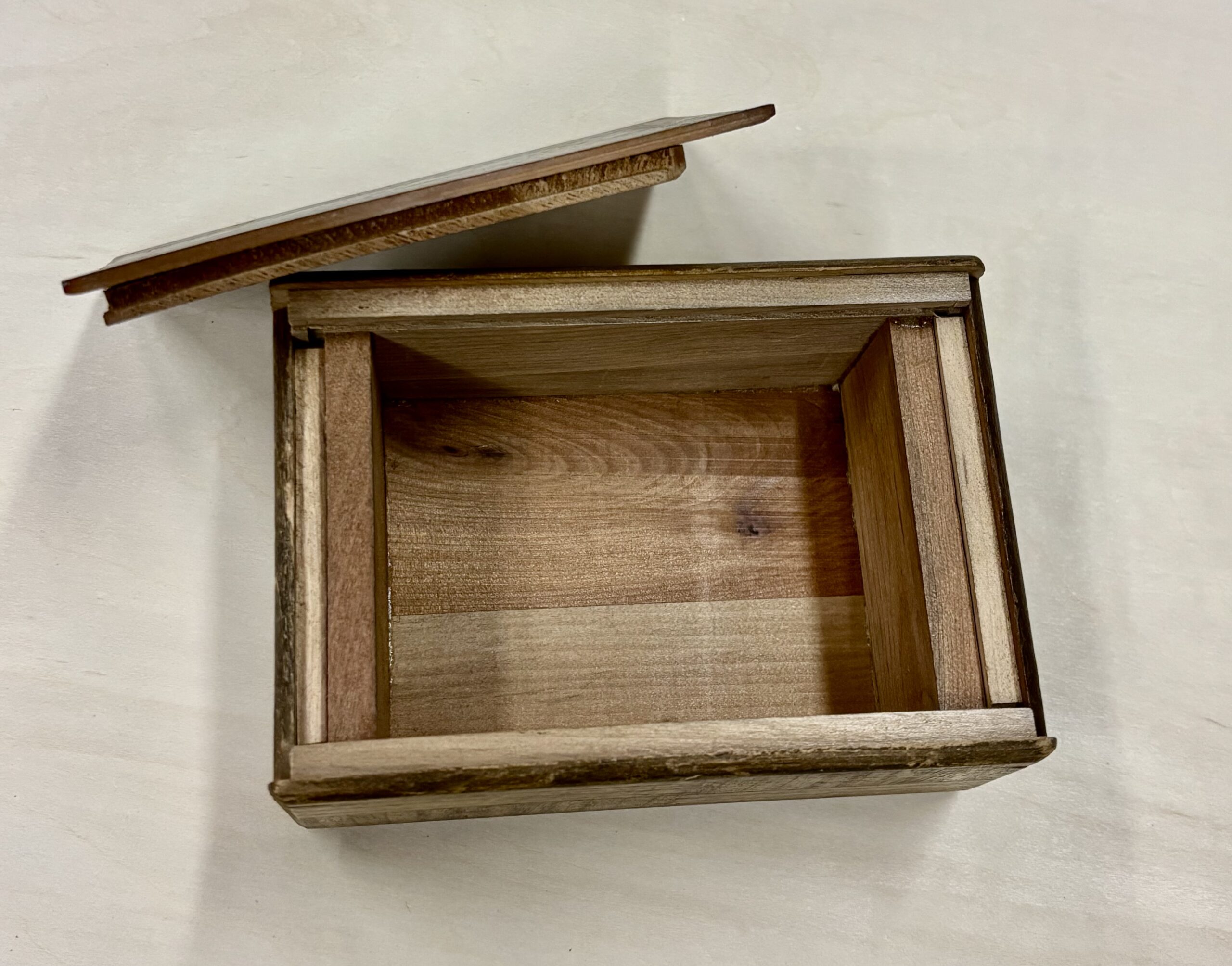
The wood inlay on the front features the shrine’s Great Torii Gate, as well as deer and stone lanterns from Miyajima, the island where the shrine is located. The design on the back features camellia flowers and a small bird. The Great Torii Gate is famous for standing in the sea. If you look at the real gate, you can see that its grand appearance has been beautifully recreated in this wood inlay. Dyed wood in shades of red and pink has also been used to show its symbolic color. The side panels have a large checkerboard-style pattern made from many wooden squares, which was common in designs from this period. The grain in these squares always runs vertically for two reasons. First, this is the direction needed to slice the wood into a thin sheet. Second, when the sheet is attached to the box panel, the crossed grain helps to reduce warping. This is a 4-step puzzle box, and it opens with the same sequence as today’s 4-step puzzle boxes.
This box is certainly old, but I think one reason the dirt and wear are so noticeable is that someone tried to move the mechanism by force. If the mechanism had moved smoothly with normal use, the box probably would not have become this dirty. The thin finish may also have made it easier for dirt to stick to the wood underneath. The warped panels that I wrote about yesterday are what made it necessary to use more force. When a panel warps, the mechanism becomes harder to move, so more pressure is needed. Eventually, part of the panel may chip or break. This has also happened to this box. Storage conditions vary greatly from person to person, so it is difficult to keep a puzzle box in good condition for many decades. However, old boxes like this show us the results of many years of use and give me many useful hints for making future puzzle boxes. Simply making the panels thicker is not always the best way to prevent warping. I believe it is important to find the right balance between stable movement and a good appearance. Finally, here are the dimensions of this box.
External dimensions: 121 × 85 × 47 mm (4.76 × 3.35 × 1.85 inches)
Weight: 120 g (0.26 lb)