Yesterday and today have been very cool, and the temperature dropped to around 20°C (68°F) at night. Today’s high is only expected to be around 26°C (79°F), which is nice. However, it rains from time to time, so the humidity is still quite high.
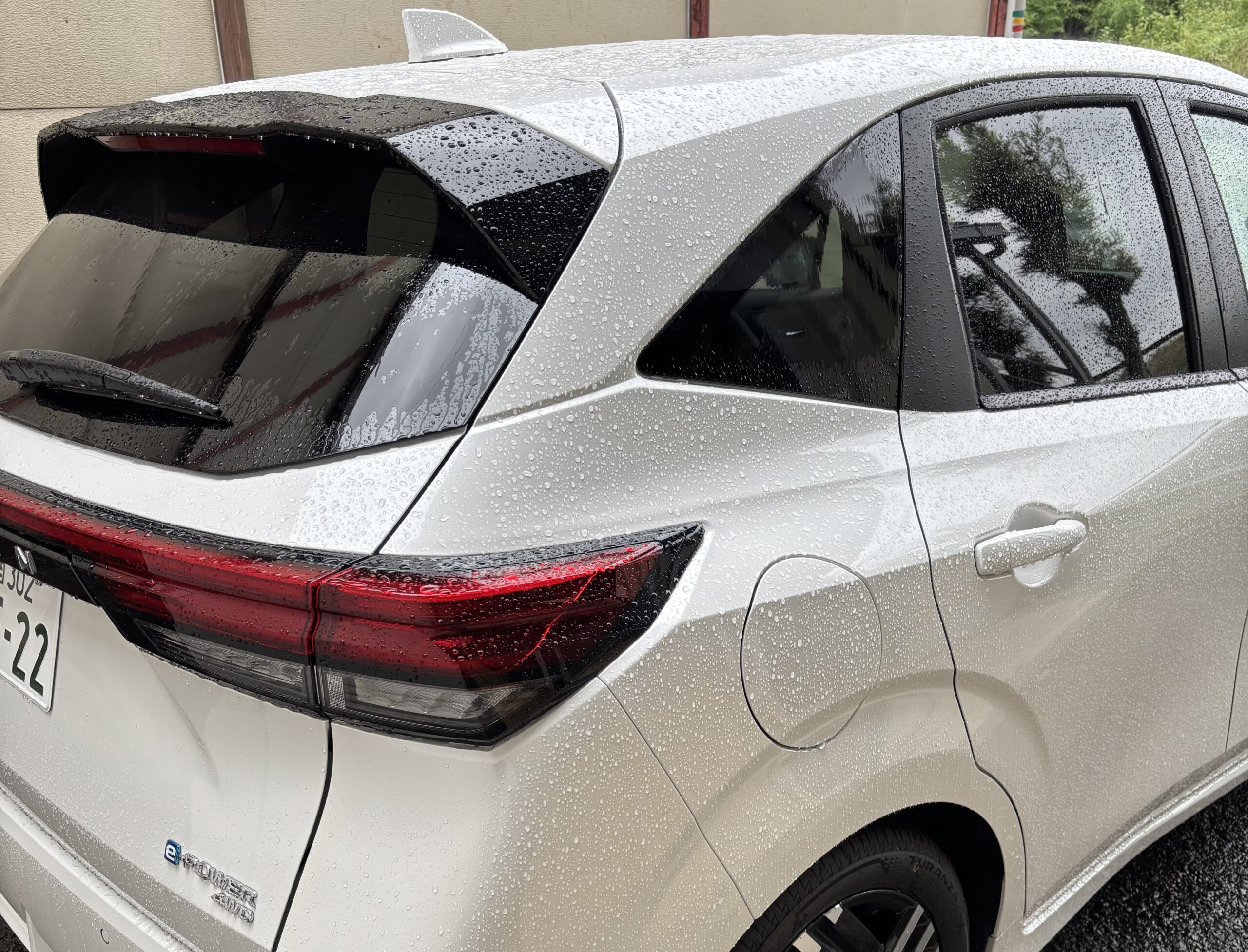
In the end, I stopped by the car dealer yesterday evening and picked up my car. They found that a clamp on a hose carrying pressurized air inside the engine had become loose, and air was leaking from there. I don’t know much about cars, so it is a little difficult for me to explain this correctly, but basically, the engine uses pressurized air to produce power. If that air leaks, the engine cannot send enough power to the drive system, such as the shaft and tires. This small 660cc car has a turbo. I was told that turbocharged cars use higher air pressure to produce more power, so there is also more stress on these parts. Because of this, a clamp like this can sometimes become loose. Still, they said this is quite rare, especially with a new car, so it may not have been checked carefully enough when the car was made. There was no charge for the repair. Also, because I have been a customer of this dealer for many years, they kindly offered to replace the part with a new one for free. They need to order the part from the manufacturer, so it will be replaced next month. I will leave the car with them for one day again. By the way, I have been going to this car dealer for about 25 years.
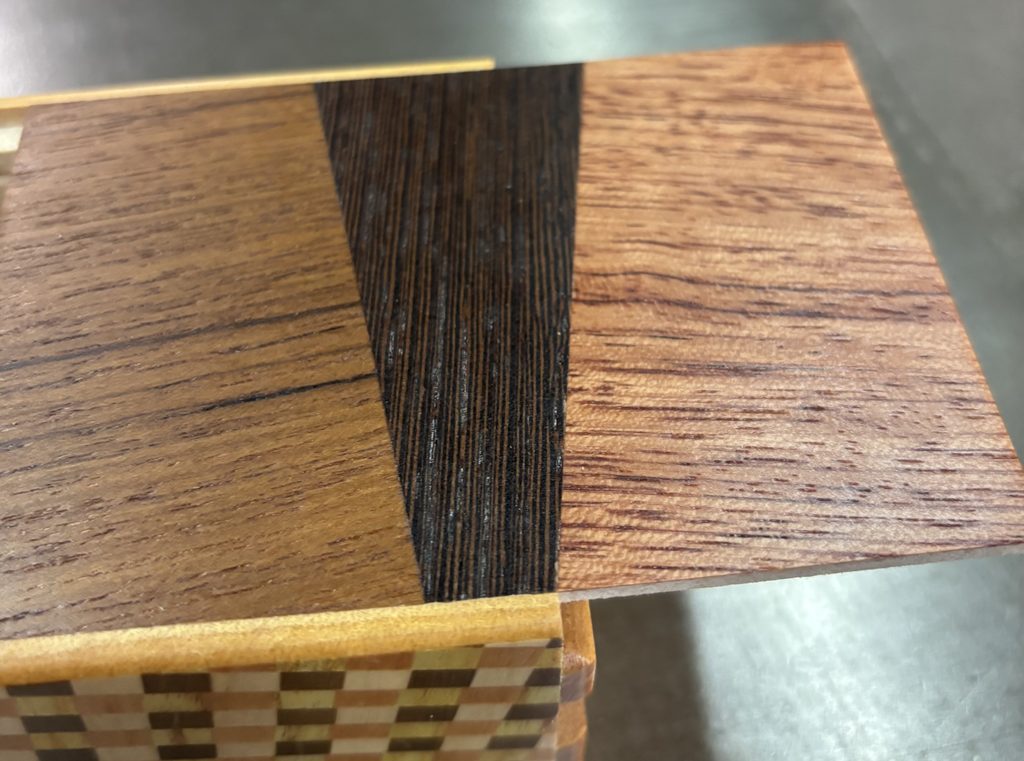
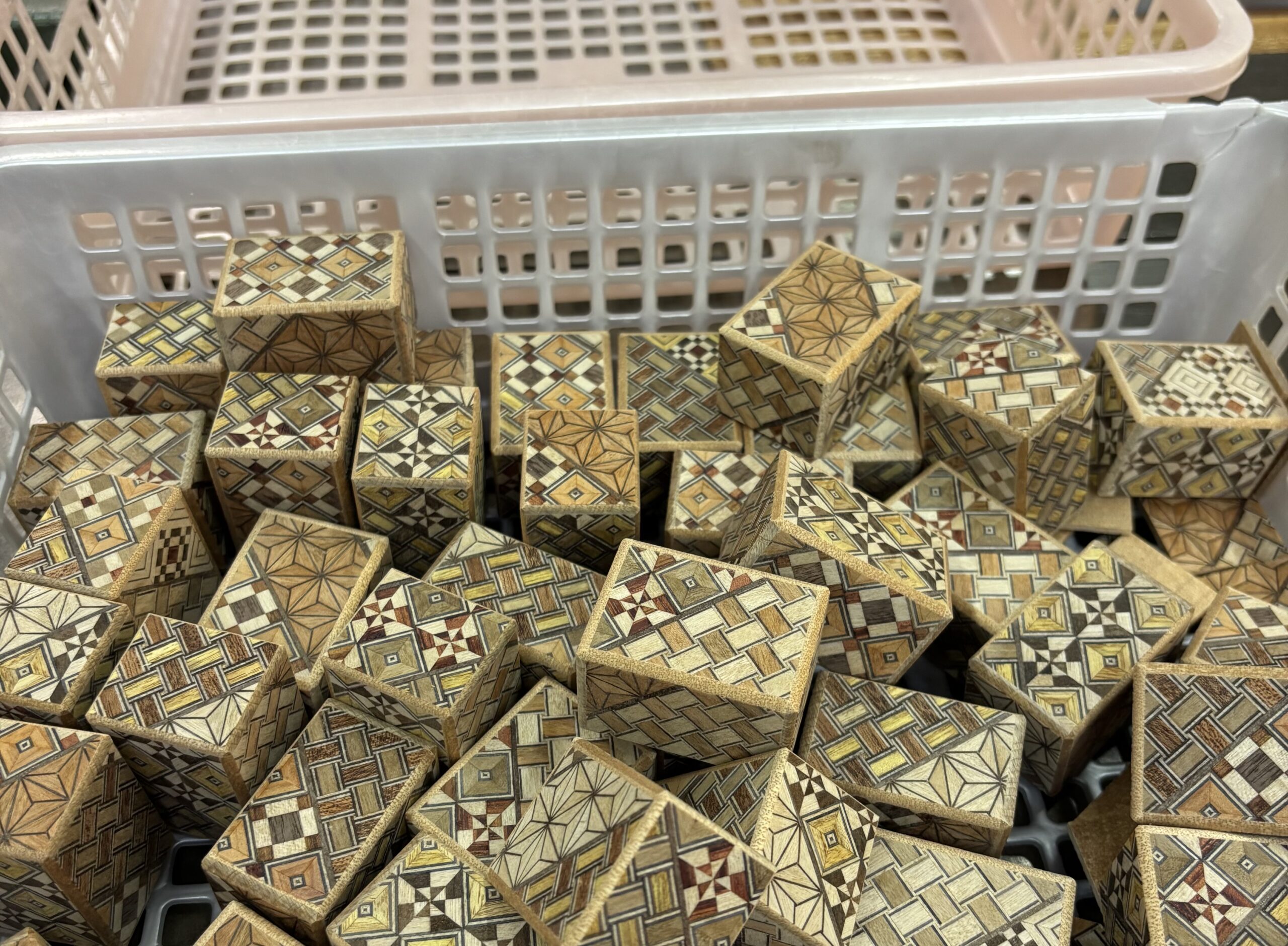
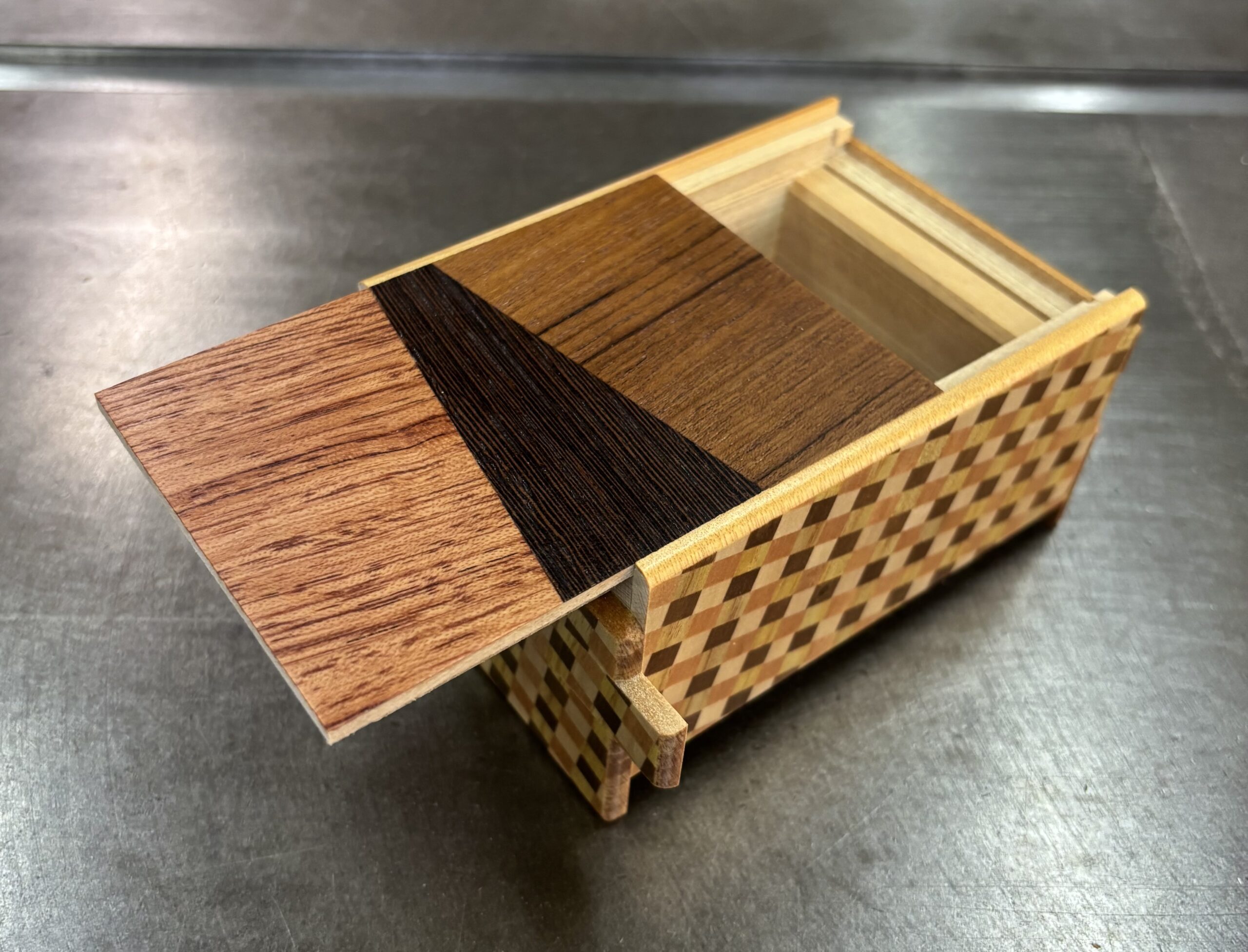
The 4-sun 14-steps puzzle boxes that I have been working on for the past few days are now finished. This time, in addition to the regular Yosegi type, I also made the random wood grain type again after a long time. The last time I made this 14-steps type with random wood grain, I used two kinds of wood, Teak and Bubinga. This time, I added another wood in the center and made the three-color type that I have made before. The three woods used this time are Teak, Bubinga, and Wenge. The slightly darker wood in the center is Wenge. It has a very dark color and an interesting grain, but it can be difficult to use together with more common woods. Wenge belongs to the legume family, which includes many hard and heavy woods, and Wenge also has these characteristics. There is a number called specific gravity that shows how dense a wood is. Wenge has a specific gravity of around 0.8–1.0. A specific gravity of 1.0 is the same as water, and if it is a little higher than that, the wood will not float in water. It is almost like a weight!…haha. One reason I can use such a hard wood for this design is that it is made into thin sheets. Many other kinds of wood sheets are also available, but a lot of them have similar colors. Dark woods like Wenge are more unusual, so they are useful for adding an accent to a design.
There are no drawings or fixed measurements for this three-color random wood grain design. I always make it by feel. The sizes are usually similar within the same batch, but the width and length of each section can be quite different from one batch to another. The only rule is that I use three different colors. This time, after finishing them, I compared them with the ones I made before. I think the narrow section in the center, which is Wenge this time, is a little wider than before. I decide these sizes depending on how much wood I have left and how I can best use each piece. For now, I join the different woods with straight lines, but I think it would be interesting to try curved lines someday. However, joining them with curves is much more difficult, especially when cutting the sheets. With curved lines, each piece would probably look even more different. For this kind of curved woodwork, I would look at wood inlay techniques used outside Japan, especially in Europe. The basic idea is to cut thin sheets of wood and fit them together. Very thin wood sheets are needed, and good cutting skills are also important. Wood has grain, so the cutting tool can sometimes follow the grain and get pulled away from the line I want to cut. This makes it quite difficult, and it also takes some strength to cut accurately. Traditional Japanese wood inlay uses a different method. Pieces of wood about 2–3 cm thick are cut with a fret saw and fitted together, and then the finished block is sliced into thin sheets. This method makes it possible to produce many sheets at once, although the joints may be a little less precise. For this random wood grain design, the joints also need to fit perfectly. If there is even a very small gap or uneven area between the woods, it creates a slight groove. Even after finishing, it can remain visible as a line. So the different pieces need to fit together perfectly, almost like a single piece of wood. For now, using straight lines is the safest way for me to get a good result. But I would like to keep experimenting with different ideas in the future.