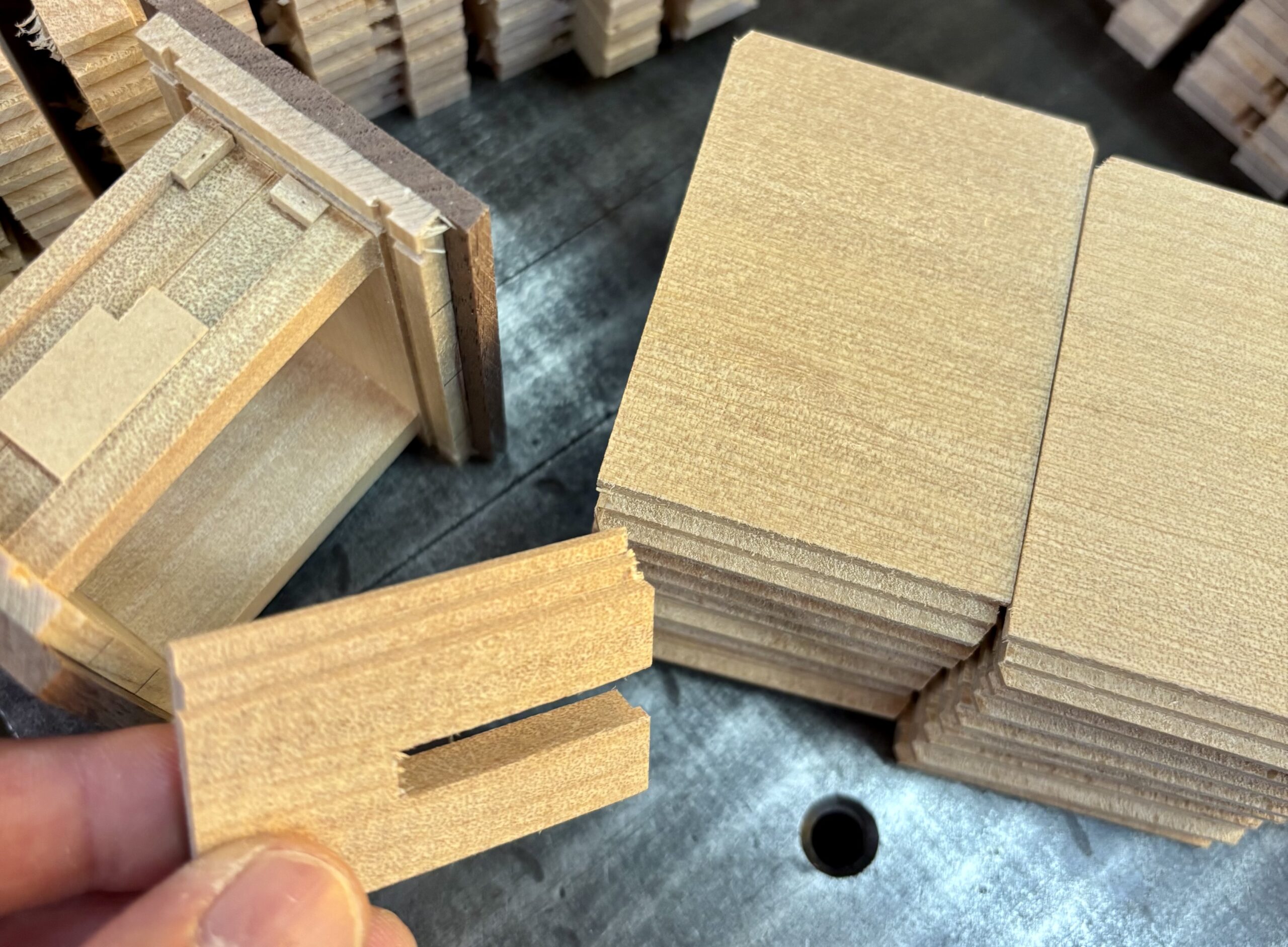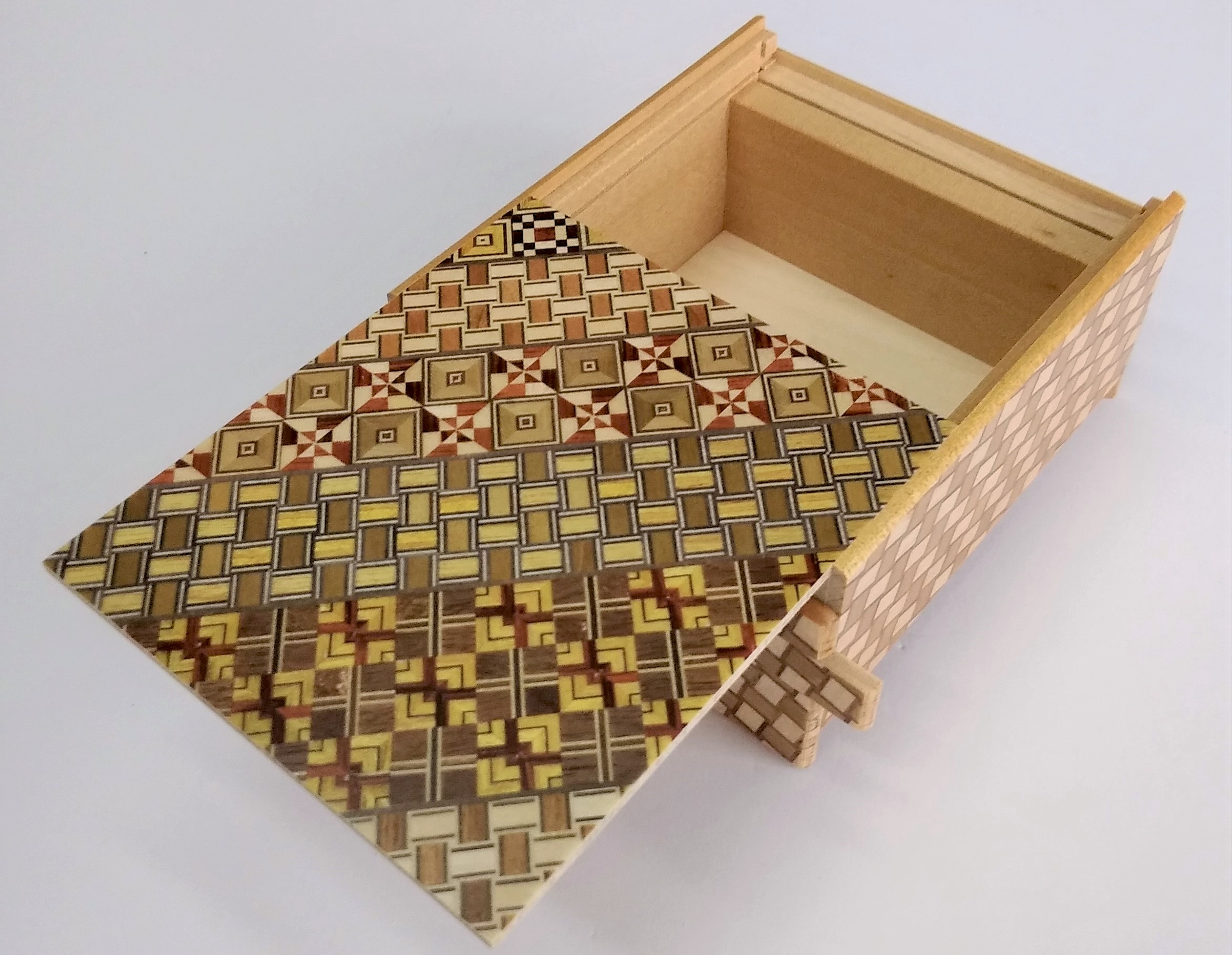
The weather was beautiful again today. It wasn’t too warm, so it felt like a fresh, clear autumn day. I had something to take care of in the morning, and afterward, I spent the afternoon working in the workshop. Today, I mainly worked on applying the final coats of finish to the 5-sun puzzle boxes. I also attached the Aruki sliding panels to the 3-sun 18-steps puzzle boxes. I’ll share some photos on social media too, but the 5-sun boxes are now “almost” complete. The boxes themselves are finished, but this model has a drawer, so I still need to finish those as well. Even the drawers are nearly done, though, so everything should be ready very soon.
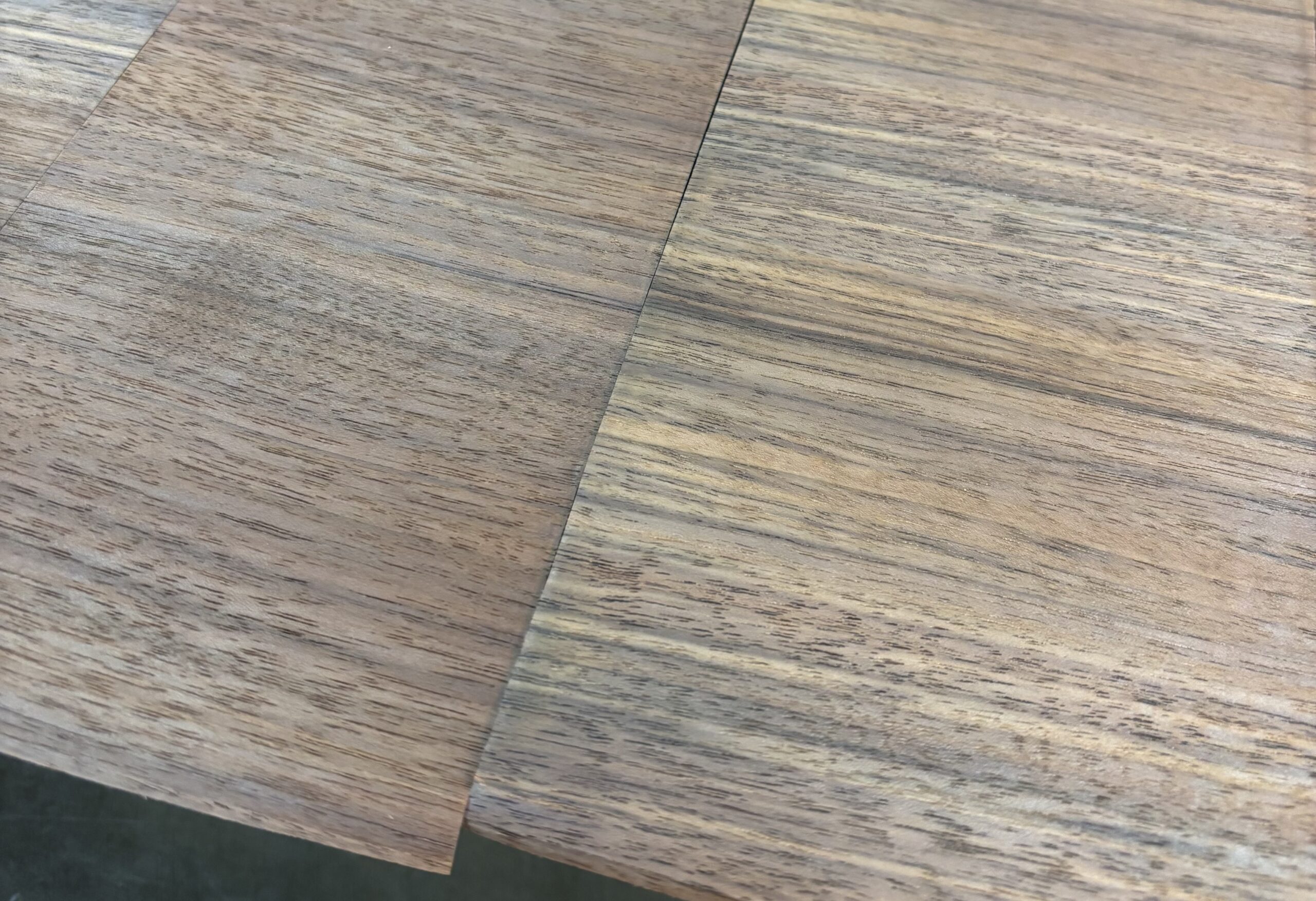
As I mentioned the other day, I coated the drawer lid panels today while applying the final finish to the boxes. The photo shows these panels (walnut). They are still plain boards and have not yet been shaped into lids. I will do that after the finish has dried. Unlike the boxes, these lid panels have not received an undercoat. I only applied the topcoat today. The topcoat works best over an undercoat, which fills the tiny pores in the wood and creates a smooth surface. The topcoat then forms a film over that surface. When only a topcoat is applied, as I did here, it soaks into the wood and does not form a full film on the surface.
So why do I finish them this way? Although it does not create a solid, plastic-like film, a thin layer of finish still remains along the wood grain. It does not all soak into the wood. This light coating does not provide the same protection against humidity and dryness as a full film of finish. However, it does help keep the wood from getting dirty when handled, compared with bare wood. The effect is small, but it is still useful. For this reason, I have sometimes used this method over the years simply to help keep the wood clean.
You may be familiar with oil finishing, a method often used on furniture. It keeps the natural grain and warmth of the wood while helping protect the surface and keep it clean. It also brings out the wood’s color, giving it a richer look. Many people love this finish and prefer it to a clear, plastic-like coating over the wood. The light topcoat I applied this time gives a similar result to an oil finish. You can still feel the warmth of the wood. There are many kinds of wood-finishing oils around the world, but some have a strong smell that people may not like. Some can also leave the surface quite sticky. With the method I used this time, the surface feels smooth and dry rather than sticky. There is a slight smell for the first few days, but it gradually fades. Sometimes I wonder if I could use this light coating somewhere else to help keep the wood clean. I had that thought again today because it gives the wood such a soft, pleasing feel. However, it offers only limited surface protection, so it probably would not protect a puzzle box well enough against humidity and dryness. Even so, I feel there may be some possibilities, and I have a few ideas.
However, applying the finish alone leaves the wood surface feeling rough. After the finish has dried, I need to sand it lightly to remove the raised wood fibers. This reverses the order of my usual finishing process.