As forecast, it became much cooler today, with the high temperature around 26°C (79°F). It rained and the humidity was a little high, but it was still a comfortable day. This is the last weekend of August, so it already feels like summer is coming to an end. However, the heat is expected to return a little next week, so it seems we still need to be patient for a while.
A live 24-hour charity TV program that has been broadcast every year since I was a child is on today and tomorrow. It is always held on the last weekend of August, and when this program starts, I always feel that summer vacation is almost over. Maybe it also feels this way because the weather usually starts to cool down around this time, and we can finally feel a little relief from the summer heat.
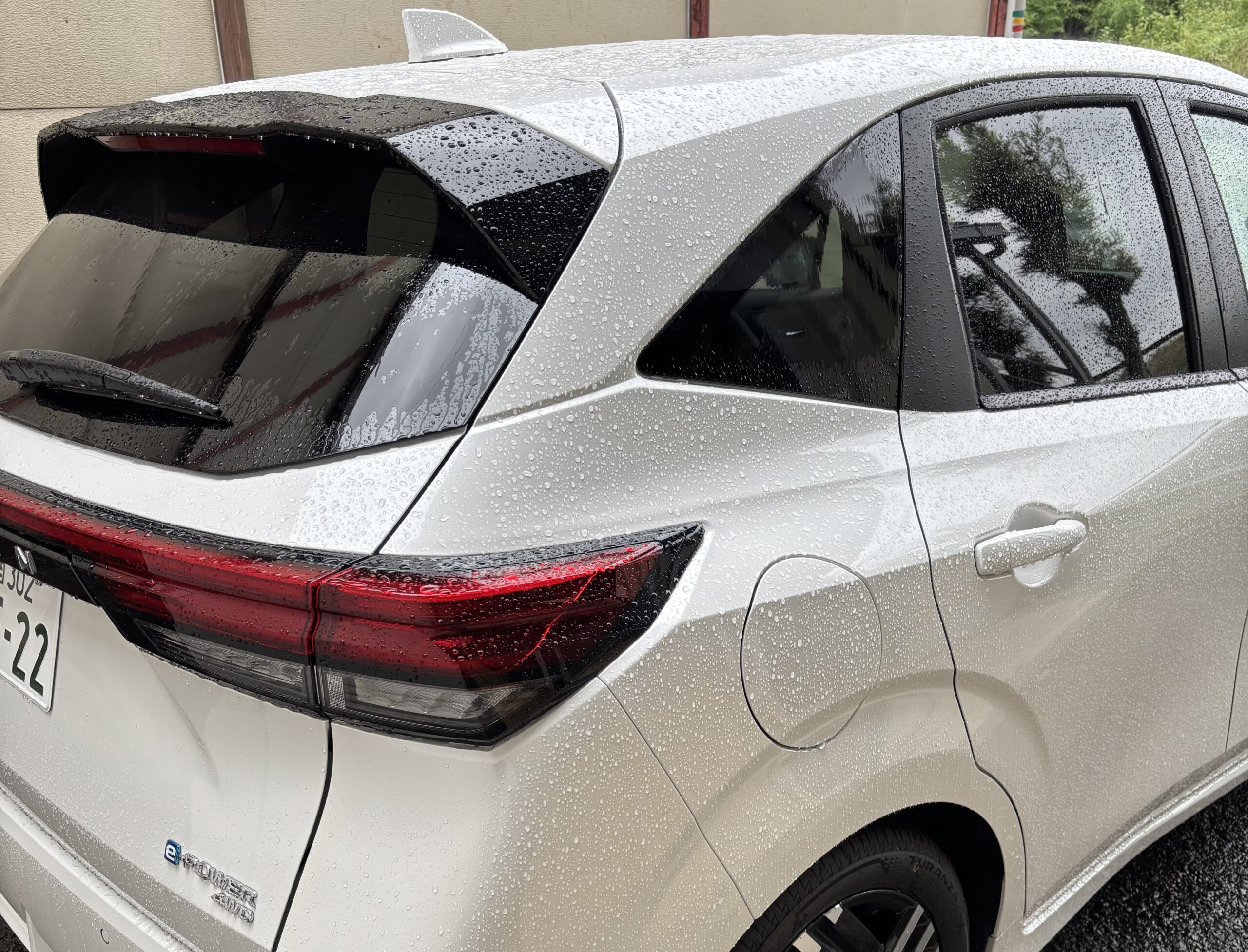
I had a chance to go to the car dealer yesterday and today. This Thursday, my family and I went to visit and clean our family grave, but our car suddenly stopped on the way. We still don’t know the reason, but it seems there is some kind of problem with the car. So I left it at the dealer for repairs. The car is not very old. It was made only about three years ago, so this was also an unexpected problem for the manufacturer. Of course, the repair will be free of charge. The car in the photo is a loaner car that the dealer gave us while our car is being repaired. In Japan, many car dealers lend you a car for free when they need to keep your car for a few days. We don’t even need to fill up the gas tank before returning it.
The car that stopped this time is a kei car, a type of small car that is unique to Japan. Kei cars have very small engines. The engine size is limited to 660cc or less, which is smaller than some larger motorcycles. However, they can carry up to four people. Kei cars are very popular in Japan and make up about 40% of all cars in the country. The price of the car itself is not especially cheap and is often not very different from cars with larger engines. However, kei cars have lower taxes and some other benefits, so they can save money in the long run. They also fit very well with life in Japan, where houses and parking spaces are often small. Most of all, they are easy to drive and very convenient for short trips. Towns and cities in Japan are quite compact, so we usually don’t need to drive many kilometers just to go shopping. In many cases, we can get where we want to go in about ten minutes.
However, when three or four adults are in a kei car for a long drive, or when driving on mountain roads or highways, it does not feel as stable, and a 660cc engine can feel a little underpowered. This time, there were three adults in the car, and our family grave is in the mountains. The car started having problems while we were driving uphill. It was also a very hot day, so that may have had some effect. The loaner car we are using now has an engine about three times larger than our kei car, and driving it made me realize again that a larger car feels more comfortable and safer in situations like this. I often drive on highways, and although kei cars have the advantage of lower highway tolls, I sometimes feel that they are a little small for highway driving. Recently, car prices in Japan have gone up even more because of the rising cost of parts and other things, so buying another car is not an easy decision. Still, I think this experience gave me something useful to think about when choosing a car in the future. For reference, a new kei car usually costs around 1 to 2.5 million yen. A small regular car with an engine of around 1,000cc to 2,000cc usually costs around 1.5 to 3 million yen.