As forecast, heavy rain began last night, and the typhoon passed through our area around midday today. The rain was intense, and the winds were also quite strong. Some roads even looked like rivers in places, but fortunately there was no major damage. Last year, we experienced extremely heavy rainfall in this area, and some cars were actually flooded. Because of that, I was worried that the same thing might happen again this time, and I was unsure whether I should come to the workshop or stay at home. However, when I checked in the morning, the roads had not been closed, so I managed to make it to the workshop despite the heavy rain. Even if I had stayed at home, I would have been worried about the workshop, so I am glad that I came. However, some other prefectures suffered more serious damage, including flooding caused by overflowing rivers, so I am concerned about those areas.
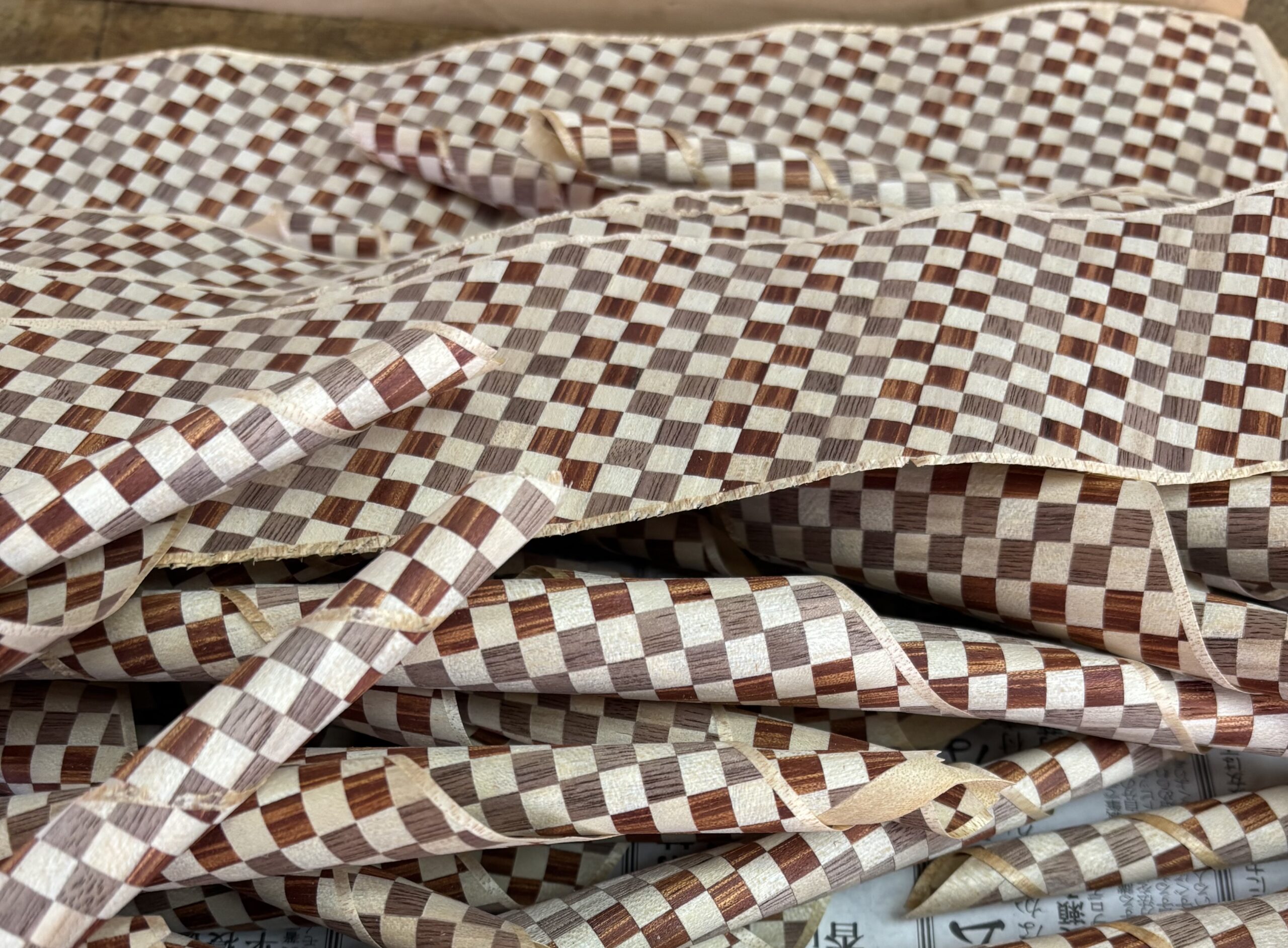
Of course, the humidity was very high today, so the type of work I could do was limited. However, I was able to finish an Ichimatsu Yosegi sheet that I had made earlier but had not yet sliced. This sheet is intended for use on 2-sun puzzle boxes (which I do not make very often 😅), as well as 3-sun puzzle boxes. Perhaps it is not something I need to worry about too much, but there is definitely a difference in how yosegi sheets behave on a very dry day compared to a day like today. After a sheet is sliced, it begins to lose moisture quite quickly, and on dry days the pattern is more likely to separate or come apart. Because of that, I can work a little more comfortably on a humid day like today. As I have mentioned before, yosegi tends to benefit from humidity, while puzzle boxes tend to dislike it. Since they have opposite requirements, it can sometimes be difficult to plan the work…🤣
Yosegi is very fond of humidity, and even after it has been sliced into sheets, humidity remains important during storage. The sheets need to be kept in protective cases or plastic bags to prevent them from drying out, and from time to time a little moisture needs to be added. They gradually dry out over time. Ideally, the sheets would be applied to panels as soon as they are made. However, a single batch usually produces around 200 sheets, so it would take a great deal of time to use them all immediately. Even after they are attached to panels, they still need to be stored carefully to prevent discoloration from sunlight and ultraviolet exposure. Panels with yosegi attached also require much more storage space. For that reason, it is often more practical to keep the sheets as they are and store them in a dark place. Today as well, I divided them into smaller bundles of about fifty sheets each and placed them in storage cases.
Later in the afternoon, the rain stopped and the sun began to come out, so I worked on making the axis panels for the custom-order box that is currently in production. With that completed, all of the materials for this custom box are now prepared, except for the internal parts.