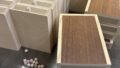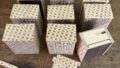
Today is Sunday, and I was doing cleaning activities near my home, so I came to the workshop in the afternoon. I was still able to make progress on several tasks today. I mainly worked on the 4-sun 21-steps Japanese puzzle boxes, including attaching the Aruki sliding panels and also attaching the top and bottom panels. This time, I am making them in three different designs, and I expect them to be completed within this month.
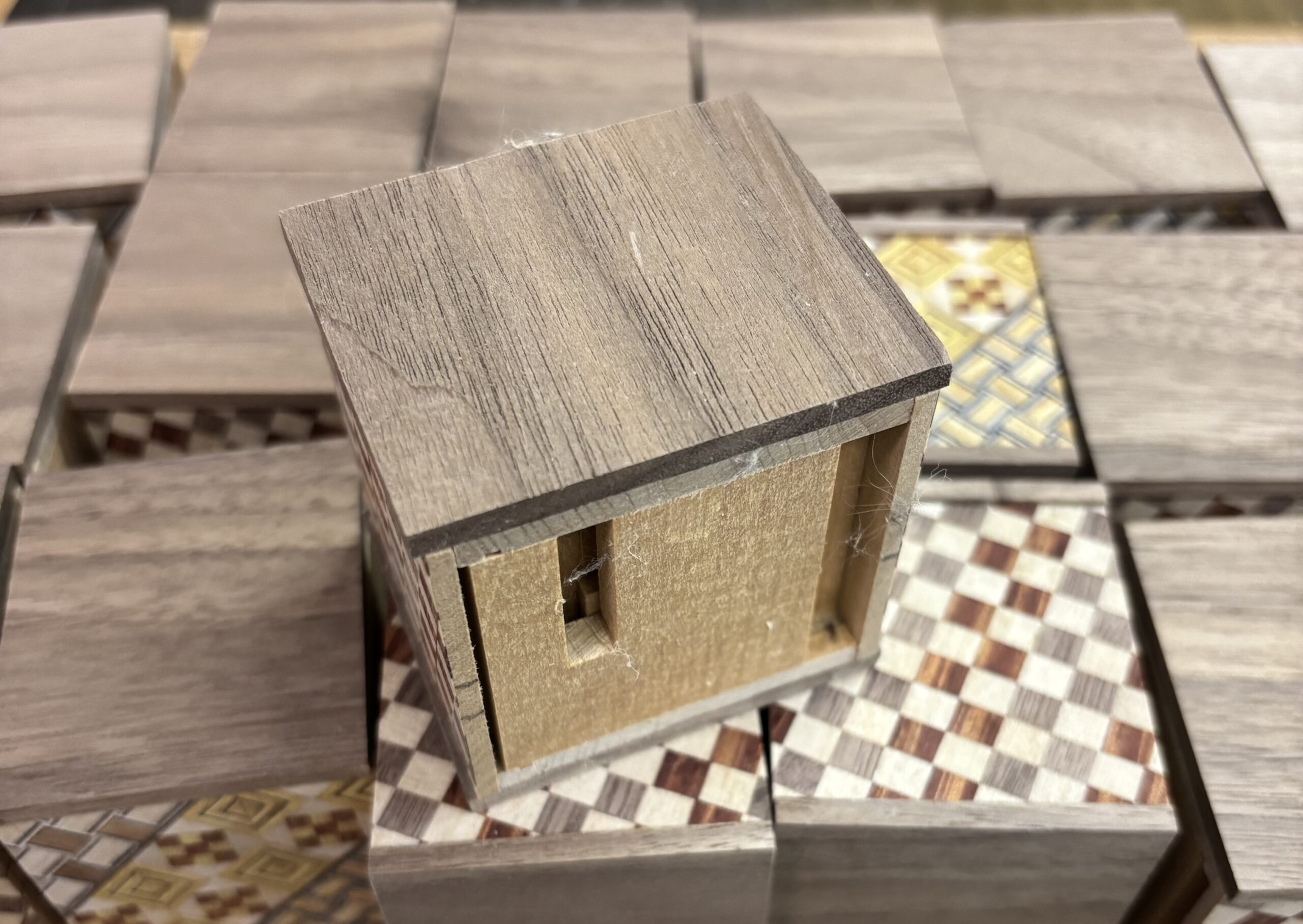
After that, I also worked a little on the 2-sun cube puzzle boxes. These boxes are also planned for production this month, so I hope to complete them together with the 4-sun puzzle boxes. At the moment, I have already finished attaching the Aruki panels and the top and bottom panels for these boxes as well. This time, I am making models that use walnut wood for the side panels, with two different lid designs: Ichimatsu yosegi and traditional yosegi. When making side panels with walnut wood, there is more difficulty compared to the usual panels covered with yosegi. Boxes with more height, like this 2-sun cube, have a larger surface area for attaching the panels, so problems are less likely to happen. However, especially when making 4-sun models with walnut side panels, there are some challenges.
Because of this, I used to often make 4-sun puzzle boxes with traditional yosegi on the top and bottom panels and walnut wood on the side panels, but recently I have almost stopped making them. The biggest problem is that the panels tend to warp easily. This is a common issue with models that use solid wood for the side panels, but walnut wood especially has this tendency. As you know, the yosegi sheets applied to the surface of the boxes also help prevent the panels from warping, so not having those sheets is one reason for the problem. When I use walnut wood, I try to use boards with less straight grain for the fixed long side panels, and quarter-sawn wood for the pieces attached over the horizontal Aruki panels. Even so, it does not always go as planned. Walnut is more sensitive to changes in temperature and humidity, which is another reason for these difficulties. Compared to woods with stronger grain patterns, such as zelkova or ash, walnut is actually a calmer wood, but compared to magnolia wood, it is still more active and likely to move.
To explain the structure of Japanese puzzle boxes once again, the walnut side panels that are more likely to warp (the sliding key panels) are not completely glued to the inside of the box. About the lower one-third of these panels is not attached. Because of this, that section can more easily warp outward. Wood tends to bend toward the side exposed to the air, because moisture escapes from the outer surface. Among these designs, the 4-sun puzzle boxes have an especially large proportion of panel area that is not glued, which makes this problem more noticeable.
At present, I only accept orders for the natural wood series that use the same walnut, rosewood, or zebrawood on the top and bottom panels. These puzzle boxes are popular because other makers do not produce them. To help prevent warping, I take special care when working, such as carefully selecting the wood and choosing days with good weather and lower humidity for the production process.