This morning it was sunny, and it became a very hot day. Even though it is spring, it was very warm, and I heard that it reached 28°C at our area. I wonder if this summer will be hot again. It was the kind of day that made me feel that way.
Today, I came to the workshop in the morning and did several kinds of work. Yesterday, it rained a lot, so the humidity was still high in the morning. I thought it might be difficult to do other work, so I decided to continue slicing the Ichimatsu yosegi that I had started yesterday. As I wrote in yesterday’s blog, humidity is very important for making this kind of yosegi work, especially for making yosegi sheets. In fact, workshops that specialize in yosegi have a storage space under the floor called a “Muro.” In that space, they keep the base blocks of yosegi patterns (these are single patterns that have not yet been sliced and are still solid blocks) as well as finished yosegi sheets. The space is so humid that water can collect there, and it has a slightly moldy smell. This shows how important moisture is for yosegi. If it dries out, it will fall apart. I was able to finish the slicing safely in the morning, and I gave the yosegi enough moisture before storing it in a case. Since my workshop does not have a muro, I put the moistened yosegi sheets into plastic bags and keep them in a case. It is the same when storing puzzle boxes. To keep the moisture from escaping, putting them in plastic bags is the best way.
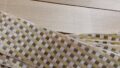
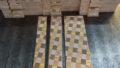
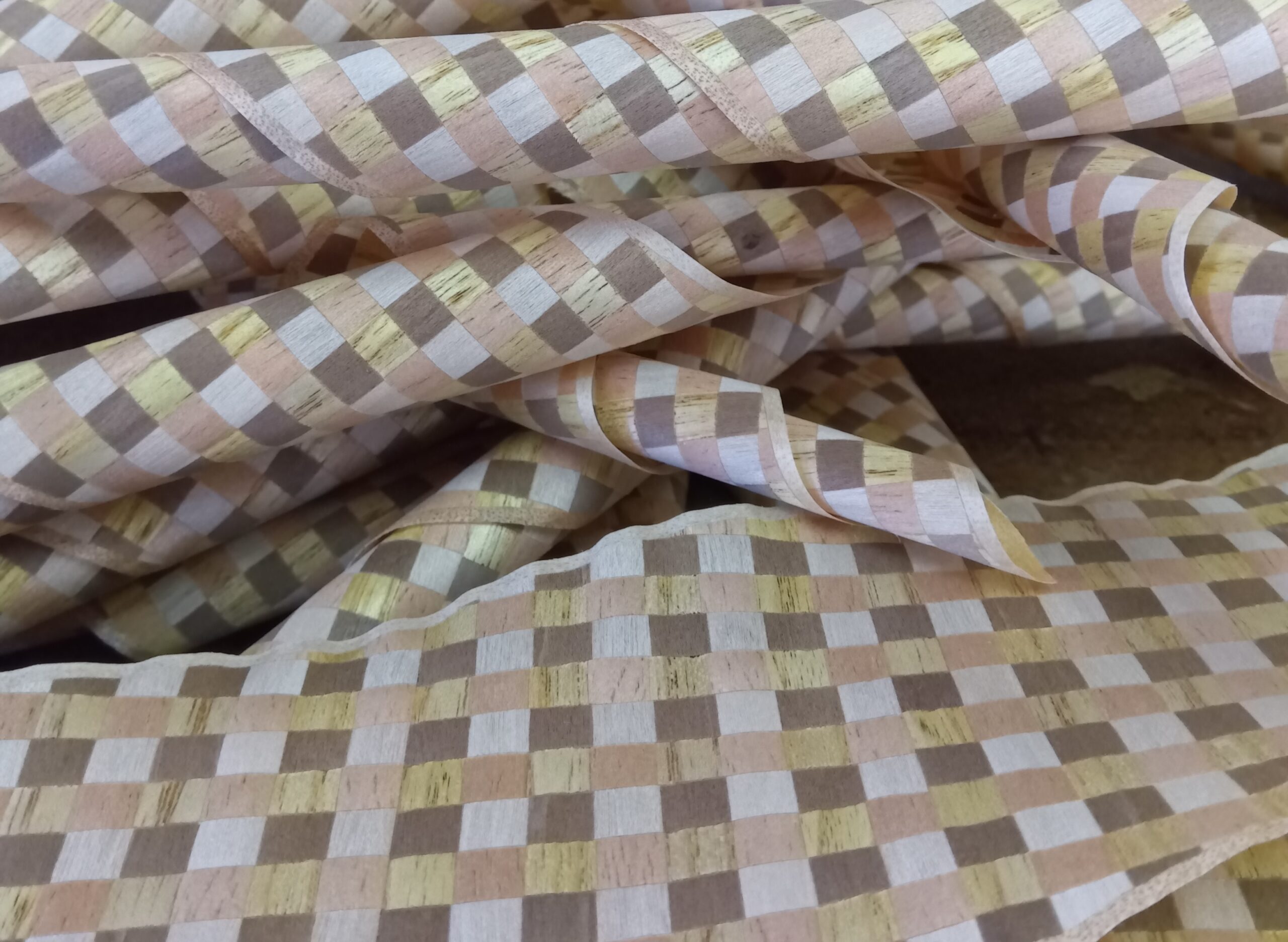
Here is the scene at that time. The freshly sliced yosegi sheets are curled like this. Then, we apply heat and pressure to flatten them. Nowadays, an electric iron is often used for this process. However, you need to be careful because it can get too hot. If it is too hot, the heat will dry the sheet and cause the pattern to fall apart. Also, the glue that holds the pieces of wood together can melt from the heat, which can also make the sheet come apart. This method of applying heat and pressure to flatten the sheet was also used in the past when attaching yosegi to boxes. Instead of assembling boxes using pre-made yosegi panels like today, craftsmen would first make the box, and then apply the freshly sliced yosegi sheet at the end. This way, a single sheet could wrap around the box without breaking the pattern. However, this method cannot be used for puzzle boxes because the panels need to move. But for regular boxes, like document boxes or small storage boxes, this method works well. In the past, there were no electric irons, so craftsmen used heated metal tools warmed over a charcoal brazier or an irori fireplace. It must have been difficult to control the temperature of those tools. Since things were not as convenient as today, many craftsmen must have relied more on their skill and intuition.
In the afternoon, it became quite dry, so I felt I could work on other tasks. I made and attached the top and bottom panels for the 4-sun boxes that I had stopped working on for a while. Because of the big change in humidity and today’s dryness, a few Aruki panels changed their movement slightly. But I was able to adjust them and attach everything safely.