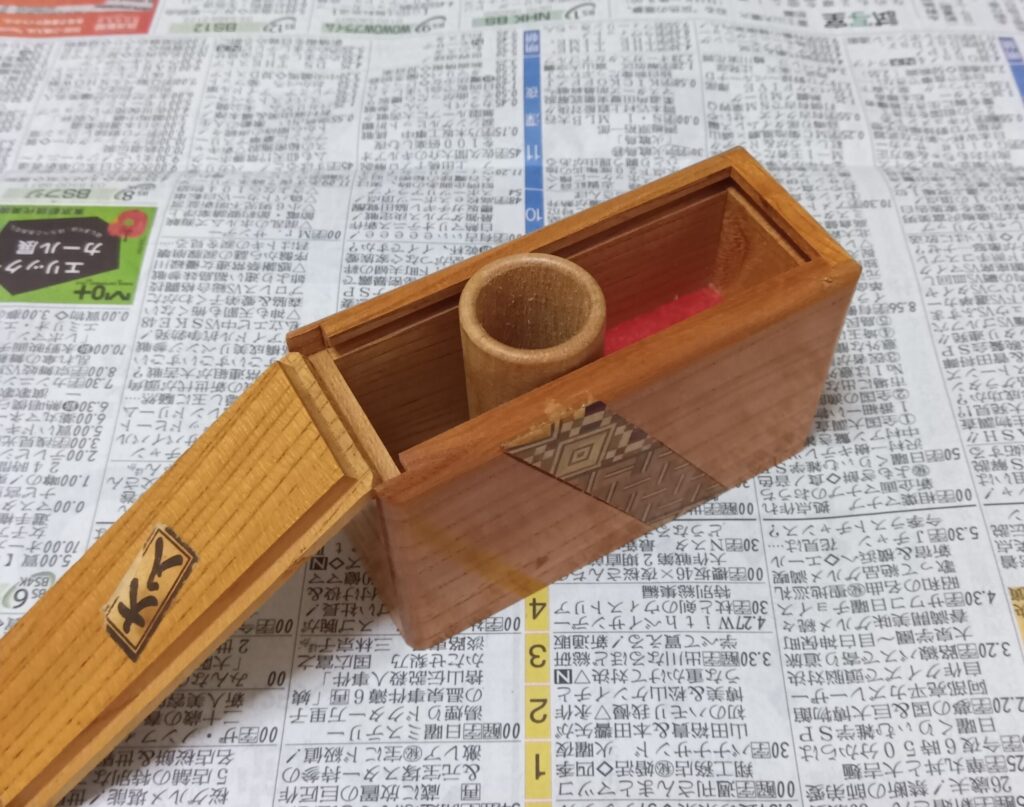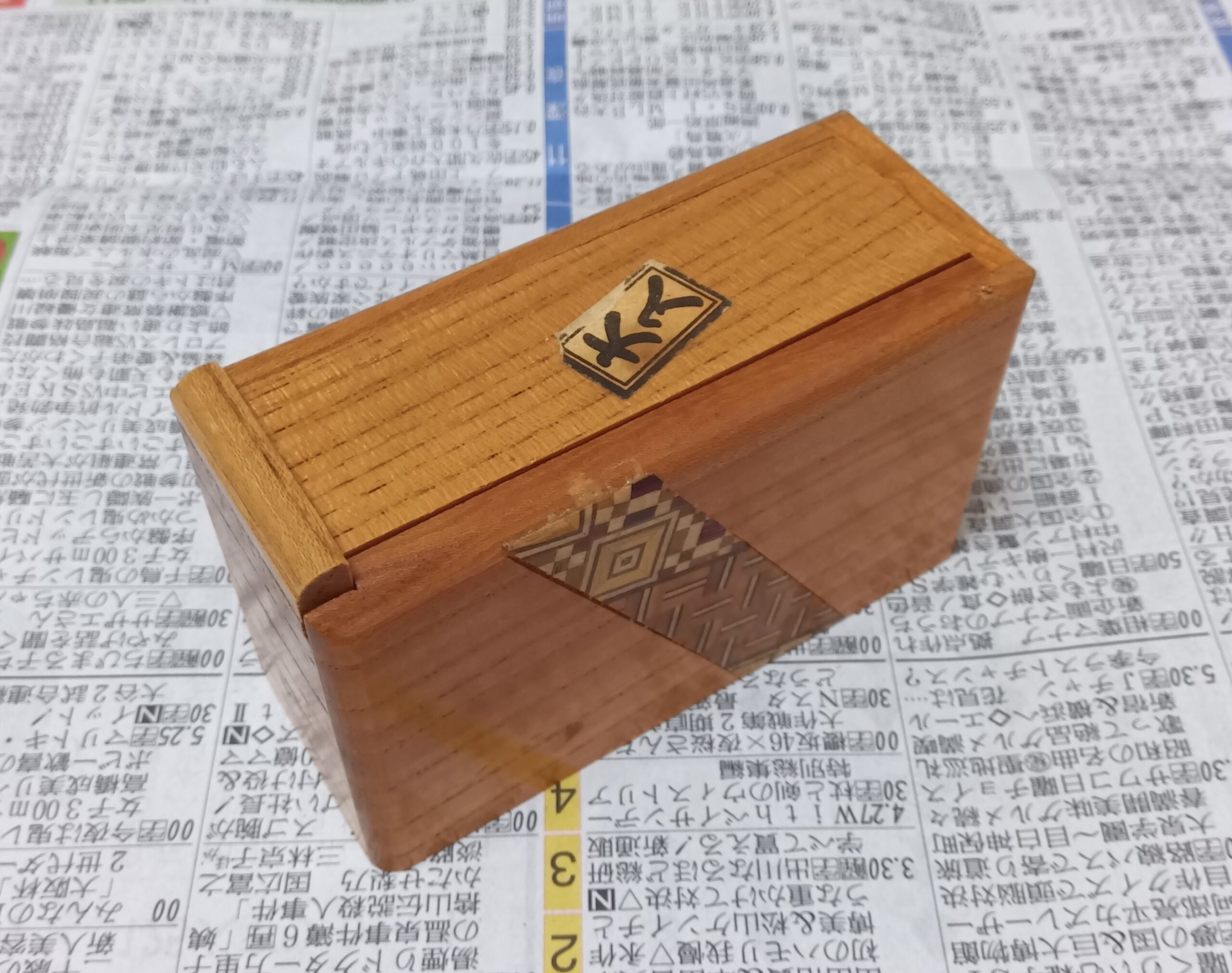
The rain from yesterday has stopped, and today we have cloudy skies with some sunshine breaking through. Since it is Sunday, I plan to take care of some things at home and then stop by my workshop for a while in the afternoon. The other day, when I shared a vintage puzzle box with a drawer, I mentioned that I have had more chances to see older pieces recently. Today, I would like to introduce another one.
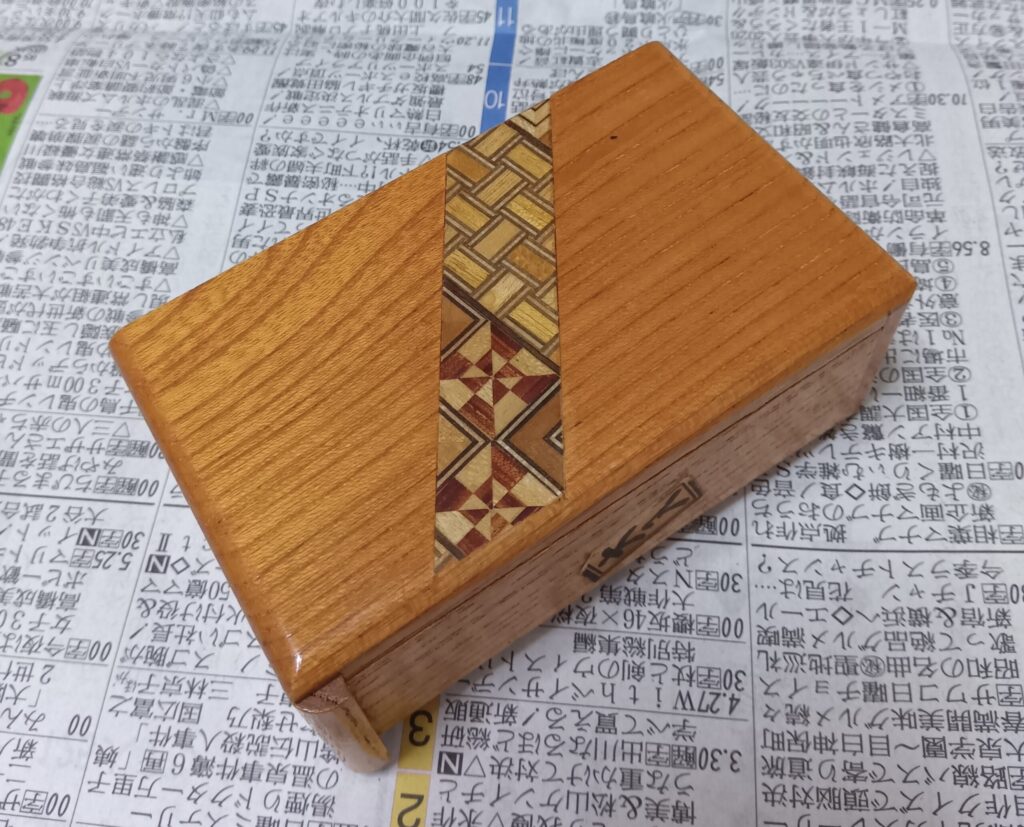
Although I say it is an older item, this is probably still being made today. It is also not what you would usually call a traditional Japanese puzzle box. However, it has an interesting structure that is unique to this region, so I would like to introduce it. This is a toothpick container, or you could call it a toothpick holder. I am not very familiar with how this is handled in other countries, but in Japan, many restaurants place toothpicks at each table for customers. It may not be considered very good manners, but in the past, it was common to see customers (especially men) leaving restaurants with a toothpick in their mouth. Nowadays, it seems that men do not do this as much. Maybe it is a matter of manners 😅.
This is not just a simple toothpick holder. When you slide the lid, the toothpicks pop up. It has a bit of humor in its design. Of course, you could simply place the toothpicks inside (standing or lying down) and cover them to keep out dust, but this design makes it a little more fun. The way this kind of moving item is made feels connected to the tradition of trick boxes from this region. In the Hakone and Odawara area, besides Japanese puzzle boxes (himitsubako), there has been a category called “trick boxes,” which include various clever mechanisms. Nowadays, there are almost no craftsmen who specialize in them, but items like coin magic boxes, where coins disappear, or card magic boxes, where thin paper like business cards can vanish, are still being made.
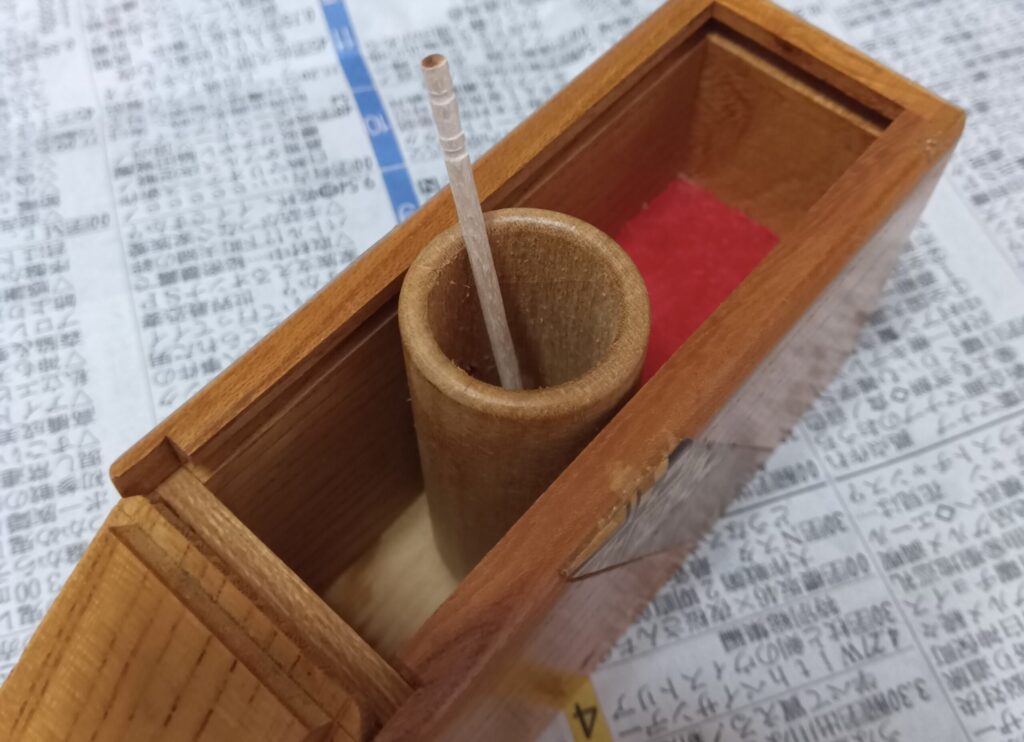
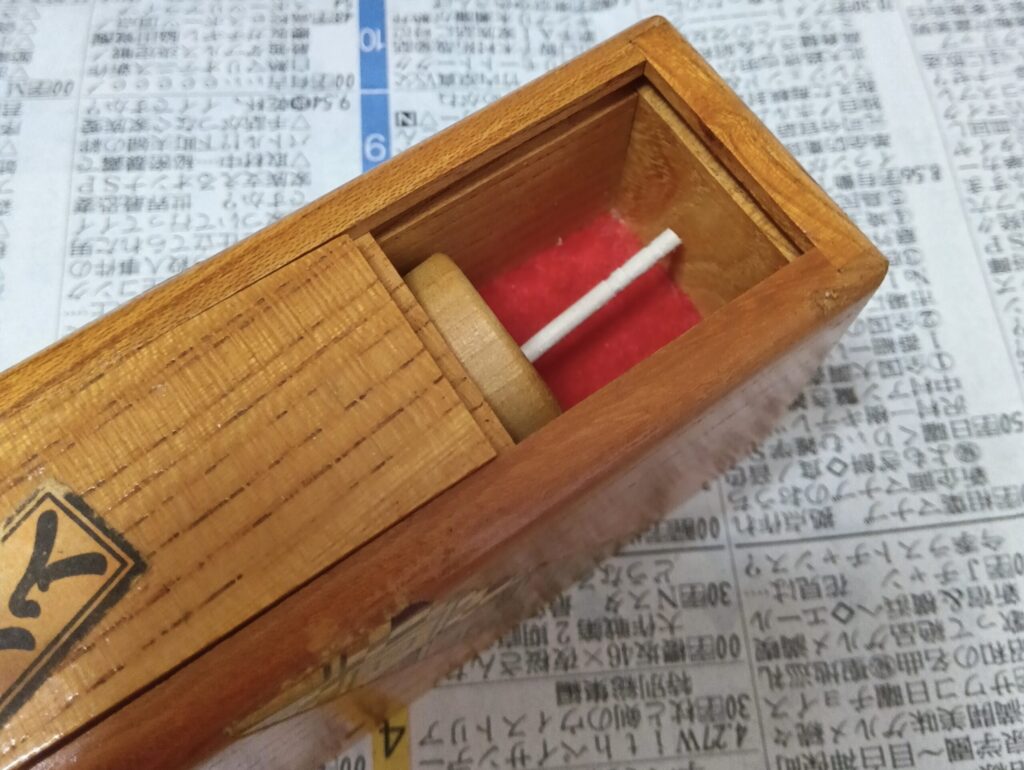
The reason why the toothpicks pop up is that it uses the weight of the inner container that holds them. There is a small pin inserted partway along the container, which acts as a pivot, allowing it to rotate. This pivot is placed slightly above the center of the container. So when the sliding lid that holds it down is removed, the lower part becomes heavier, and the container tilts downward around the pivot. As a result, the upper part with the toothpicks rises and comes out. The position of this pivot is very carefully balanced. Even when the container holds around 20 to 30 toothpicks, it still moves smoothly. The surface is finished with a glossy coating. In the past, matte finishes like those used today were not very common, so many items were finished with this kind of gloss. It is also true that a glossy finish tends to be more durable.
In the past, you could often see yosegi products like this in restaurants in this area, especially in small, family-run places. Today, those kinds of restaurants have become much fewer. Many restaurants are now part of large national chains, and their table items are mostly made of plastic. The sticker on the lid that says “O-iri” (meaning “many customers” or “good business”) was probably not part of the original product, but added by the shop owner. In traditional family-run shops, it was common to display such stickers as a wish for prosperity. Seeing this brings back a nostalgic image of Japan from the past.