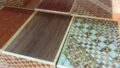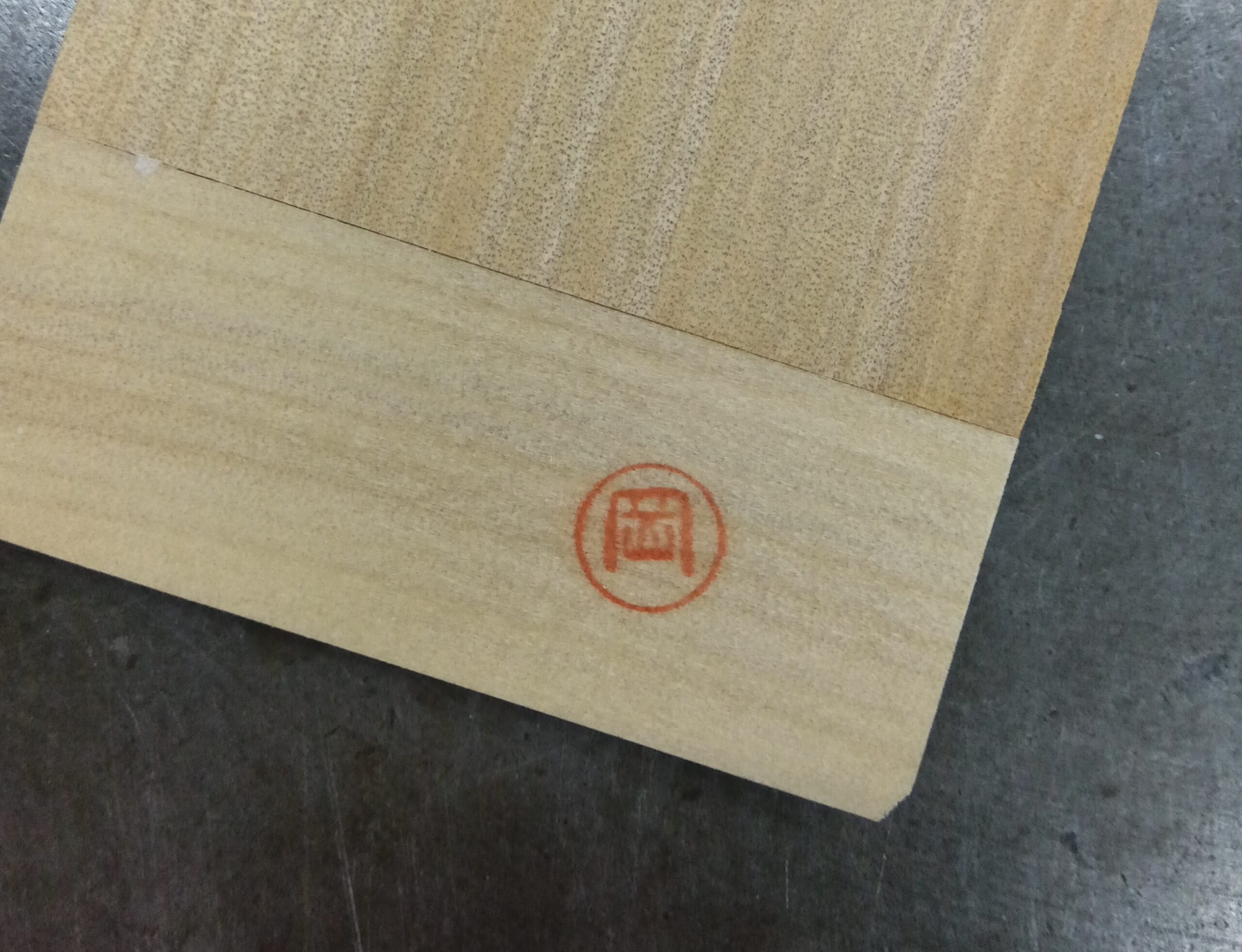
Last night was very cold. The house must have been very cold, because the heater took a long time to work properly. It really feels like full winter now, with a clear year-end atmosphere. I did a little work at the workshop again today. Tomorrow, I will deliver the 6-sun wood-inlay puzzle boxes that I have been making. A dealer from Hakone will come to pick them up, so I also prepared for that today. I did a final check and then packed the boxes. When I say “packed,” I simply put all the puzzle boxes together into a cardboard box. They are not individually wrapped. For items made for the Hakone market like this, my role is only to make the Japanese puzzle boxes (himitsu-bako) themselves. I do not put them in decorative boxes, and I do not include instruction sheets. Another big difference is that these puzzle boxes do not have my personal stamp on them.
Of course, these puzzle boxes are made by me, but I do not stamp them with my seal. It feels like I am making puzzle boxes simply as products. Because of that, they do not have my stamp, but many puzzle boxes that I made are sold through shops in Hakone. For example, Mame puzzle boxes, 4-sun 27-steps puzzle boxes, hexagonal puzzle boxes, triangular puzzle boxes, and wood-inlay puzzle boxes like this time. I tend to make puzzle boxes that are not standard designs. I often make boxes that other craftsmen are not making and deliver those to Hakone. I could stamp them if I wanted to, but I have worked this way for a long time, so I continue to do so now. This is not something I do, but with some other craftsmen, there are cases where shops stamp their own seal on puzzle boxes that do not have the maker’s stamp and sell them as if they made them. Please be aware of this. Even for those boxes, there is always a craftsman who actually made them. They are not made by shop staff, but in another workshop or company. I have also heard that in some cases, the original stamp is removed and replaced with a different one before the box is sold.
From a modern point of view, stories like this may feel unreasonable or hard to accept. However, I also understand the way of thinking that such practices were normal in this region and in the craft industry. In the past, this was very common. In times when puzzle boxes sold much more than they do today, it was far easier and more profitable for craftsmen to have specialists sell their work rather than selling it themselves. Because of this, a style that could be called “division of labor” was formed. Many craftsmen were shy 🤣 and they were not good at dealing directly with customers. When I first entered this industry, there were many quiet, reserved craftsmen like that, and even now, a few of them are still active. So they left everything to shops and wholesalers. That way, they could focus only on making things. Puzzle boxes take a lot of time and effort to make, and in those days, no matter how many were made, it was never enough. Times have changed now, and shops and workshops are run by the next generation. However, I think many of them still follow the same sales methods that were used by the previous generation. There are probably mixed opinions about this, but I believe that being a craftsman who supports things quietly behind the scenes is also one traditional style 😊