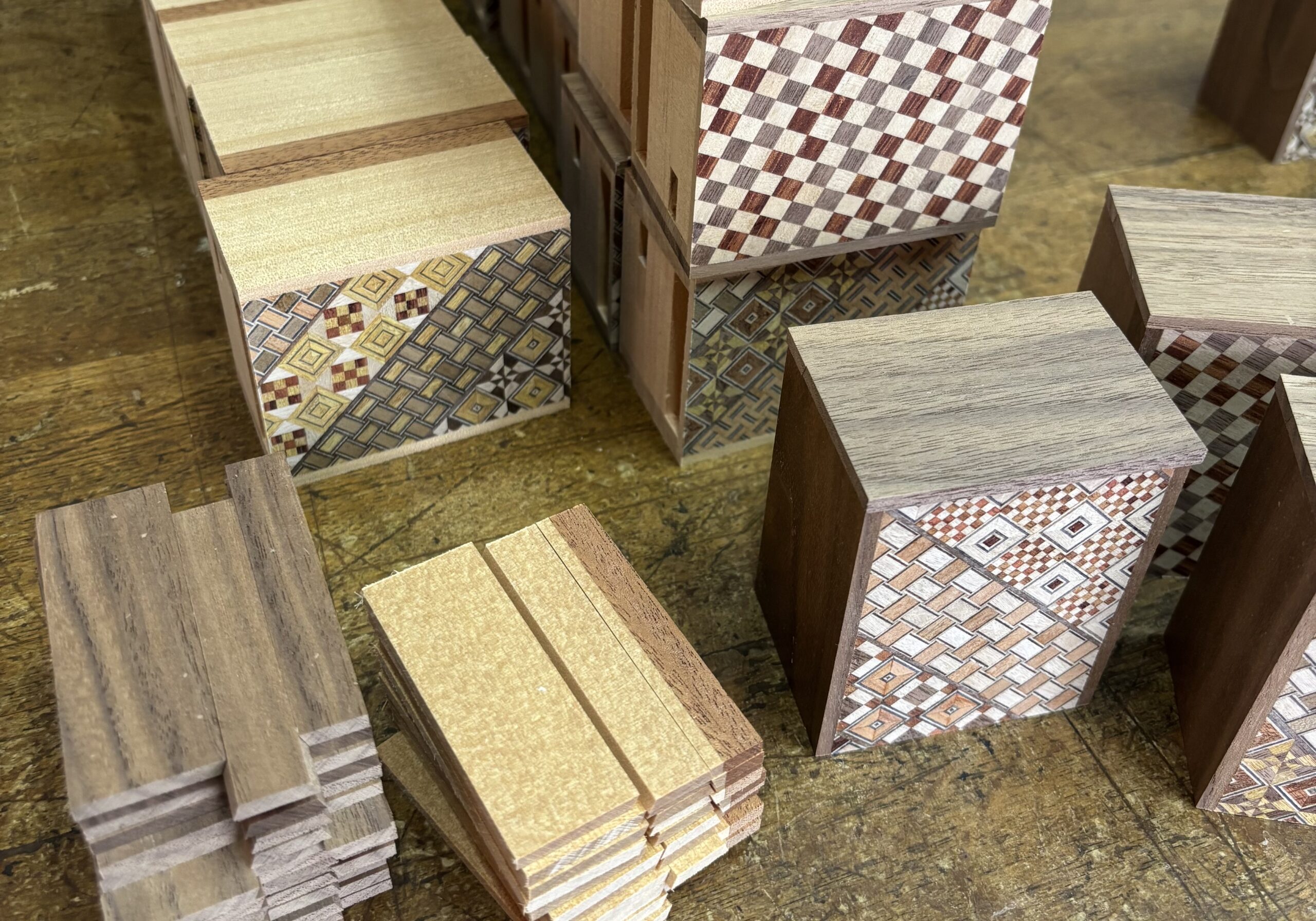
It has been very humid since this morning, with the humidity at around 90%. In these conditions, I couldn’t do any work that requires fine adjustments or attach any panels. So today, I decided to work on some other things instead and get ready for tomorrow. Because of the rain we’ve had lately, several different jobs are still only partly finished. But today, instead of continuing with any of them, I did some preparation for the work that comes after them. Square boxes are also on my production schedule for this month, so it’s fine to start getting things ready for them now.
However, I still hadn’t decided exactly what type of Square boxes to make this time, so I decided on the design today. Except for a few special-order boxes, I’m planning to make a different type of random grain design. I already have a basic idea for this new random grain pattern, so I’ll work from that. I’m planning to arrange the wood in a way that makes good use of the Square shape. For the side panels, I plan to use the same two-color checkered pattern that I used last month. I’ve been making Square boxes quite often recently. For now, I don’t have any plans to make the traditional Yosegi type, so I’d like to keep trying different designs as alternatives to it.
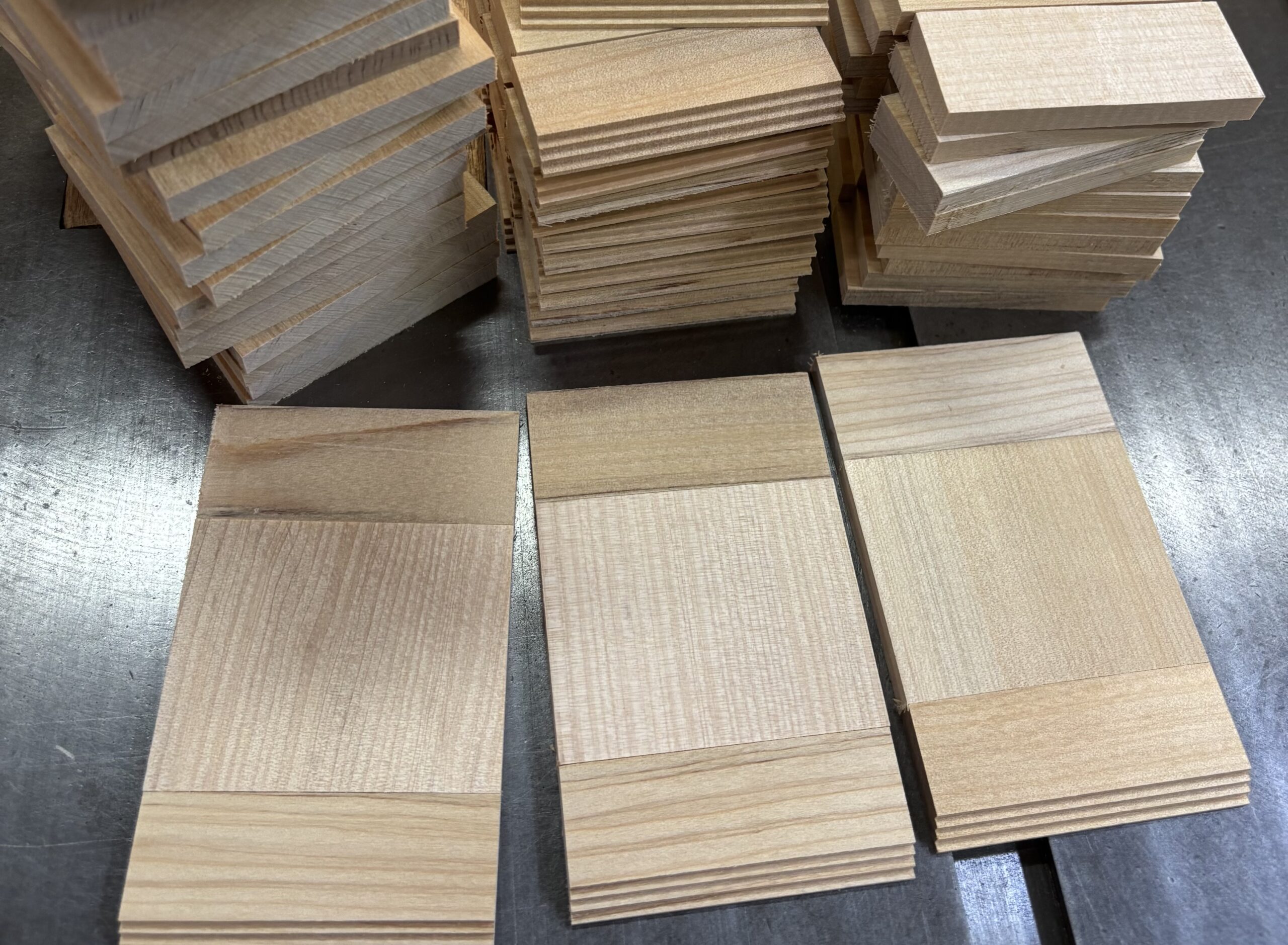
I also assembled the top and bottom Aruki sliding panels for the 5-sun 36-step boxes that I prepared yesterday. I’ve mentioned this several times before, but this is a method called “Hashibami.” Each piece of the Aruki panel has to be prepared separately, so it takes a little extra time. However, this method is often used for boxes of 5-sun or larger to help prevent the panels from warping. This is one of the more time-consuming steps in making Japanese puzzle boxes, which already involve many different processes. Sometimes I find myself wondering whether this warping-prevention method is really necessary. The answer is probably yes. A panel made from a single piece of wood can easily warp, but when it is made from three separate pieces joined together like this, warping is much less likely to occur. Even after machining, the panel can be left sitting for a while without developing noticeable warping. So the method does work. In fact, it would probably be beneficial for 4-sun boxes as well. However, because they are a little smaller, this method is usually not used. Instead, the decorative top panel, such as Yosegi, is attached to the surface and helps keep the panel flat. To avoid spending too much time on this process, I prepare the panel pieces with the stepped machining already cut into the front edge. By doing this, the stepped section is already completed when the panel is assembled. It also allows me to make the steps more accurately. If I try to cut the stepped pattern after the large panel has already been assembled, the panel is more difficult to handle, and it becomes much harder to machine the steps precisely. This stepped section is an important part of the mechanism and requires accuracy within about 0.1 mm, so precision is very important.