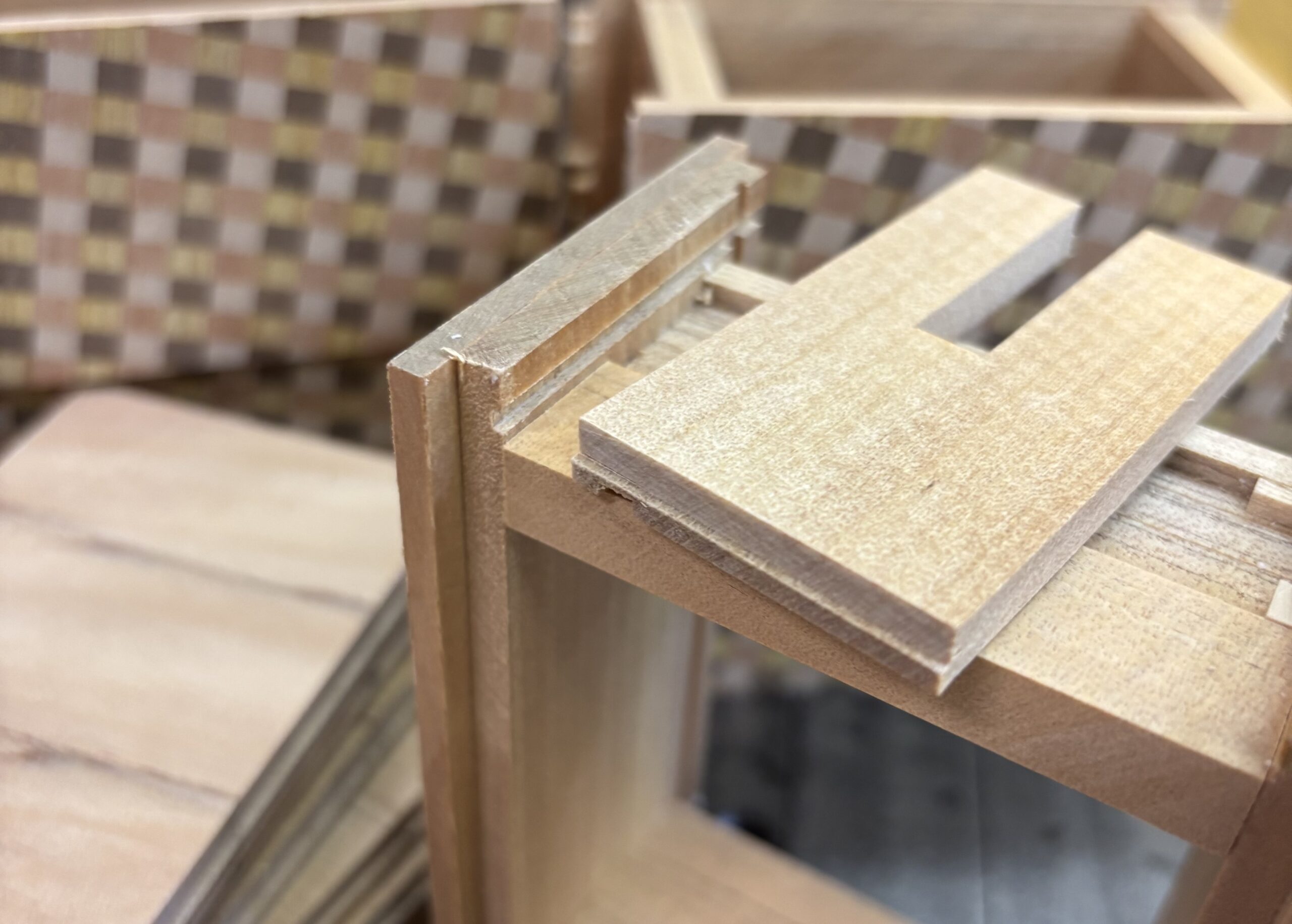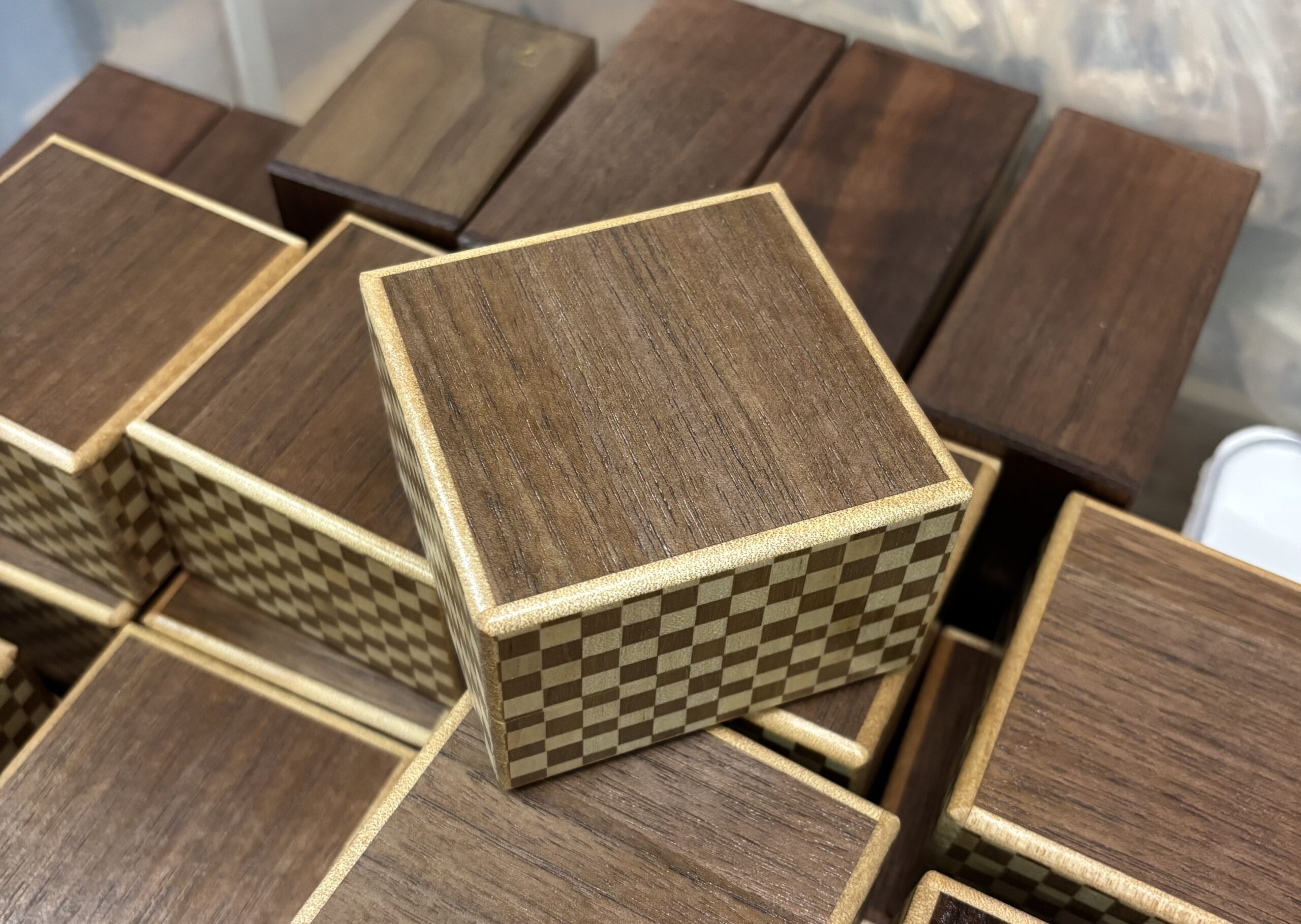
The weather was beautiful this morning, with clear skies and plenty of sunshine. Unlike yesterday, however, it did not feel especially hot, probably because the humidity was lower. By the afternoon, the weather began to change, and we had a few light showers from time to time. According to the news, the first signs of the autumn rainy season may arrive next week, so perhaps the seasons are slowly beginning to change. and The Square puzzle boxes are now finished. This batch features a simple combination of natural wood and checkered Yosegi. After a final inspection, I plan to list them on my website early next week.
A couple of months ago, I wrote about an elderly woman who lives alone in my neighborhood and how my wife and I had been helping her. About a week ago, she officially moved into a nursing care home because it had become too difficult for her to continue living on her own. Professional caregivers were visiting her two or three times a day, and my wife also stopped by every day. However, walking became increasingly difficult for her, and she also began to show signs of dementia. After discussing the situation, and with her own agreement, she decided to move into a care facility. Although it was a sad decision, the burden on the people around her had become too great. It was no longer just my wife and me helping her, but also several other neighbors. The local authorities also recommended that she move into a care home.
Having caregivers visit at home every day is expensive, but living in a care facility costs even more. Fortunately, she was financially able to afford it. For many ordinary families in Japan, however, the cost of a nursing care home is simply too high. Some people eventually run out of money and have to leave the facility at an even older age to live with their families instead. In her case, money was not the problem. The biggest challenge was finding a facility with an available room. Especially at publicly operated care homes, where the fees are relatively lower, there are often long waiting lists. Since she lived alone and had no close family, she was given priority and was finally able to move into a facility.
Even when a care home has vacant rooms, it may still refuse new residents. The reason is often a shortage of staff. If an elderly person is still relatively independent, they may be accepted. However, if they need assistance with meals, using the toilet, or other daily activities, admission may be refused because more caregivers are required. I have also heard that if a resident’s condition worsens after moving into a facility and they require much more care, they may be transferred to another facility or asked to return to live with their family. Unfortunately, things do not always work out as people hope. This is something I was told by a local government official. Even for those who are eventually admitted to a publicly operated care home, the average length of stay is said to be only about two years. Perhaps this is because life in a care facility is naturally more routine and offers fewer opportunities for the variety and enjoyment that people experience while living independently. Private care homes that offer more activities, better meals, and a wider range of services may help residents enjoy a longer and more fulfilling later life. However, they are also much more expensive. The cost varies depending on the area, with facilities in large cities generally being more expensive. According to what I was told, the initial fee can range from about 3 million to 10 million yen, and the monthly cost is often around 300,000 to 500,000 yen. For an average salaried household in Japan, those costs are difficult to afford.