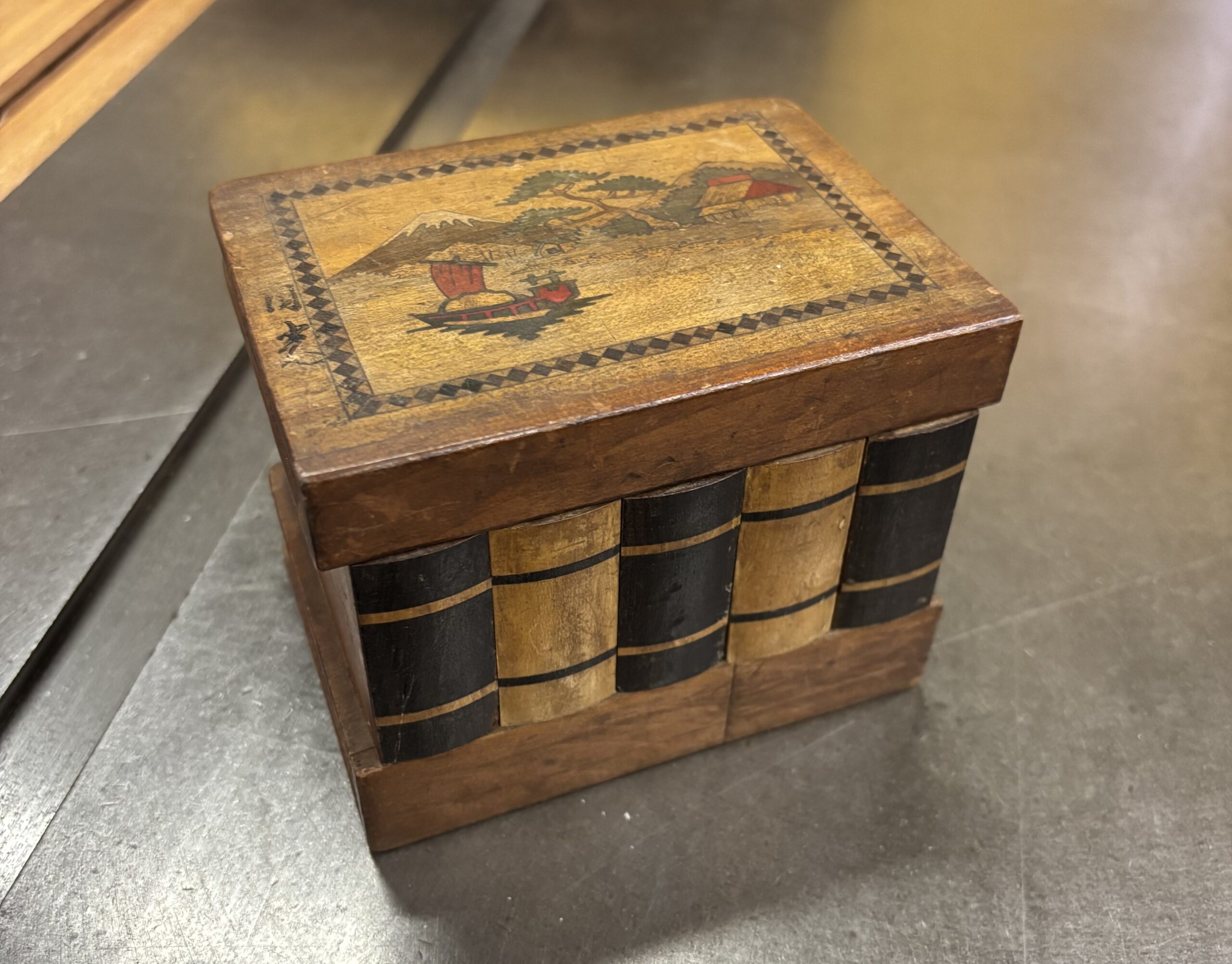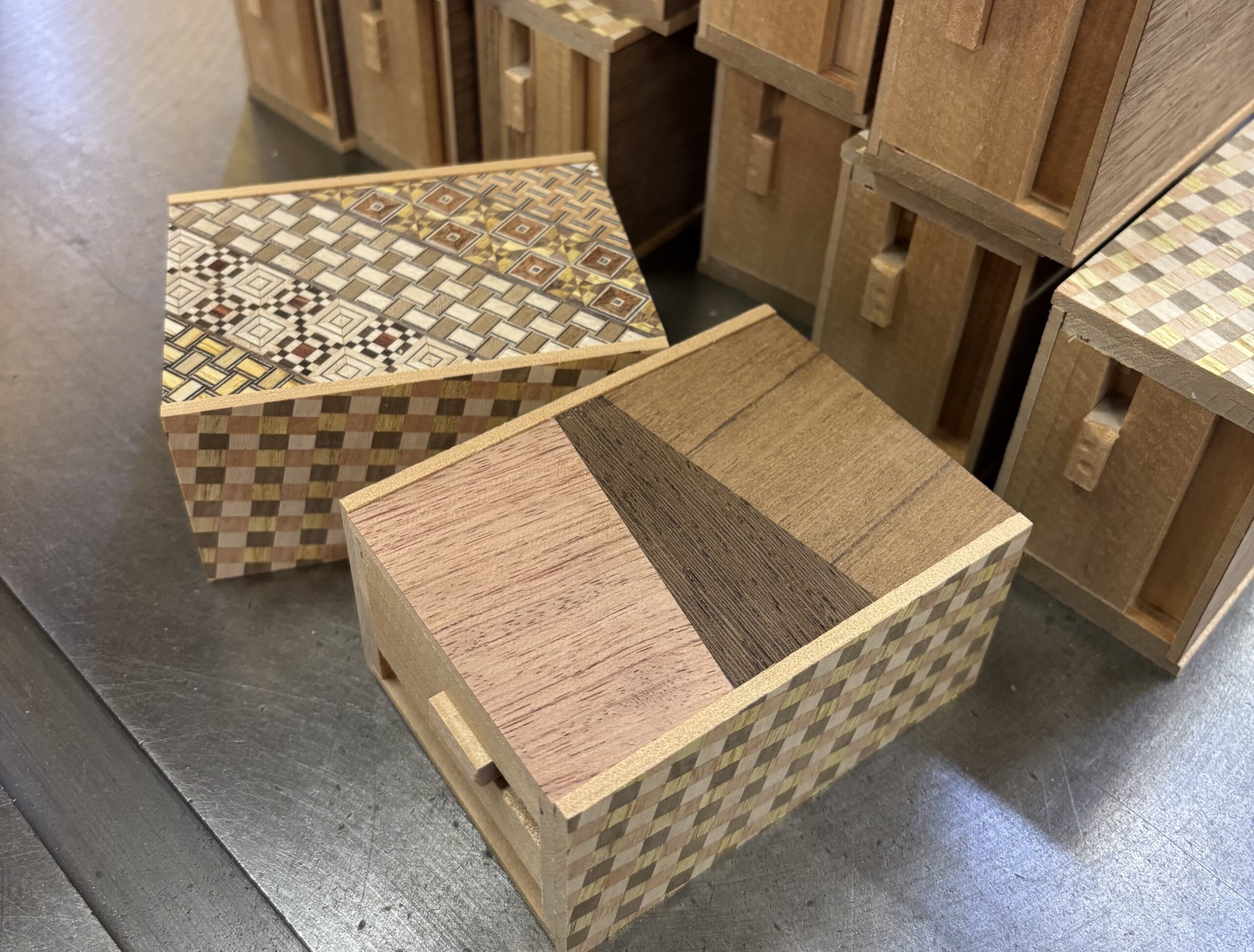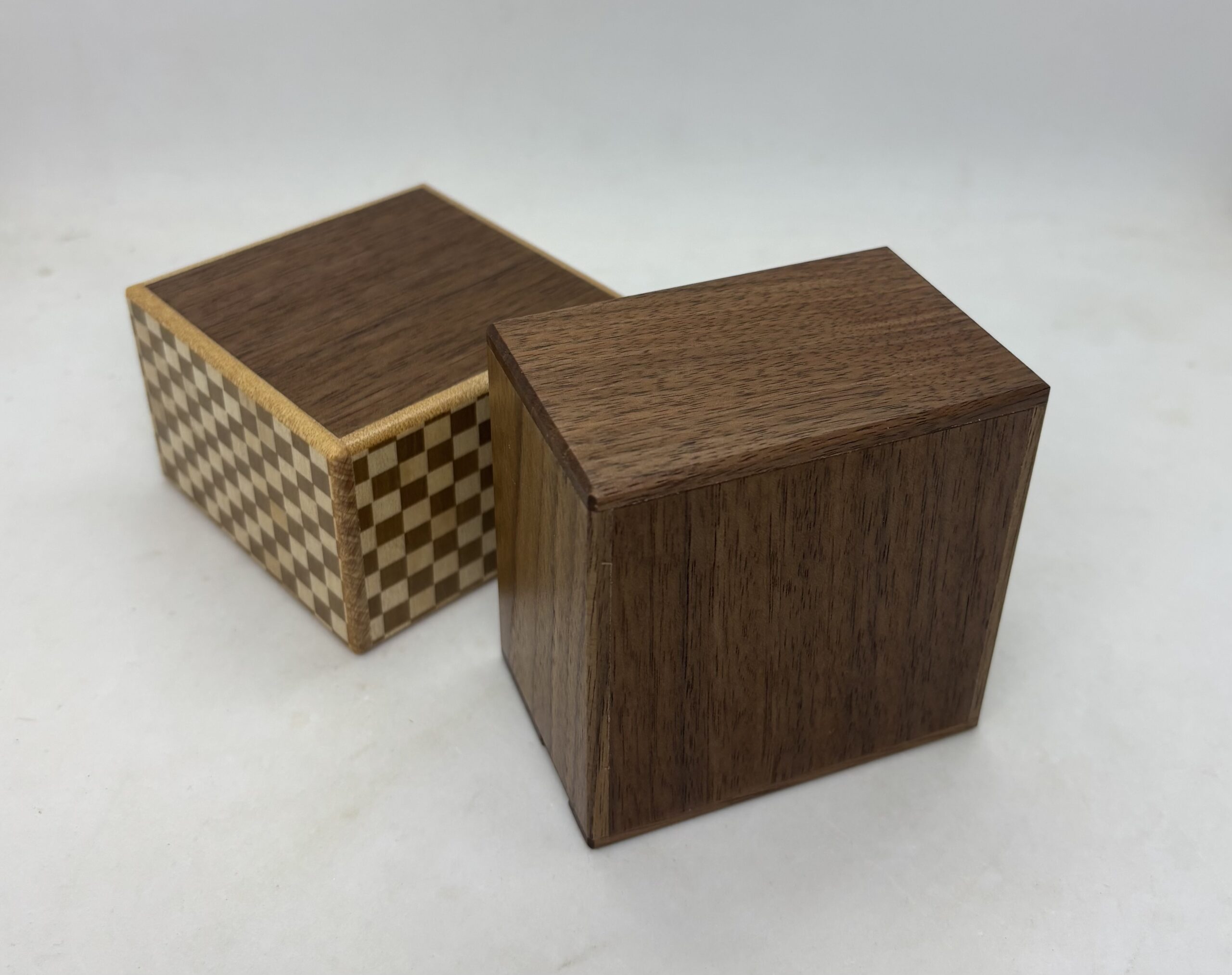
Today was another very hot day from the morning. I had a few errands to take care of, so I spent quite a bit of time away from the workshop and did not get much work done. The Square puzzle boxes were finished at the end of last week, and I listed them on my website today. This time, I added two different versions. Following the recent 4-sun puzzle boxes, I also made a version with Walnut on all sides. Both versions feature the 14-step mechanism.
The full Walnut version has been especially popular, so I would like to continue making it whenever I have the opportunity. Although natural wood designs are not as popular as traditional Yosegi, they still have many fans. I often receive requests to make more versions using different kinds of wood. At the moment, however, I have not found another wood species that is as suitable as Walnut, so this is the only version I make. It is not that other woods are unavailable. Rather, Walnut is the only one that meets all of the conditions I am looking for.
One possible alternative is Japanese Magnolia (Ho). Because of its properties, it is actually a very suitable wood for Japanese puzzle boxes. However, I have two concerns about using it. The first is that the color variation between individual pieces can be quite large.Japanese Magnolia ranges in color from a grayish tone to the light green shade that is often used in traditional Yosegi. Of course, other woods also show natural color variation, but with Japanese Magnolia, combining pieces of different colors can make them look as if they are completely different wood species. This may also be due to its texture. It has very little visible grain and gives a smooth, even appearance. For the top panels, I use sliced veneer, which is prepared by a specialist. That means I also have to select Japanese Magnolia for the side panels that matches the color of the veneer as closely as possible. The second reason is simply that Japanese Magnolia is not as popular as Walnut. I think this is because it does not have the same rich, substantial appearance that Walnut is known for.
Other popular choices include Teak, Mahogany, Oak, and Cherry. However, when I consider all the requirements—such as resistance to warping even when cut into very thin panels, and how easy the wood is to work with—each of them presents some challenges. Because the panels of a Japanese puzzle box are so thin, the wood needs to be reasonably soft, easy to machine, and have a straight, predictable grain. Of these woods, Mahogany may come the closest to meeting those requirements. I have used it a little before, and the results were quite good. I have never made a puzzle box entirely from Mahogany, though. As with Japanese Magnolia, I am concerned about the variation in color between different pieces. The price and long-term availability of good-quality Mahogany are also factors to consider. For now, I still have not found another wood that I feel is suitable enough to join Walnut as a regular option in my lineup.