It was a little chilly in the morning and evening, but during the day the sunshine felt warm. I worked as usual from the morning. After attaching the sliding key panel on the other side of the 5-sun 27-steps puzzle box, I moved on to the next work, making the 4-sun 18-steps puzzle boxes. This time, I will make about 40 boxes, including the ordered ones.
Today I worked on various steps for the 18-steps puzzle boxes. First, I prepared the side panels, and then I prepared the materials for the other parts. Using those materials, I made only the core panel in advance. After that, I shaped the Aruki panels for the side parts to the correct thickness, and added the step-like cuts beforehand. Just having this process done in advance makes the work on the Aruki panels much faster. This time, I already have enough internal parts from previous work, so I did not prepare new ones. After that, I worked on the preparation of the top and bottom Aruki panels.
You might wonder what I mean by “preparing the top and bottom Aruki panels,” but this is something I do in my own way when making 4-sun puzzle boxes. Normally, for 4-sun boxes made by others, a process called “hashibami” is not applied to the top and bottom Aruki panels, no matter how many steps the box has. This process is used to prevent the panels from warping, and it is commonly done for larger boxes, such as 5-sun and above. Since 4-sun panels are smaller, it is usually not considered necessary. Actually, after becoming independent, I did not make 4-sun boxes for quite a long time, maybe around seven or eight years. During that period, I mainly made 3-sun, 5-sun, and 2-sun cube boxes. And also Mame puzzle boxes. Since the 4-sun size is the most standard size for puzzle boxes, I think this was a bit unusual. I avoided it on purpose because many others were already making them.
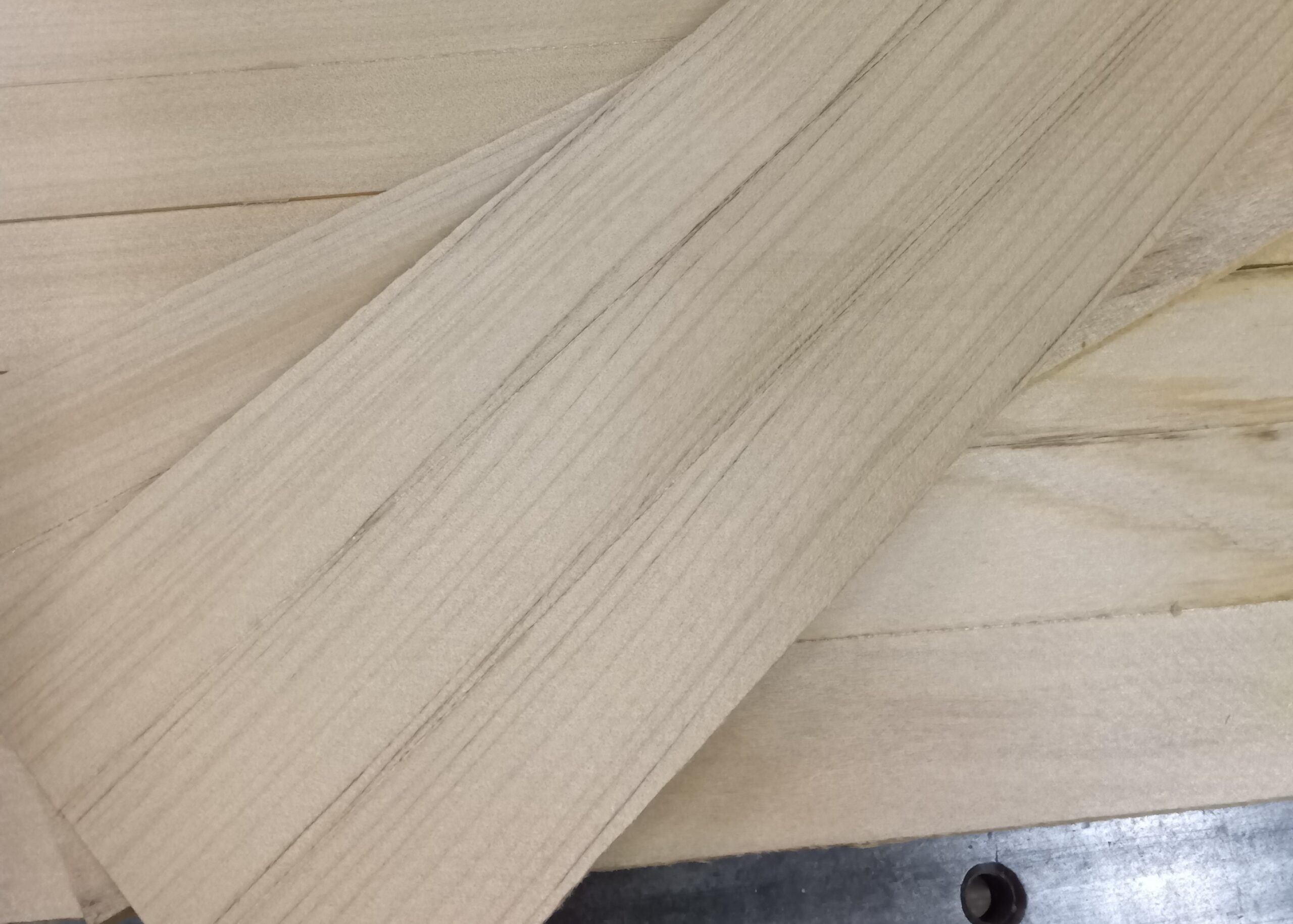
When I first started making 4-sun boxes, I felt a bit unsure about using a single solid board for the top and bottom Aruki panels. It is smaller than a 5-sun box, but still a little wide to be made from just one piece of wood. In other words, because the width is relatively large, a single board can be more likely to warp or shrink. For 5-sun boxes, the Aruki panels are treated with the hashibami process to prevent this. While it may not be necessary to go that far for 4-sun boxes, I felt it would be better to do something. So instead of using a single board, I decided to make the panels by joining two narrower boards together. From an expert’s point of view, it might seem that this does not make a big difference. However, it is not always possible to use wood with perfectly straight grain, and if a single board has slightly complex grain, there is a risk of warping. In that case, I feel that joining two boards may help them balance and reduce that movement. Since then, my top and bottom Aruki panels are made by combining two or sometimes three narrower pieces of wood into one panel (The photo shows the three-piece type). It may just be for my own peace of mind, but somehow it still matters to me, so I continue doing it. And just to be clear, I am not joining leftover materials together 🤣 It is something I do intentionally!