Today is a normal Saturday, but because Japan is in the extended holiday period of Golden Week, everything feels a bit quieter than usual. Of course, I think tourist areas are quite busy. This long holiday will continue until May 6.
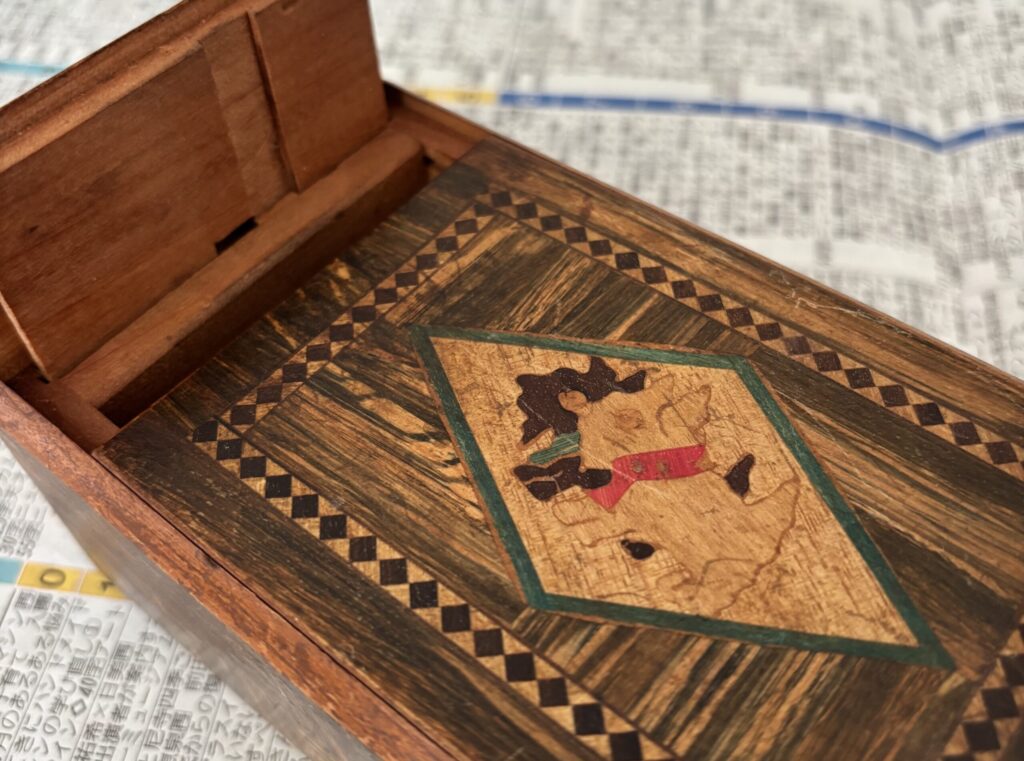
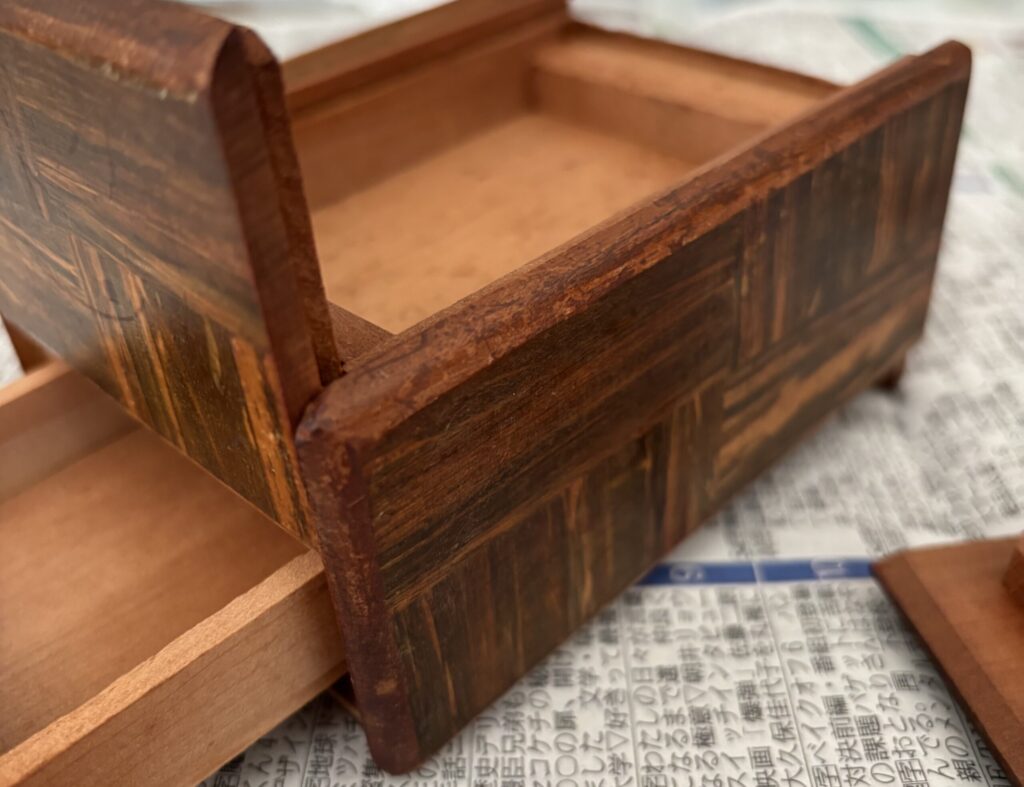
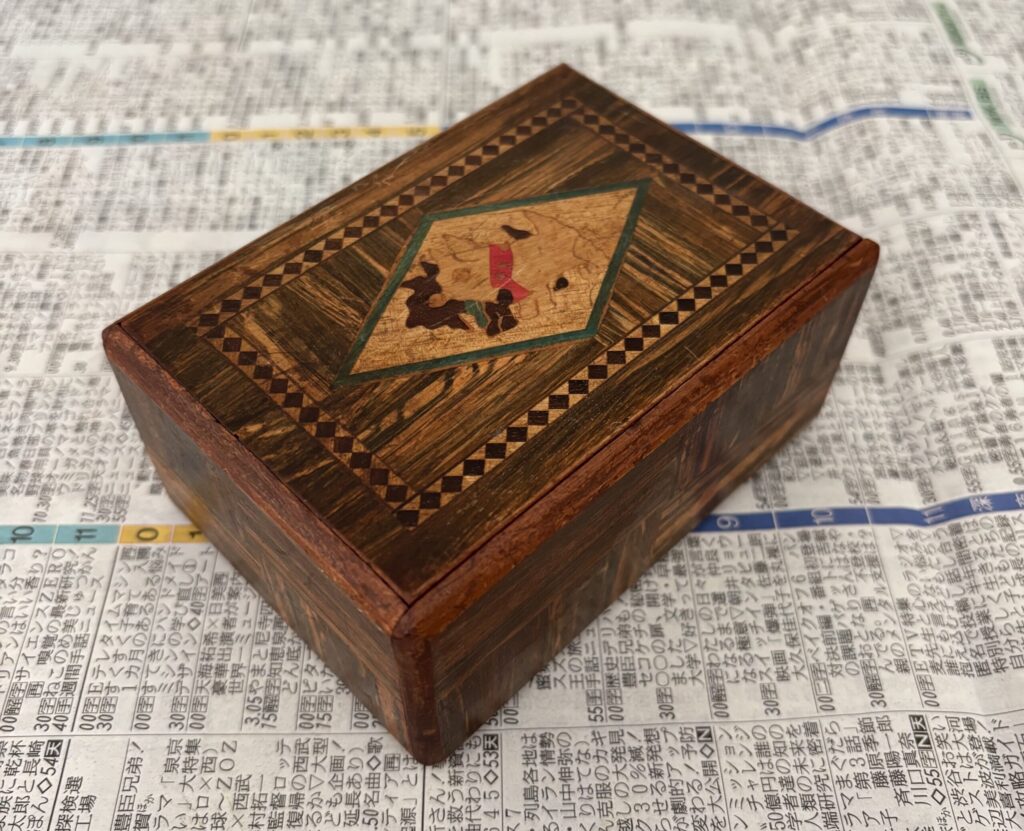
Today, I would like to introduce another slightly unusual puzzle box. This box has a 4-step mechanism and includes a sound drawer. I’m not exactly sure when it was made… there isn’t a clear date, but I think it is probably around 50 or 60 years old. The design mainly uses wood inlay. Traditional yosegi is only used on the front of the drawer and on the side panels, which have a large ichimatsu pattern. The wood inlay on the top panel shows a dog design, which is often seen on boxes from this period. From the shape, it looks like a terrier, but I’m not sure if the craftsman was actually thinking of that breed when making it 😆 You can really see this same dog shape quite often on puzzle boxes from that time. As I mentioned before with the trick box, this layout—where the wood inlay is surrounded by a diamond-pattern yosegi border—was also a common design at the time.
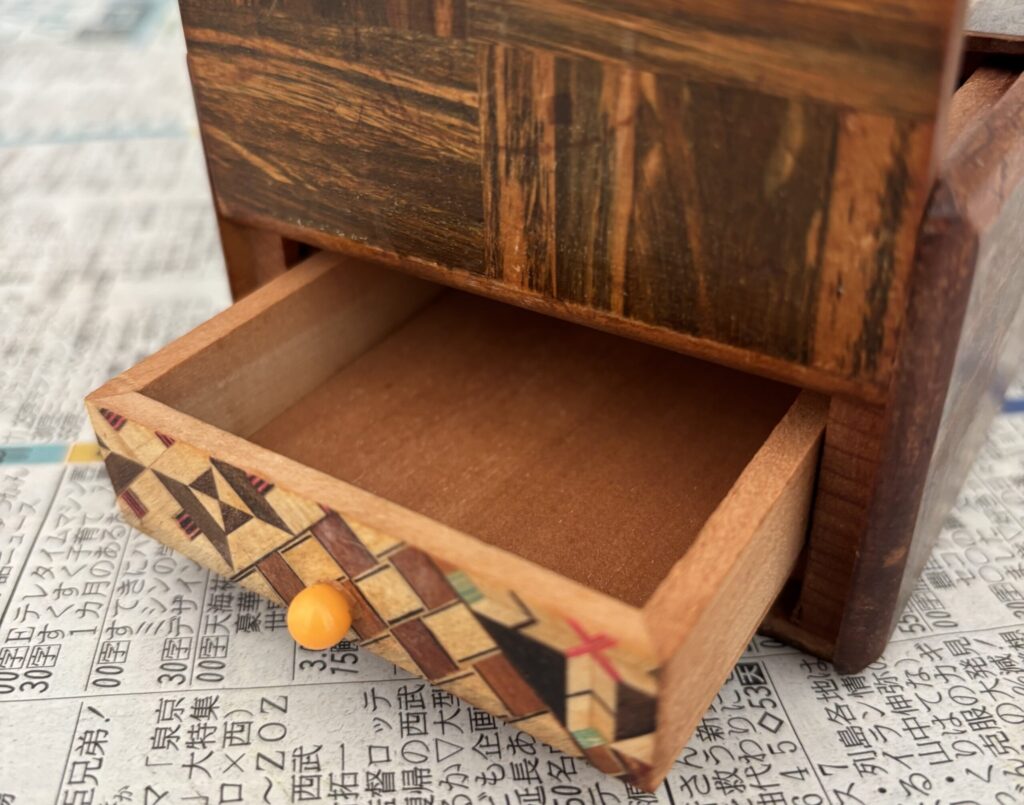
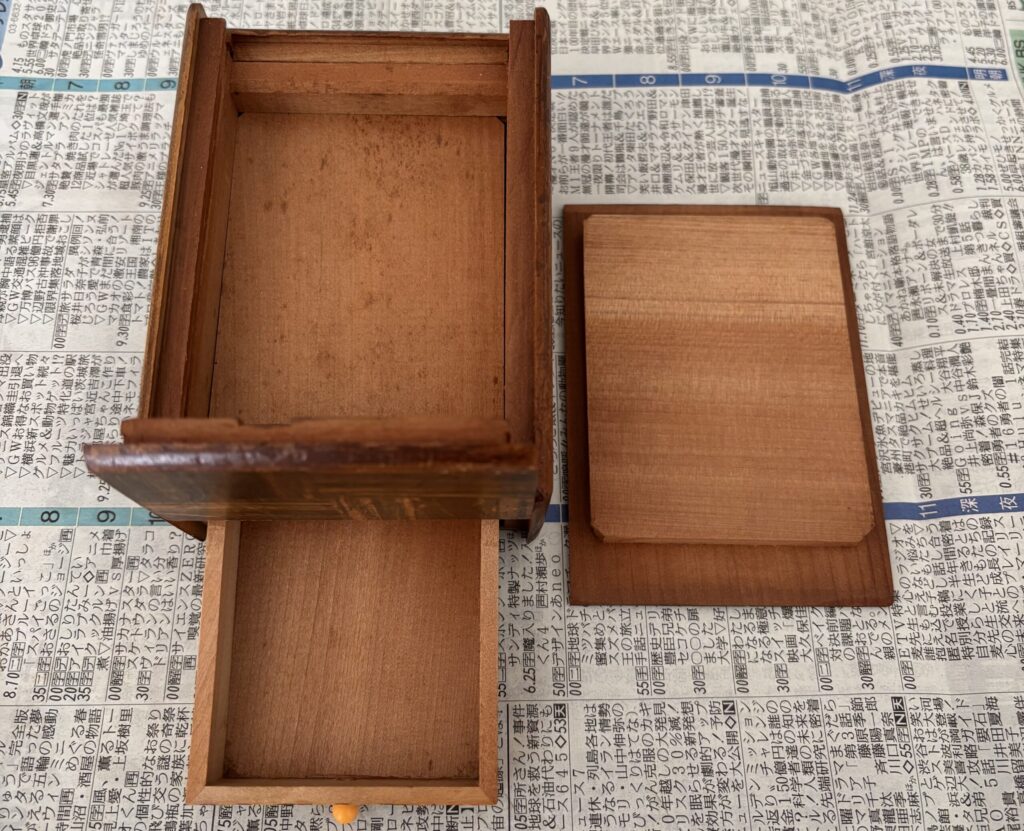
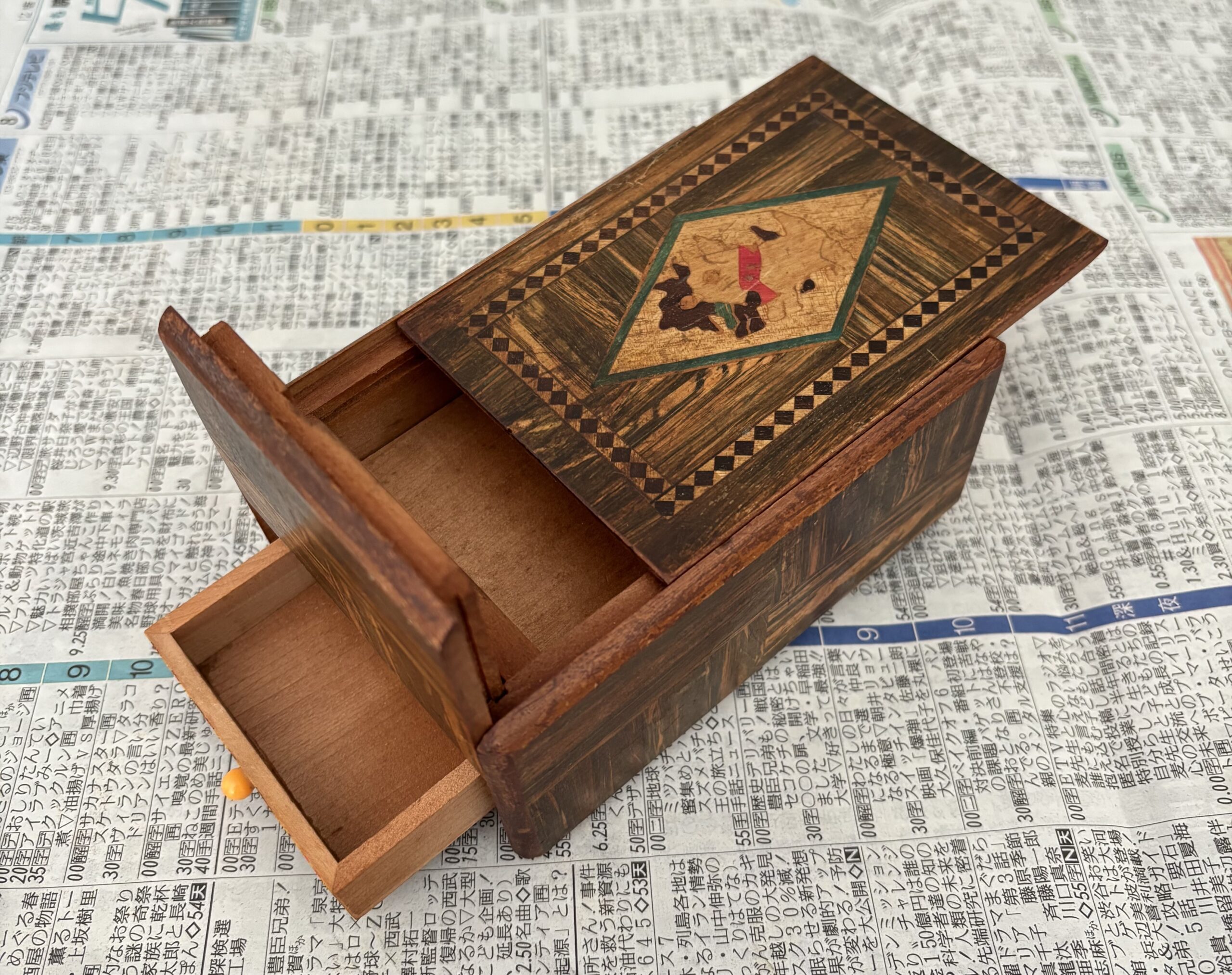
High-quality katsura wood is used for the materials, including the internal structure, divider panels, and the drawer itself. Because of that, even after many decades, the wood has remained stable without warping. On the front of the drawer, there is a round plastic knob, which was a typical feature of drawer-style boxes from that time. I have always wondered why plastic was used only in this part. One possible reason is that similar plastic parts were used in other Hakone craft souvenirs, so they were probably easy to obtain. This round knob is not just a simple ball shape. Part of it extends like a small rod and is firmly inserted into the front panel of the drawer. However, the adhesive used was probably animal glue, so it may have come off quite easily over time.
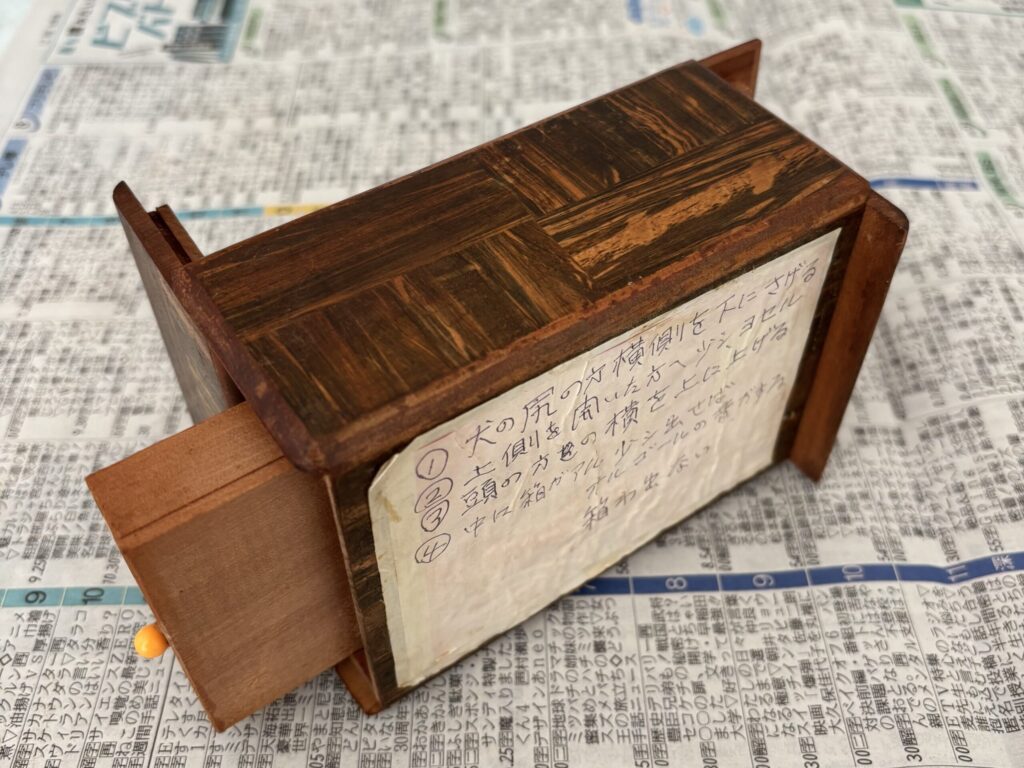
For this 4-sun size with a drawer, the standard was a 4-step mechanism, and there are no sliding keys. Because the box is relatively small, there is also no lid on the drawer. However, when you pull the drawer out, it makes a pleasant sound, almost like a bird, similar to the 5-sun drawer boxes. The structure is probably the same as those, using a piano wire. The way the drawer opens and how the panel is held in place are also made using a traditional method, similar to the 5-sun drawer boxes. A groove is carved that stops partway, and a small wooden piece catches in that section to hold it in place. As you can see in the photo, the bottom is unfortunately (or maybe interestingly) covered with paper, so the original design cannot be seen. It was likely a wood inlay pattern. On this paper, there are instructions on how to open the box, probably written by a craftsman or someone from that time. One reason I believe this box is quite old is the way the text is written. The wording is not commonly used today. In older Japan, especially around the early Showa period (up to around the 1940s), it was common to write using a mix of katakana and kanji. Hiragana, which is widely used today, was not used as much. Considering this, the box may have been made even earlier than we might first think. The katsura wood, which has aged into a warm amber color, gives the box a truly nostalgic feeling 😊