Today the sky is clear from the morning, but it is still cold. Even so, when the sunlight comes in during the day, it sometimes feels warm. This afternoon I will go to my workshop again and continue my work. I have something to do next weekend, and I won’t be able to work for about two days, so I hope I can finish the two types I am making now before then. Today I will make the Aruki panel for the 4-sun 18-steps puzzle box and attach it. This time the top panel is traditional yosegi, and the bottom panel is natural wood, so after that, I can start gluing these panels from tomorrow.
Yesterday, when I left my workshop, I stopped by the supermarket and bought some food, and I also bought some Mikan (Japanese mandarin orange). In Japan, mikan are really a classic winter fruit. Maybe it’s something special about our region, where many mikan are grown, but mikan feel more like an everyday food than other special fruits. In Japan, fruit often has the image of being a little expensive, something a bit special. Sometimes I buy apples or persimmons because they are reasonably priced, but I don’t buy many other fruits. But mikan are cheaper and grown in large amounts, so they feel much closer to us. That’s why they have been one of the foods I’ve eaten often since I was a child.
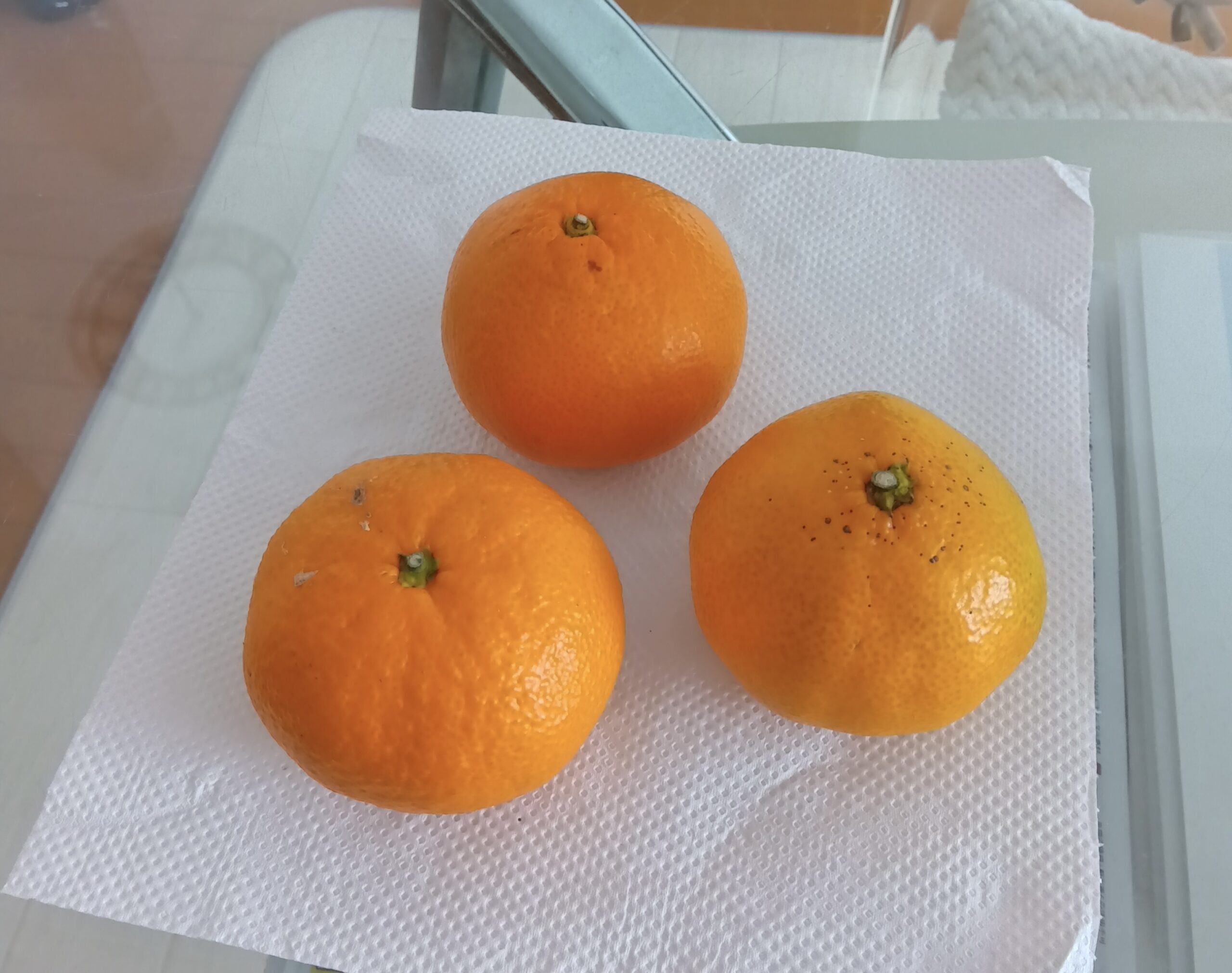
However, even mikan have become more expensive recently. Since many things are going up in price, I guess the cost of producing mikan has also increased. In the supermarkets in my area, mikan are usually sold in a net bag with about five to seven pieces, and the price is around 400 to 500 yen. So each one is about 60 to 80 yen. The ones in the photo I bought yesterday had seven pieces and cost 398 yen before tax, which felt reasonably cheap, so I bought them.
Around this season, I sometimes see mikan not only sold in small net bags but also in large cardboard boxes. One box is usually around 3,000 to 4,000 yen. But when mikan are stored in a box like that, they bump into each other and the skin gets damaged, and they can rot quickly. In the supermarkets in our region, when you buy a box, the staff will check the inside for damaged mikan and replace any bad ones with good ones. At that supermarket they call this “Mikan Check!”. When I line up at the register with a box of mikan, the cashier shouts loudly, “Mikan Check, please!” Then a special staff member comes and checks each mikan one by one inside the box. It’s quite a fun scene to watch 😄. In the past, those big boxes of mikan (usually with about 30 to 50 inside) were cheaper and felt like a good deal compared to the ones sold in net bags. But now the prices are almost the same, so they don’t feel as special anymore.
The reason seems to be that the number of producers is decreasing in many regions. It is said that in a few decades, many mikan farmers may have to stop their work because of the lack of successors and the effects of climate change. In our area too, the amount of mikan being produced has been going down in recent years, and we don’t see them in stores as often as before. By the way, the mikan I bought yesterday were from Kumamoto in the Kyushu region.
Mikan are rich in vitamin C, and ever since I was a child, people have said that if you eat a lot of them, you won’t catch a cold. They also contain vitamins that help improve blood flow and make blood vessels stronger, so they are said to help prevent illnesses that are common in winter. Mikan are easy to eat, and they have been a traditional food for the New Year in Japan for a very long time. I really hope the farmers can continue their work, because mikan are such an important part of our lives 😊