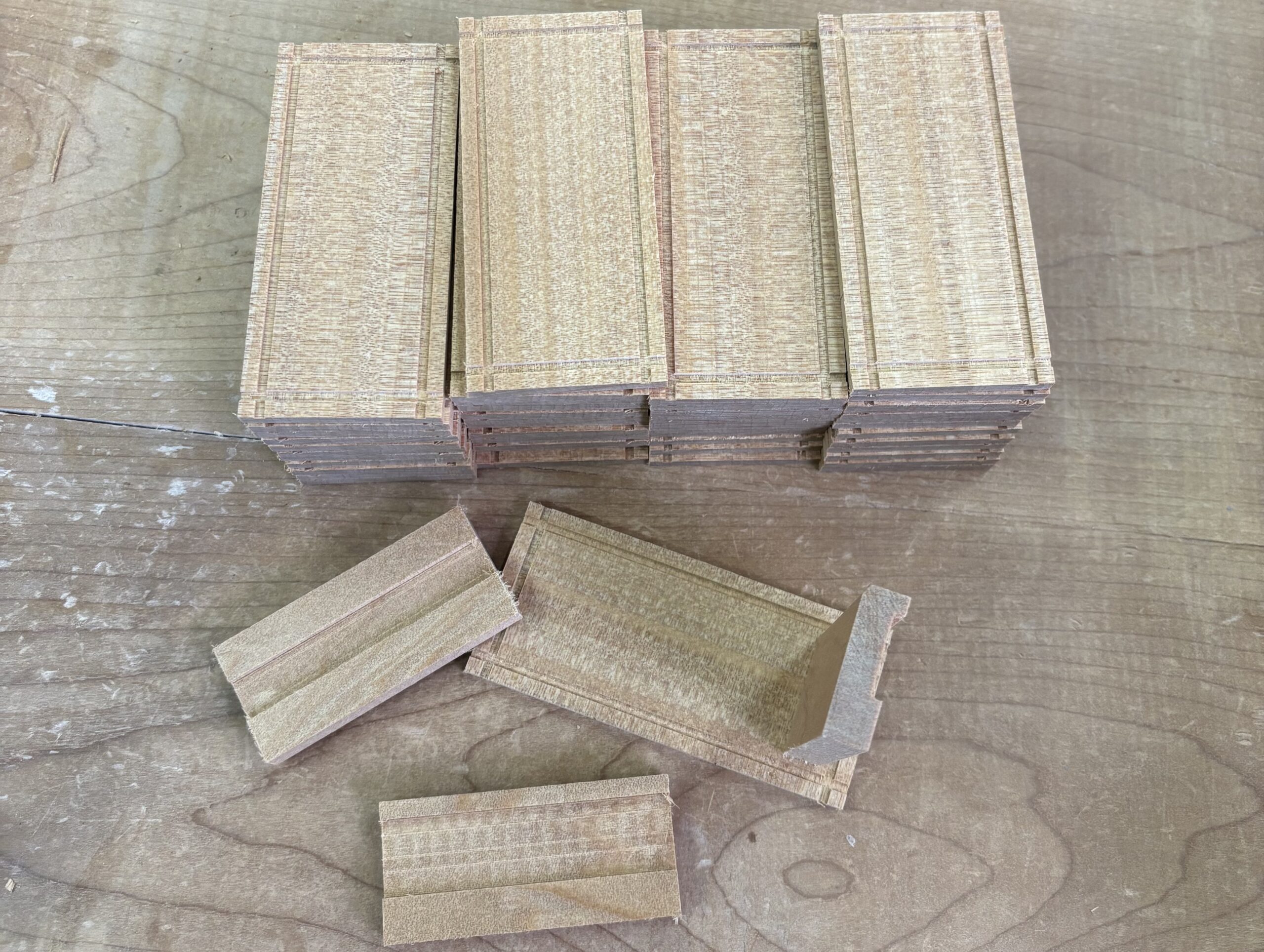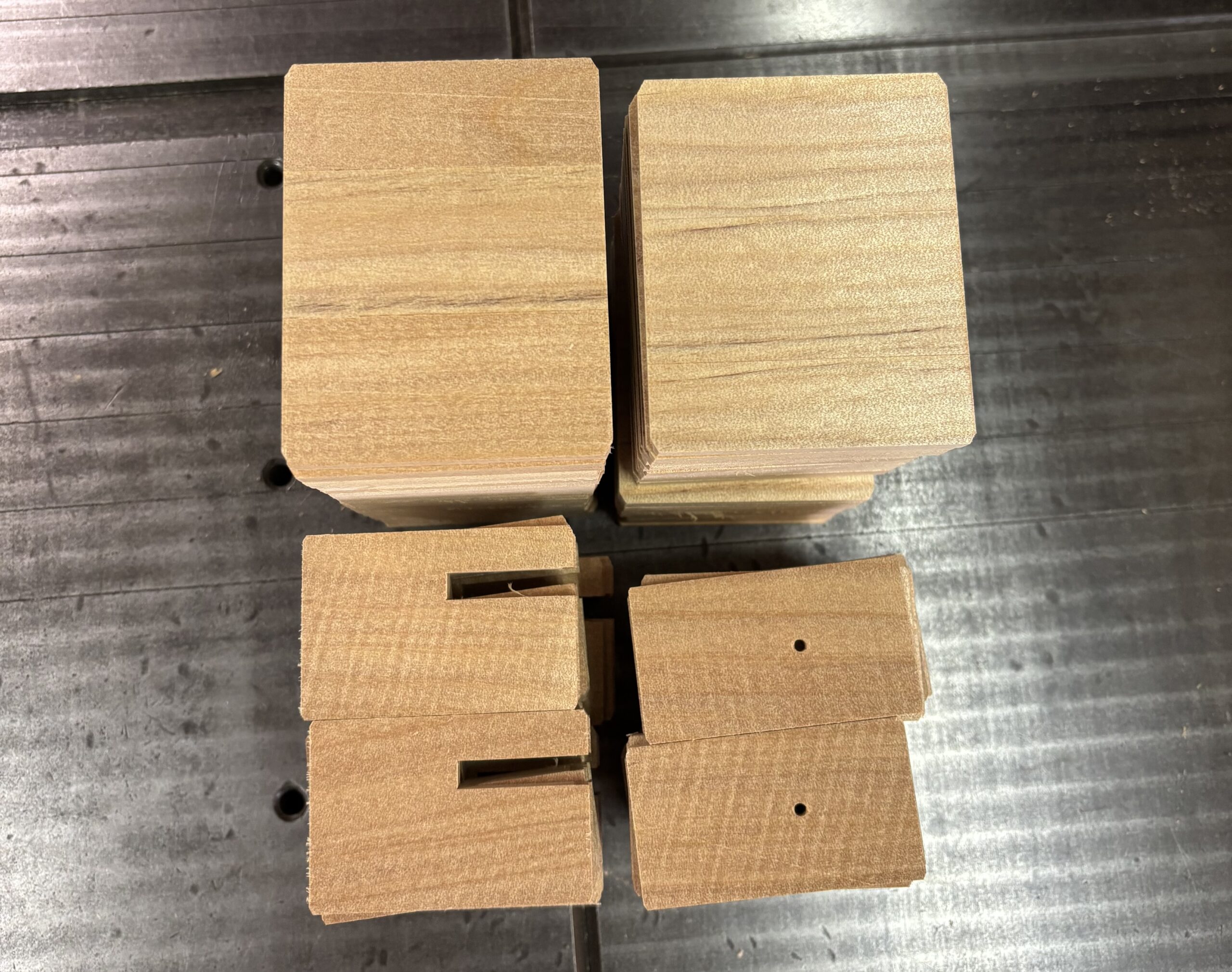
The weather was cloudy again this morning, and the humidity was quite high, so I was wondering what kind of work I should focus on today. Then I realized that I had not prepared all of the parts I needed yet..haha, so I started working on those. Specifically, I worked on the parts for the 21-step mechanisms. These will be used in the puzzle boxes that are currently in production, the parts I had in stock were not enough. I do not make 21-step puzzle boxes very often. Other day, I only made them again recently after a long break. Since then, I have started to think that these parts may be useful for future projects as well. I also plan to use them for the puzzle box that I recently decided to make. Originally, I was going to build it using parts for a 14-step mechanism, but I decided to use these parts instead so that I could increase the number of moves slightly.
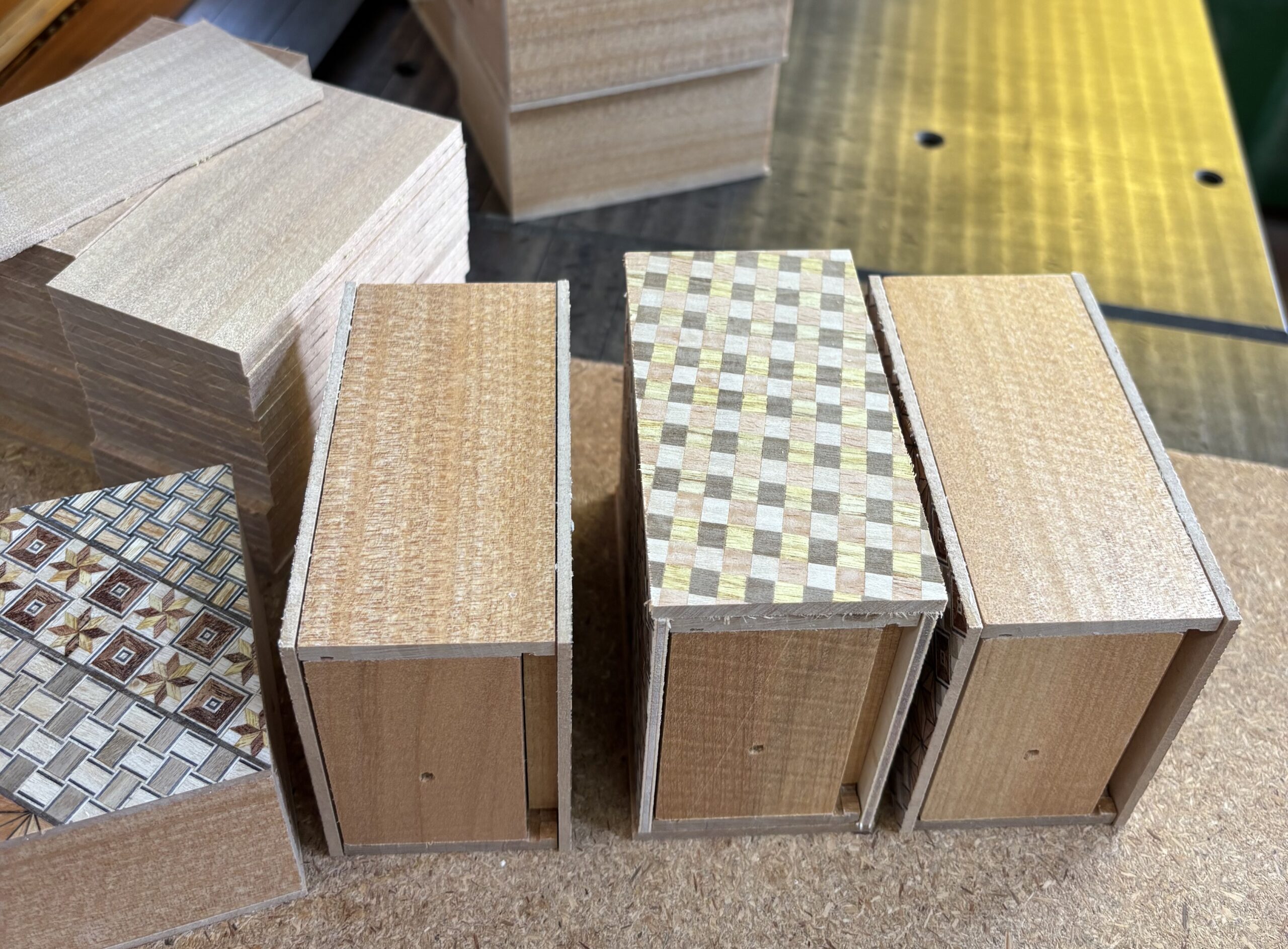
This time, I will probably make only about 25 of these puzzle boxes, so they will likely be a limited production run. Before noon, I assembled the frame parts that I made yesterday. In the afternoon, the humidity dropped a little, so I started making the Aruki sliding panels. This is a design that I have never made before, so I worked out the dimensions as I went along. There was no established design to follow, so I used the shape I had in mind as a guide when deciding the size of each panel. As shown in the photo, this puzzle box has four moving panels, but all four are different. In a typical Japanese puzzle box with four moving panels, the two side aruki panels are usually the same, and the top and bottom aruki panels are also the same, or differ only in width. In this design, however, each panel has a different role. The two large panels at the top and bottom may appear identical in the photo, but they are actually different sizes. Another unusual feature is that, although this box has four moving panels, it does not use the typical stepped notches often seen on this type of mechanism.
So far, if everything continues as planned, this puzzle box will have an 11-step mechanism. It is based on a box with a 9-step sequence on one side, with two additional moves added to it. To someone familiar with traditional Japanese puzzle boxes, the mechanism may seem a little unusual. Because of that, it may also be a little more confusing to solve. The box includes a Kannuki (sliding key), but unlike my usual designs, moving it will not allow you to continue immediately. Before it can be used, two other moves must be performed first. The mechanism still relies entirely on sliding movements, but it is shaping up to be a somewhat unconventional puzzle box. While working on it, I realized that it would probably be possible to add another two steps and turn it into a 13-step mechanism. That would likely make it even more confusing, but I think I will save that idea for another project in the future.