Today is the first day of April. In Japan, it is the start of the new fiscal year, and many young people are going to work for the first time today. In our area, it rained yesterday and the wind was strong, almost like a spring storm. Fortunately, the rain had stopped by this morning and there were even some sunny moments. It must have been a good start for their first day. However, the weather started to worsen again in the afternoon, and it looks like it will continue to rain until tomorrow. I saw fallen cherry blossoms on the road, scattered by the rain. This is how this season often feels in spring.
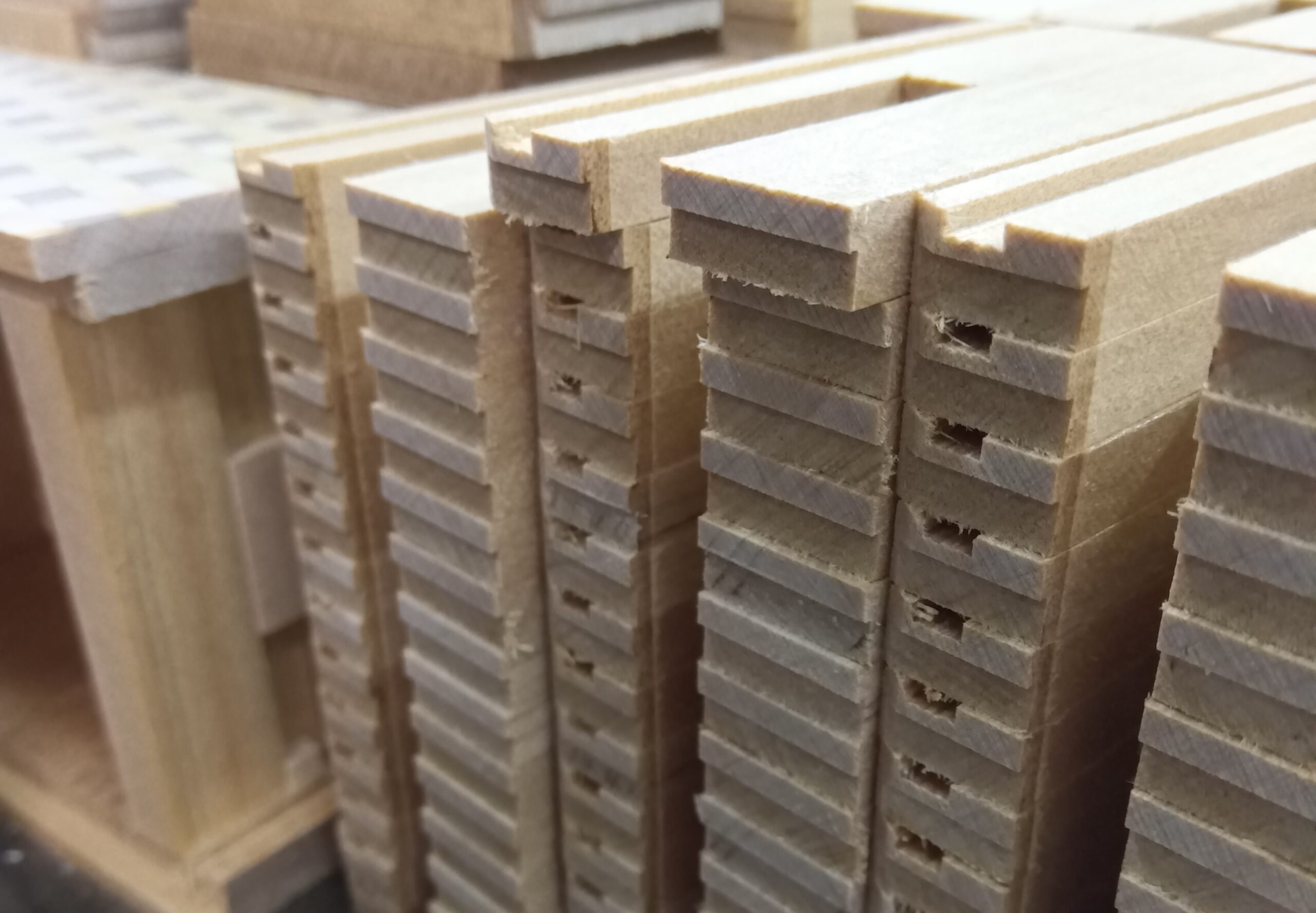
So today, I thought the rain from yesterday had stopped, but around noon it started raining again. During a short period of better weather in the morning, I worked on making the Aruki sliding panels for the 4-sun 14-steps puzzle boxes. However, even though the rain had stopped, the humidity was still high, so I did not attach them yet. Of course, working in high humidity can be a concern, but the Aruki panels are designed with some measures to handle this. One of these is the direction of the wood grain. In Japanese puzzle boxes, the grain of the Aruki panels and the axis panels is set horizontally, meaning the grain runs parallel to the ground. Wood tends to expand and shrink across the grain, but changes much less along the grain. The axis panels are made and attached in this direction, which helps prevent the width of the box from changing. The Aruki panels are also made in the same way, so even the very fine dimensions created during production are less affected by changes in weather.
Another important point is the thickness of the “legs” of the Aruki panels. The “legs” are the small protruding parts of the panel that fit into the grooves of the frame. The movement of the Aruki panels depends greatly on this part. If the legs are too thick compared to the grooves, the movement becomes tight. If they are too thin, it becomes loose. So I carefully adjust the friction between the legs and the grooves to find the right balance.At the stage of making the panels today, I leave the legs slightly thicker. In this state, the movement would be too tight to operate properly. I leave them just a little oversized so that I can adjust them later. When I attach the panels, I make the legs slightly thinner. This means there is still room for fine adjustment, and I do this on a day with lower humidity. If you ever find a puzzle box that becomes very tight to move on rainy days, it may be because this adjustment was not fully done, and the panels were attached at their initial size. This adjustment process slightly compresses the wood fibers, which also makes the parts more stable against changes in the environment. This technique is sometimes called “Kigoroshi” which means “killing the wood” in Japanese, and refers to compressing the wood fibers.