It was sunny again from the morning today. There was a local festival (Matsuri) in my area, so I stopped by for a short time, and then went to my workshop in the afternoon. The festival is organized by a local community group called a “Jichikai,” and it is run only by the residents. A Jichikai manages a local area, and its size can vary, but it usually includes a few hundred households. Within it, there are smaller groups of about 10 to 20 houses, called “Kumi.” The representatives of these groups come together to form the Jichikai. The group representatives change every one or two years. My house is not a representative right now, but it was before, and our turn will come again in the future. The Jichikai organizes many events, and the festival is one of the biggest. These local connections are helpful for checking on the health and well-being of elderly people and for working together in case of disasters. They are also supported by requests from the city or town.
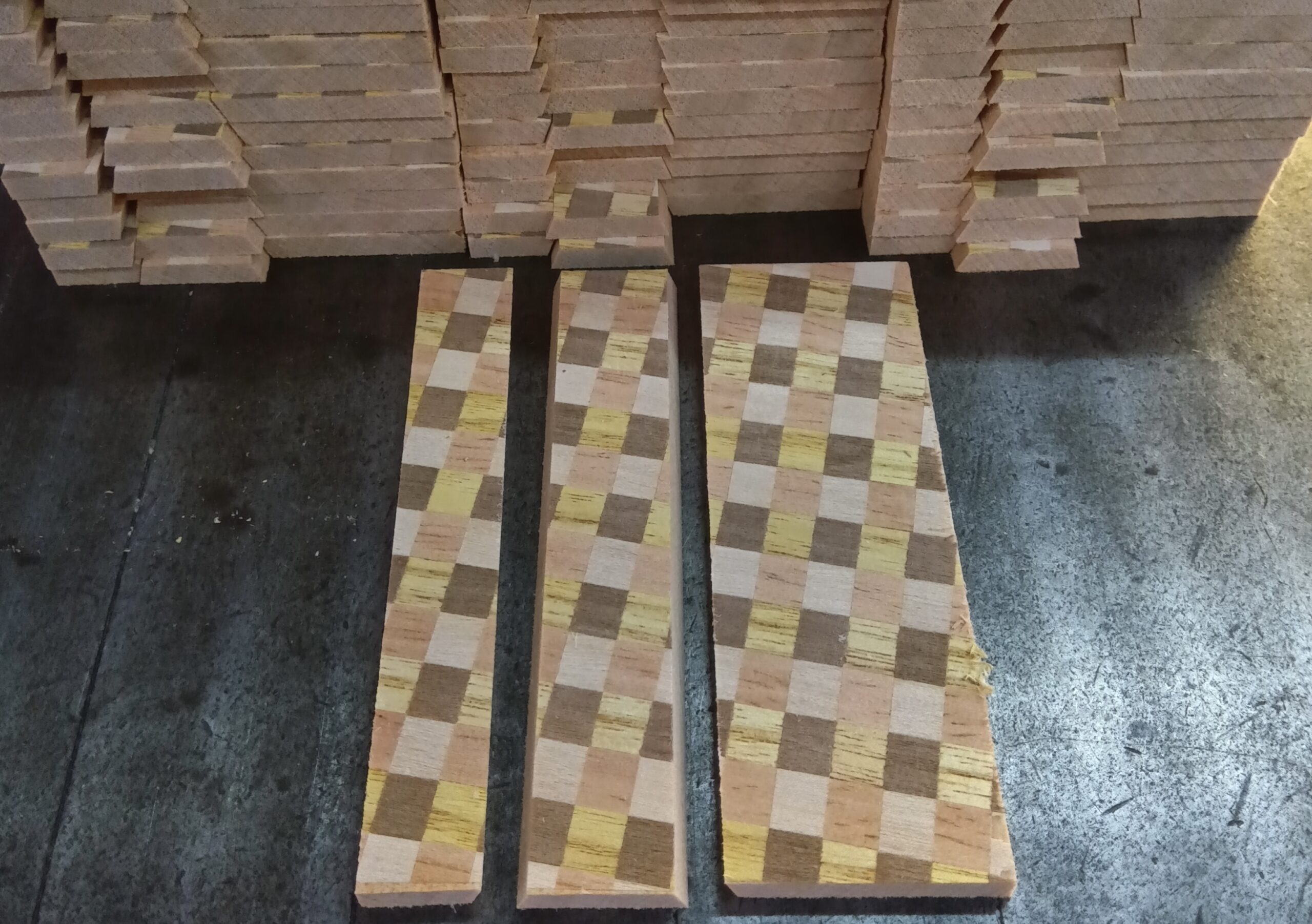
The 4-sun boxes I’m working on have finally started to move forward, so today I made the sliding key panels. Right now, I have attached the top and bottom panels and fixed the boxes with clamps. After this, the next steps are to attach small internal wooden parts (bocchi), shape the surface, and then attach the sliding key panels. I didn’t do the bocchi attachment or surface work today, but I made only the sliding key panels first. Doing everything in one day takes a lot of time, so I often prepare parts like this in advance.
The shape of these sliding key panels really varies, and each craftsman puts a lot of thought into the design. Recently, it seems that wider sliding keys have become more common, but in the past, they were often made narrower. The “key” is the middle part of the panel—the part that actually moves. It’s the width of this section. One reason for making the sliding key wider is that it helps the movement become more stable. Problems with poor or unsmooth movement happen quite often, so this change probably came from that. The place where the sliding key panel is attached (the inner side of it) is an Aruki panel, so the space is smaller than the outer side of the box. Since the Aruki panel moves up and down, there needs to be space below it. If the sliding key is made wider, the bonding area of the lower part (under the key) becomes smaller, so it can feel a bit weaker in structure. Thinking about this balance, I have also made several improvements over time. Compared to others, my sliding keys might be a bit narrower. I don’t think the current design is perfect, but for now, it is the best I have. Because the 4-sun boxes have a relatively small bonding area, the three attachment points of the sliding key panel need to be adjusted very carefully, down to 0.1 mm. This might be one of the most difficult parts of making Japanese puzzle boxes.