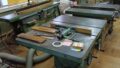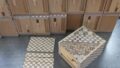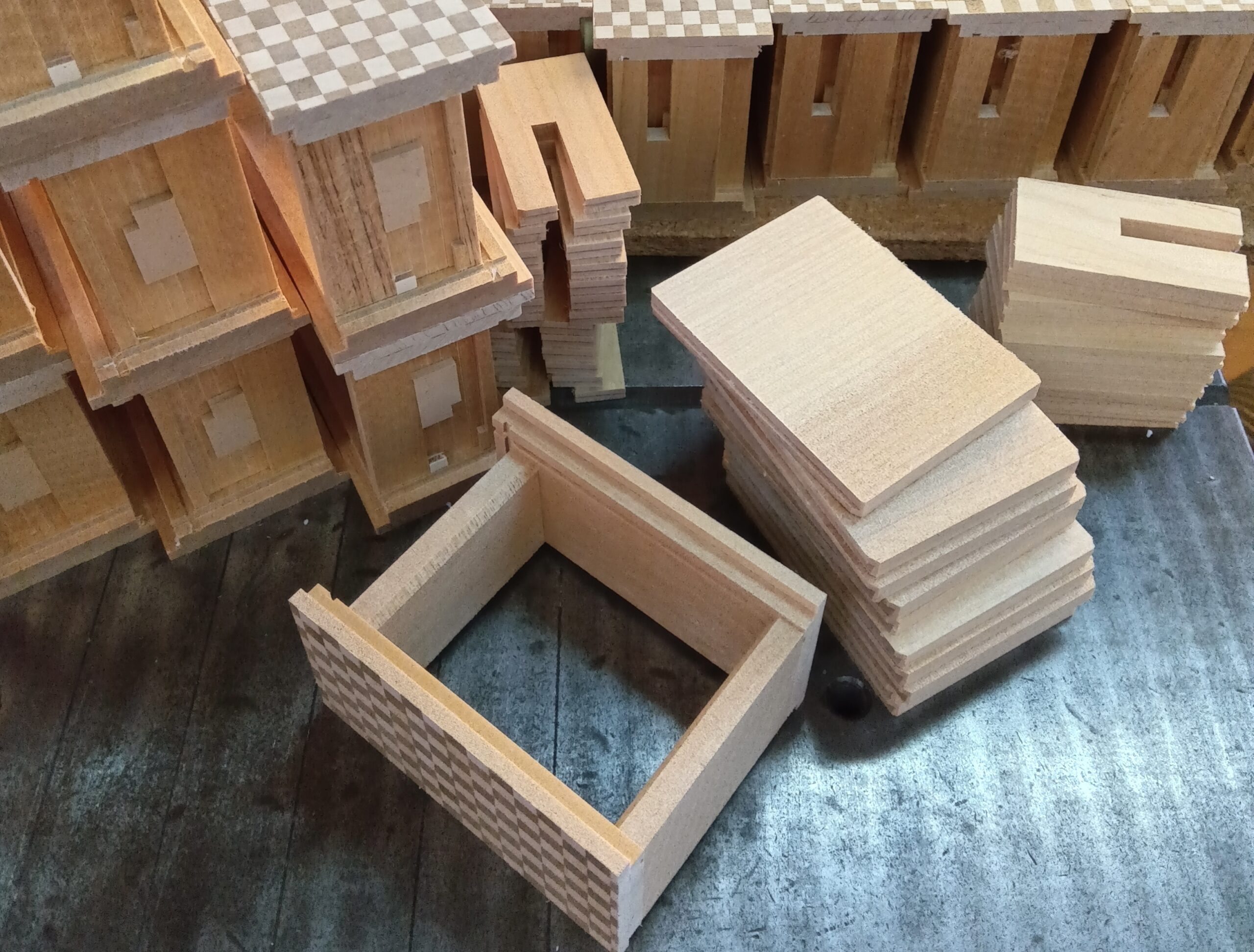
Today is Sunday, and it was a bright and sunny day. The dry weather is nice, but sometimes I find myself wishing for a little rain as well. I came to the workshop today, but since I had a few things to take care of at home, I arrived in the afternoon. As planned, I finished the finishing work on the 5-sun boxes yesterday, so they have now received their first coat, which is a relief. From here, I will focus on making the inner boxes for the nested set. Once that work is on track, I plan to move on to making Mame puzzle boxes next. I am making and attaching the Aruki moving panels for the smaller inner box. As you may be able to see in the photo, it feels slightly smaller than a 4-sun box. The height of the top and bottom is only about 2 millimeters different, but the width and length of the box are shorter. Because of this, it may look a little cute ☺️ This time, I am making it with a 7-step mechanism, so there are two Aruki panels. From tomorrow, I will start attaching the surrounding yosegi panels and related parts.
Yesterday, memorial services and special broadcasts were held to mark the anniversary of the Hanshin–Awaji Earthquake, which occurred 31 years ago. This morning’s newspaper also featured it as the main front-page story. This major earthquake is deeply etched in Japan’s history and continues to be remembered as a great tragedy. Japan has long been known as a country prone to earthquakes, and there were many large earthquakes even before this one. However, for me personally, this earthquake became a turning point that made me think much more seriously about disaster preparedness. Since then, many systems and preparedness measures have been reviewed and improved. The area affected by this earthquake is located around the middle of the Japanese archipelago, with the epicenter near the city of Osaka, one of Japan’s most well-known cities. Of course, Osaka also suffered severe damage.
One of the major characteristics of this earthquake was that it occurred at 5:46 a.m. Because it happened early in the morning, many people were still asleep, which led to a very high number of casualties (6,434 people). Many people lost family members and friends, and even today, they continue to live with deep sorrow. The damage to cities and buildings was also severe, and terrifying images of an elevated highway collapsing sideways remain deeply etched in people’s memories. About ten years ago, I visited Kobe, the city near the epicenter of the earthquake. At the port, the damage from that time has been preserved as it was and turned into a memorial site. The condition was truly shocking. The quay walls had shifted and broken apart, clearly showing the immense force of the earthquake.
After this earthquake, the number of people in Japan who purchased earthquake insurance increased, and the media began to report on this issue more often. At that time, earthquake insurance was not very common, and it is said that the enrollment rate was only about 2%. Because of this, many people whose homes collapsed due to the earthquake had to borrow additional money to repair their houses. There were many reports about people who already had a home loan and then had to take out a second loan for repairs, resulting in what is known as a “double loan.” As a result, their daily lives became very difficult. This situation is exactly why earthquake insurance exists. However, even today, the nationwide enrollment rate for earthquake insurance is still only about 35%, which is relatively low. One of the main reasons is that earthquake insurance premiums are quite expensive compared to fire insurance and similar coverage. In a Japan where the economy continues to struggle, many people feel that paying these insurance premiums is a heavy burden.
After this earthquake, more people began to prepare their homes for disasters. It has become common for local home improvement stores to have special sections for disaster preparedness. Not only that, many local governments have also started to reexamine community connections, based on the idea that in an emergency, the people you can rely on most are your neighbors. In other words, helping each other when something happens is very important. In my own home, we always keep several days’ worth of water and disaster supplies ready. The area where I live is considered at risk for both a possible Tokai earthquake and a major earthquake directly under the Tokyo metropolitan area, so I always pay close attention to earthquake information and news. In recent years, large earthquakes have occurred more frequently in Japan. While I sincerely hope for continued peace, I also believe that taking concrete action and being prepared is very important 🦺