It’s cloudy today, and it looks like rain or snow will start later. It has been a little warmer over the past few days, but it seems this weekend will feel like winter again ⛄️
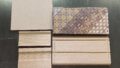
Today, I plan to start by doing the final checks on the 3-sun 12-step puzzle boxes. I will operate each box one by one and check the movement of the mechanisms. After that, I will place them in gift boxes together with the instruction sheets. and I will also work on assembling the frame parts and the drawers themselves for the drawer puzzle boxes that I made yesterday. Since the temperature isn’t rising today and it’s likely to stay cold during the day, this kind of work feels just right 😅 Oh—and I’ve noticed that the internal parts are starting to run a bit low, so I’ll need to make more of those as well. The parts used for this box are the same as those for a standard 7-step puzzle box and are shared with the 4-sun size boxes. Once these assembly steps are finished, it looks like I’ll be able to move on to making the Aruki moving panels next week.
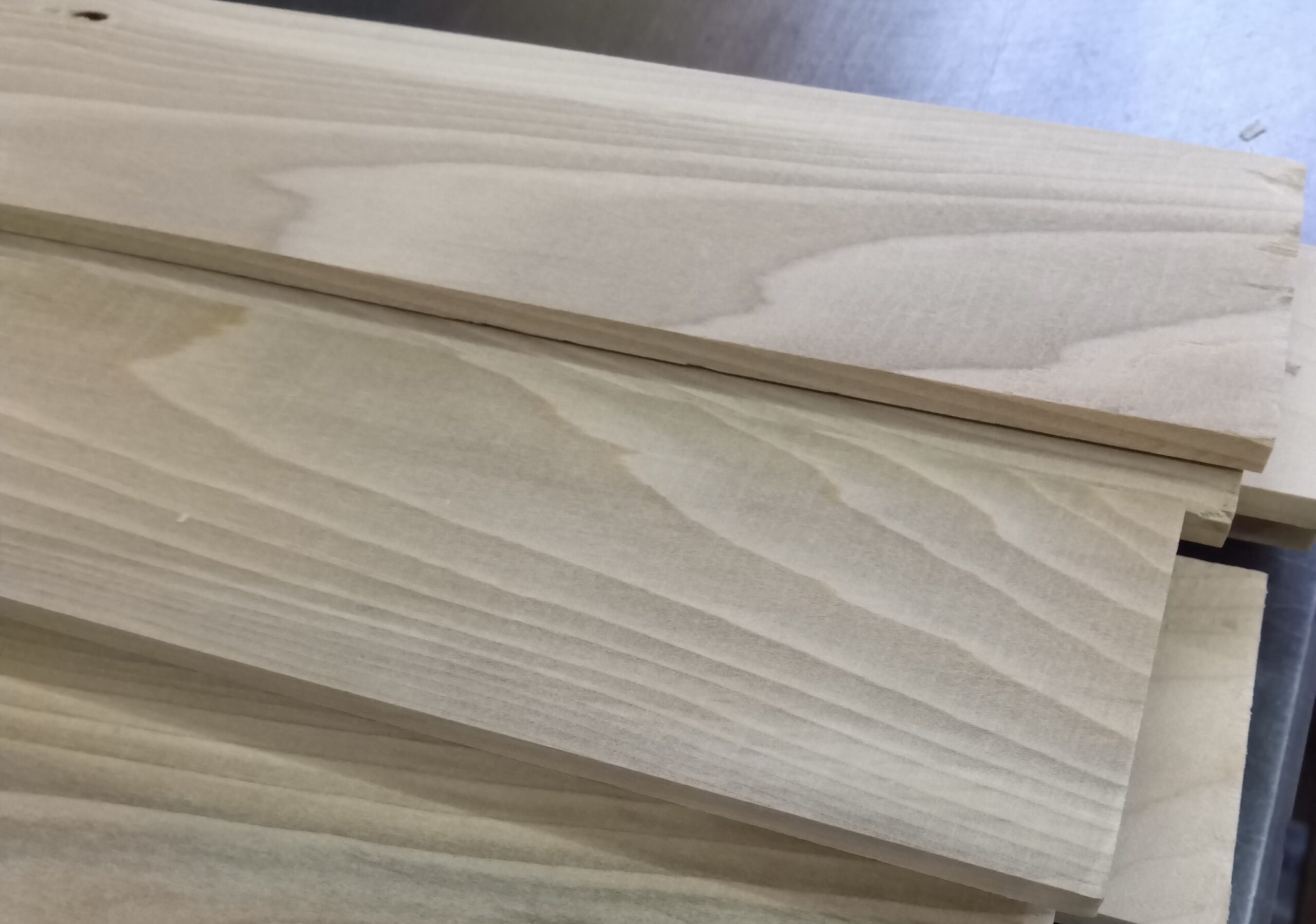
This time, for the drawer puzzle boxes I am currently making, I plan to use “Katsura wood (from Japan)” for the Aruki moving panels. I will use it only for the side Aruki panels. For the Aruki panel on the top lid, I will use agathis wood as usual. When I made the 18-step Mame puzzle boxes last month, I also used katsura wood for the Aruki panels, and I will do the same this time. I happened to find katsura wood in a size that was just right, so I decided to buy it and use it. In terms of dimensions, it was perfect for making the side Aruki panels for this production. If good-quality agathis wood is used (softer and slightly flexible), there is not a big difference, but katsura wood is still very suitable for making Aruki panels. The reason I am using it only on the sides this time is that the color is not as nice as the last batch, just slightly. It does not have the strong brown tone that agathis wood has, so I will use it for the side Aruki panels, where much of it is hidden. Of course, the wood itself is in good condition. In that sense, katsura wood may have a small drawback. Unlike agathis wood, where the color is quite consistent even if the material is different, katsura wood tends to have more variation in color. This time, it looks a little pale. Once it is used inside the mechanism of the box, it should not be noticeable. I’m looking forward to seeing how it turns out.
Actually, I am also looking for katsura wood for my next project, which will be the 4-sun 27-step puzzle boxes. I plan to make a slightly larger number, so I’m not sure if I will be able to find pieces in just the right size, but since I still have some time, I hope I can. In the past, I sometimes bought katsura wood in larger quantities, but these days it seems that good-quality material is not as widely available. Because of that, I now use it only when I can find small amounts at a lumber shop. The process of looking for small pieces of katsura wood like this can be quite enjoyable as well 😊 By the way, These small pieces are often sold for carving purposes.