The rain had stopped for a while this morning, but just when the sun seemed to be coming out, light rain would fall again. We are entering the last week of October, but the streets seem quiet wherever I go. Perhaps people are away enjoying the autumn travel season, so tourist spots may be busy even if the town is quiet. Many people in Japan received their salaries on the 23rd this month. Payday is usually the 25th, but since it falls on a Sunday this month, many people seem to have been paid on Friday the 23rd instead. Shops and restaurants tend to get busy around this time each month. A man who directs traffic in the parking lot of the supermarket I often visit once told me, “It gets so busy after the 25th every month.” Prices of various everyday items have gone up again this month, so it seems many people are finding it harder to make ends meet.
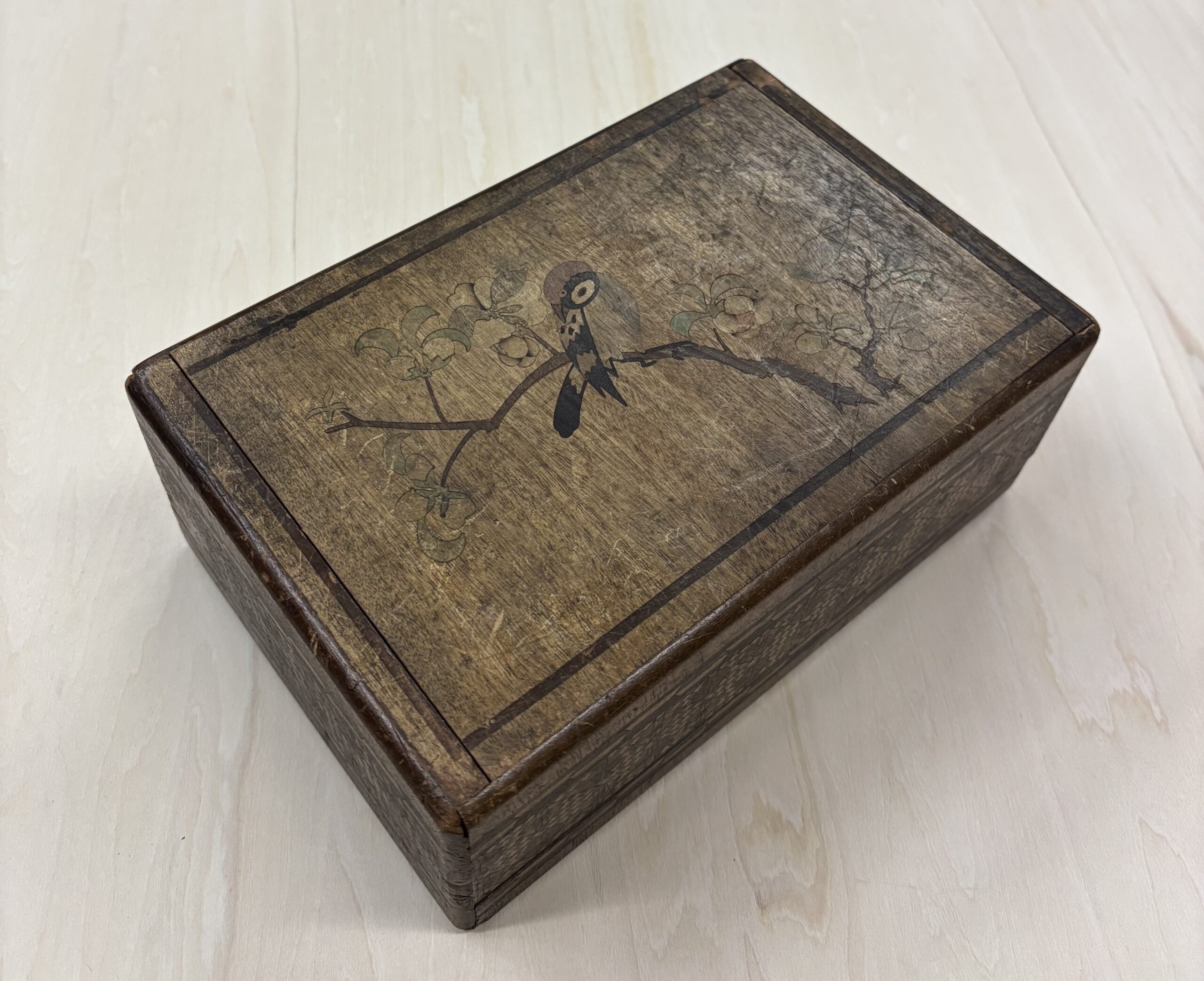
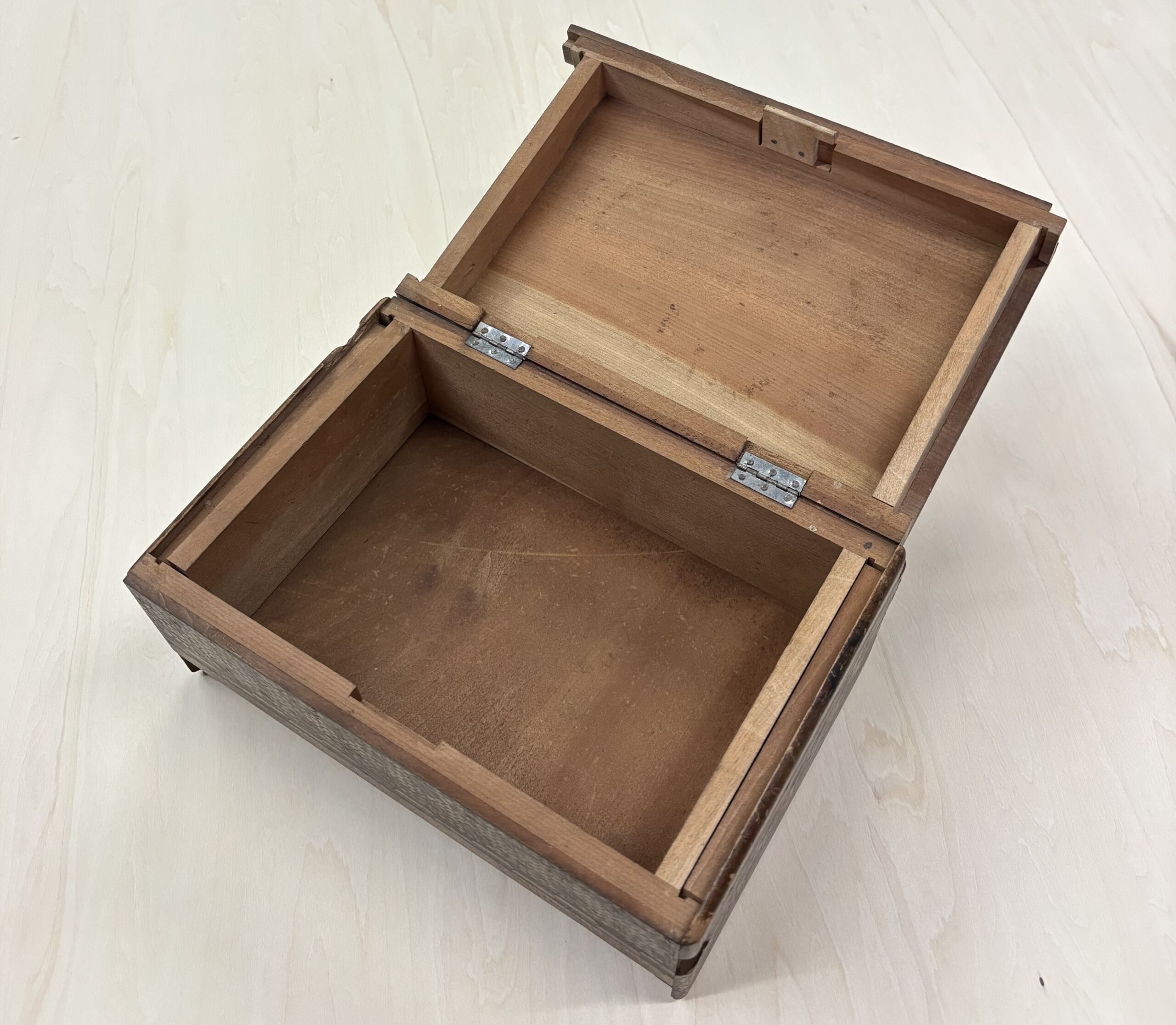
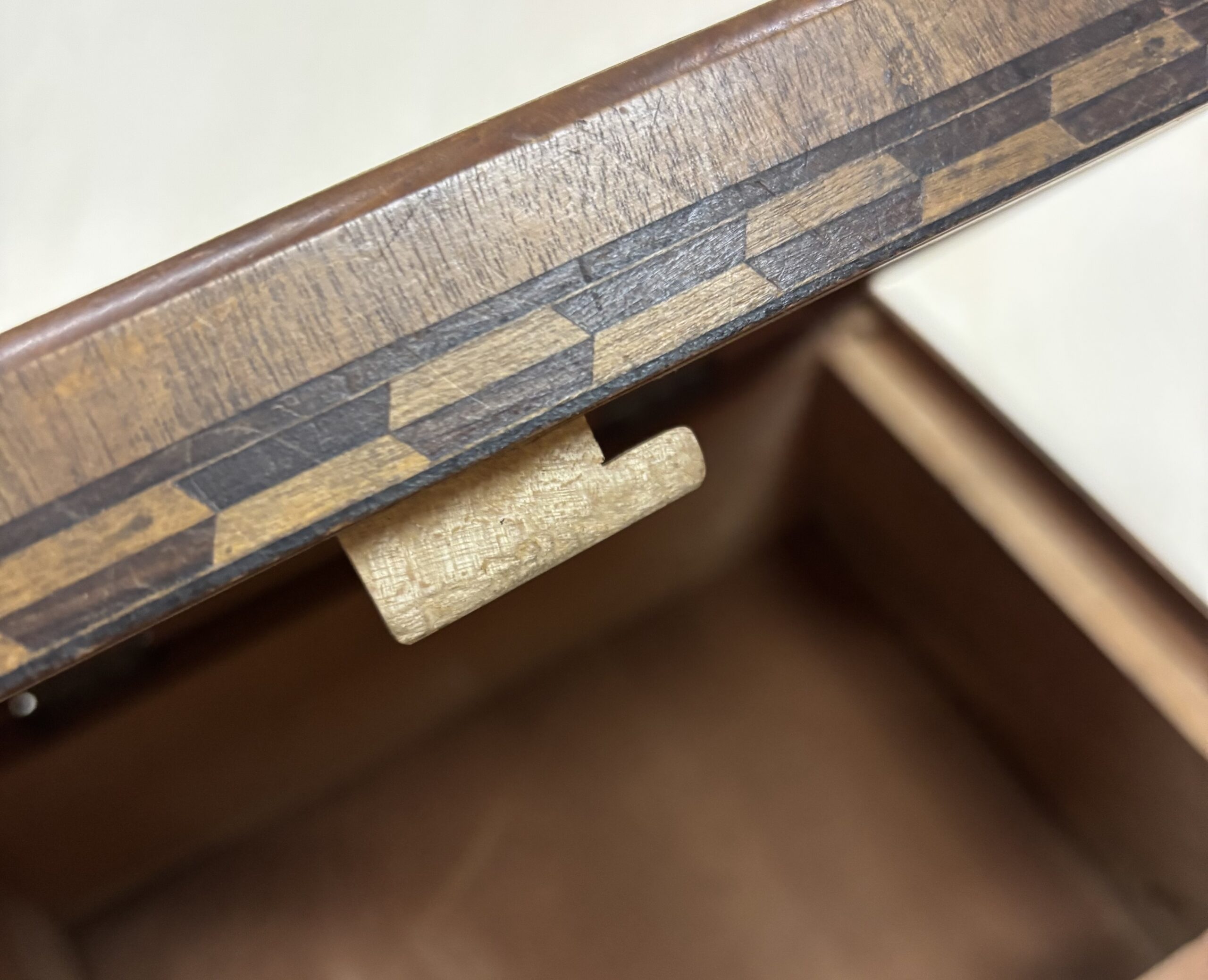
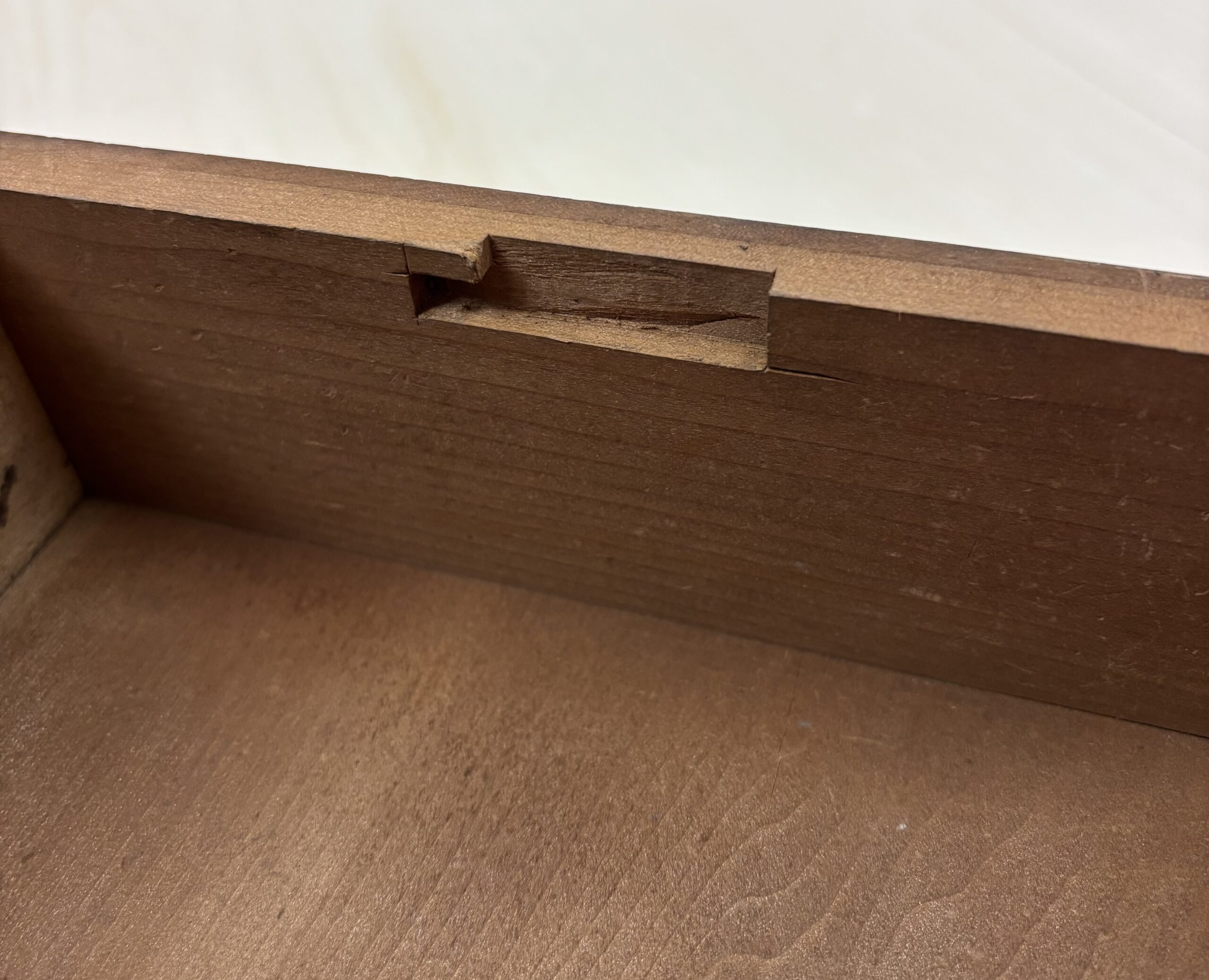
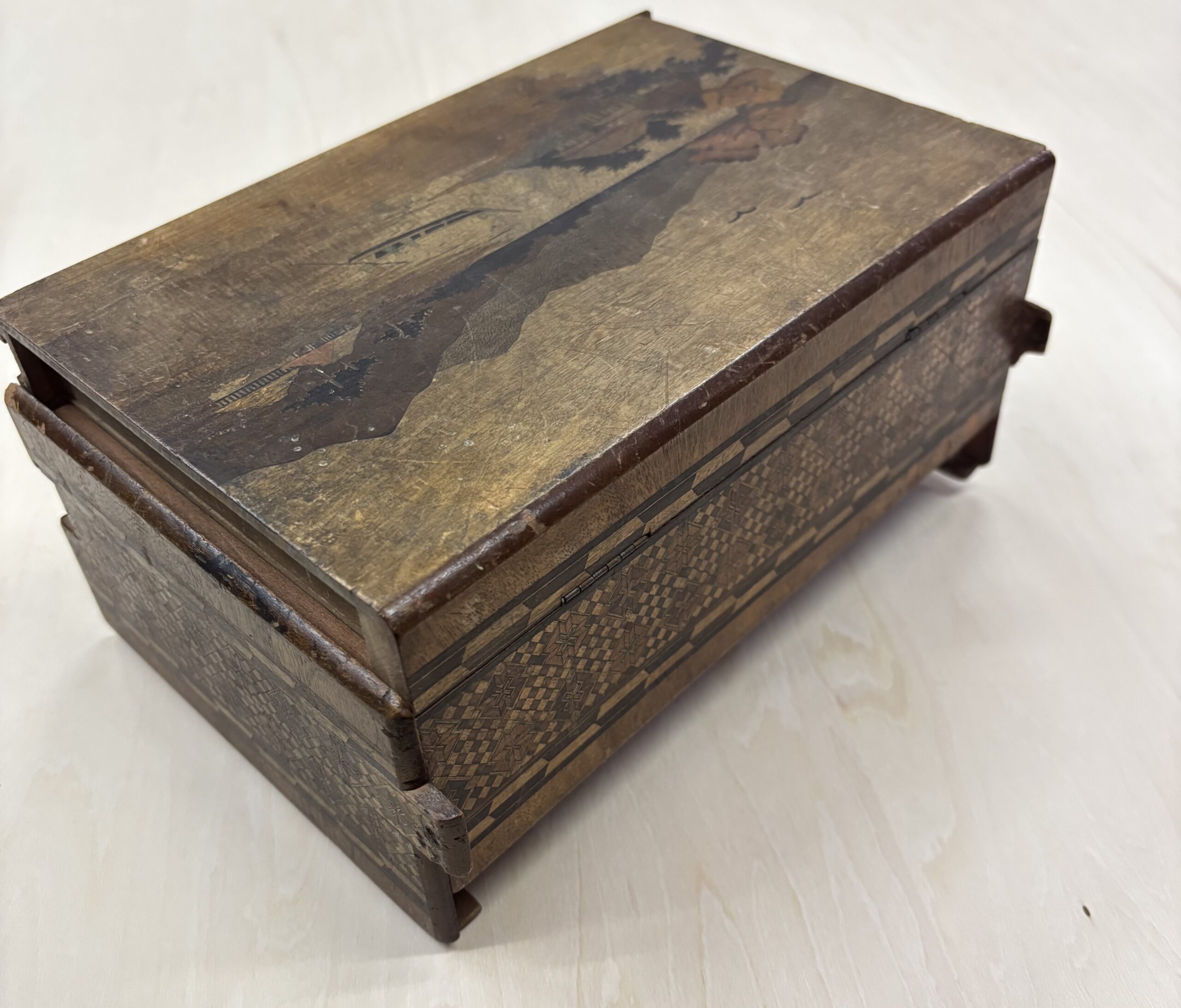
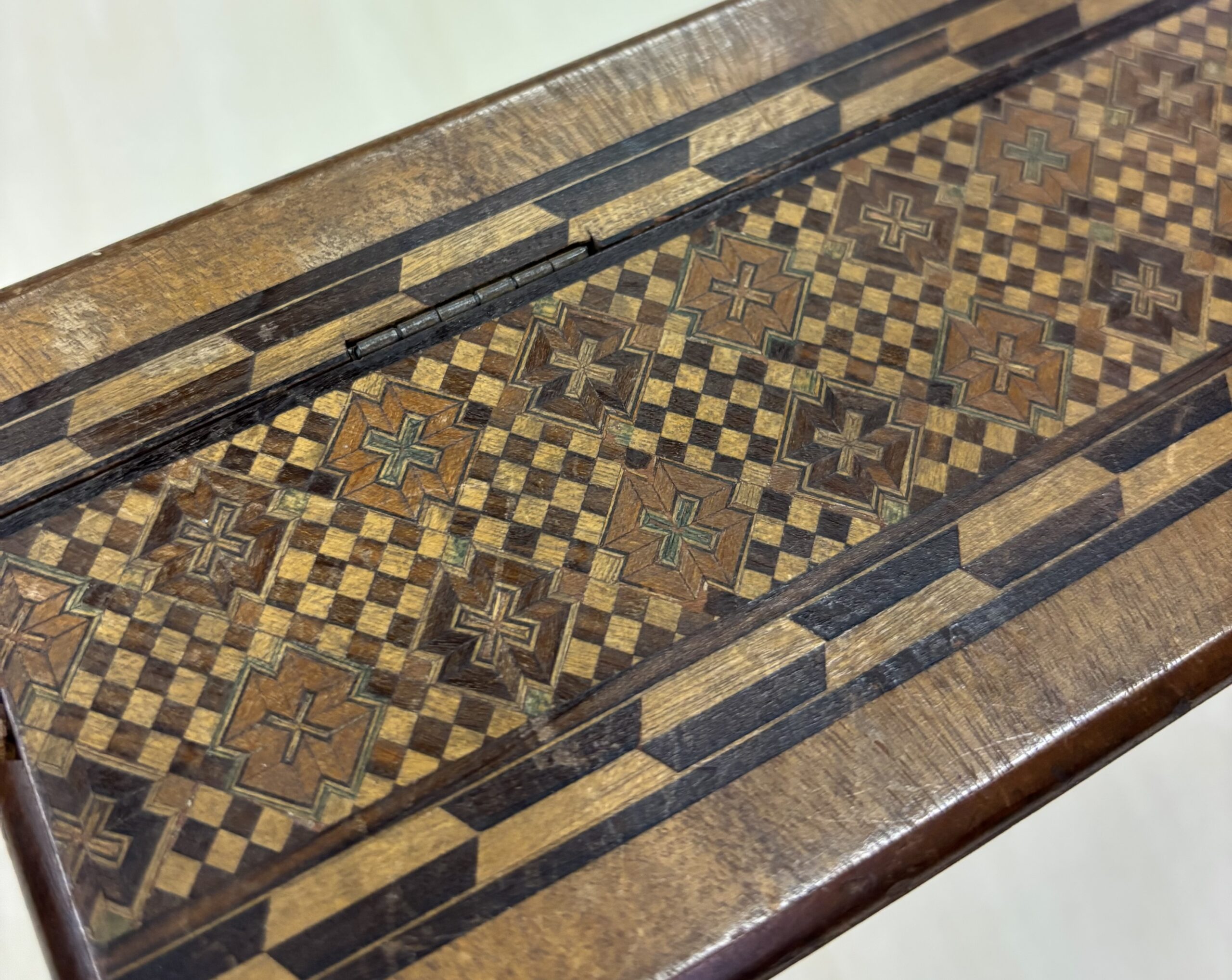
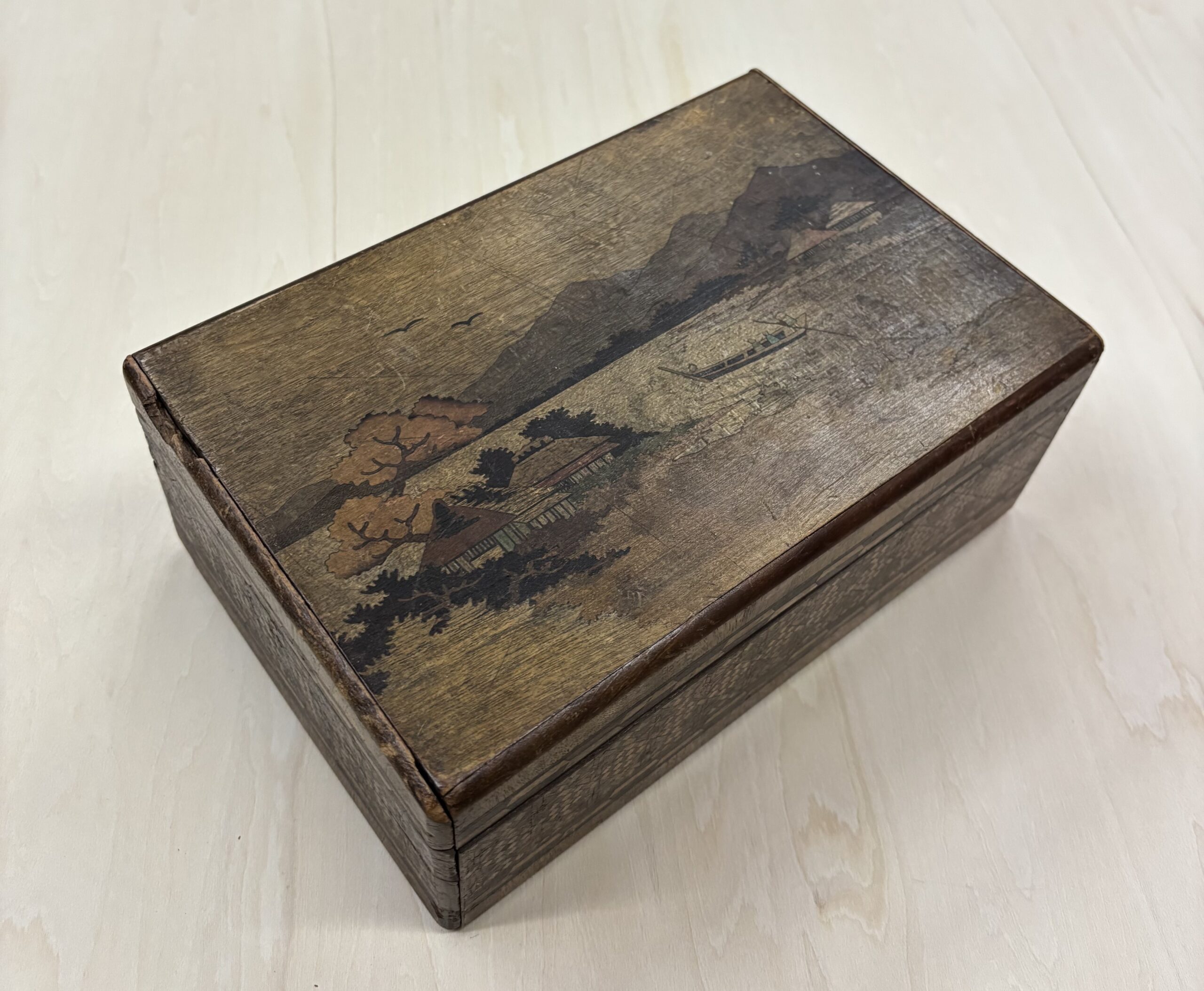
Today, I would like to write about a rather unusual box. I think it can still be called a Japanese puzzle box, though you might wonder! It uses sliding keys (Kannuki) and sliding panels (Aruki), but unlike most Japanese puzzle boxes, it has a lid that lifts open. There are two hinges along one edge of the top lid, allowing the other side to lift open. This is a common design used for small storage boxes and similar cases. The first thing you might wonder is how this hinged lid works with the sliding mechanism of a Japanese puzzle box. As you can see in the photo below, there is a bar-shaped part at the front of the lid that slides sideways. Moving this bar is the step just before lifting the lid. It releases the interlocking parts inside that act as a lock, allowing the lid to open. Both the way the lock catches and the sideways movement of this narrow part are typical of Japanese puzzle box mechanisms, so I suspect this box was made by a Japanese puzzle box craftsman.
Before the bar-shaped key can slide sideways, the side panel of the box must be pulled down. This panel uses the familiar Aruki panel and sliding key system found in Japanese puzzle boxes. At the moment, this mechanism works in just two steps: moving the sliding key and pulling down the panel. I do not know whether it originally had only two steps, or whether it once required more steps but now opens in two because something inside is broken. Lowering the panel reveals the hidden bar-shaped key and allows it to slide sideways. The Aruki panel has to move far enough to expose this bar, so it slides quite a long way. There is also an identical mechanism on the opposite side of the box. At present, it does not seem to work together with the opening mechanism, so I do not know whether it is simply a dummy or whether it is broken.
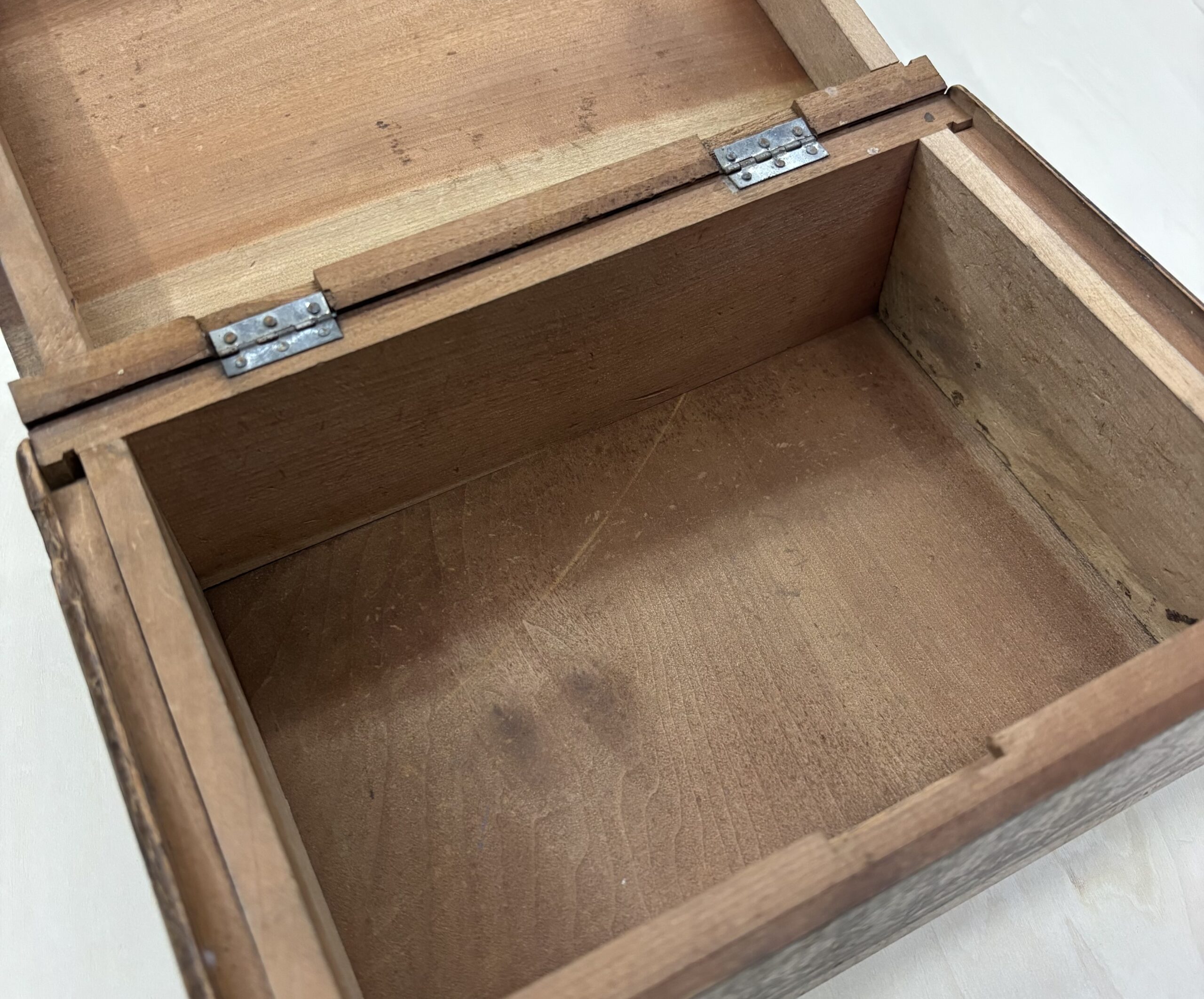
I will include the dimensions at the end, but this is quite a large box (23 cm = 7 ~ 8 sun). The wooden parts used in its mechanism are much thicker than those in a typical Japanese puzzle box. They probably need to be that thick to support a box of this size. However, once the lid is open, you can see that the internal axis panels and side panels are built just like those of a Japanese puzzle box. The use of high-quality Katsura wood is another feature it shares with Japanese puzzle boxes.
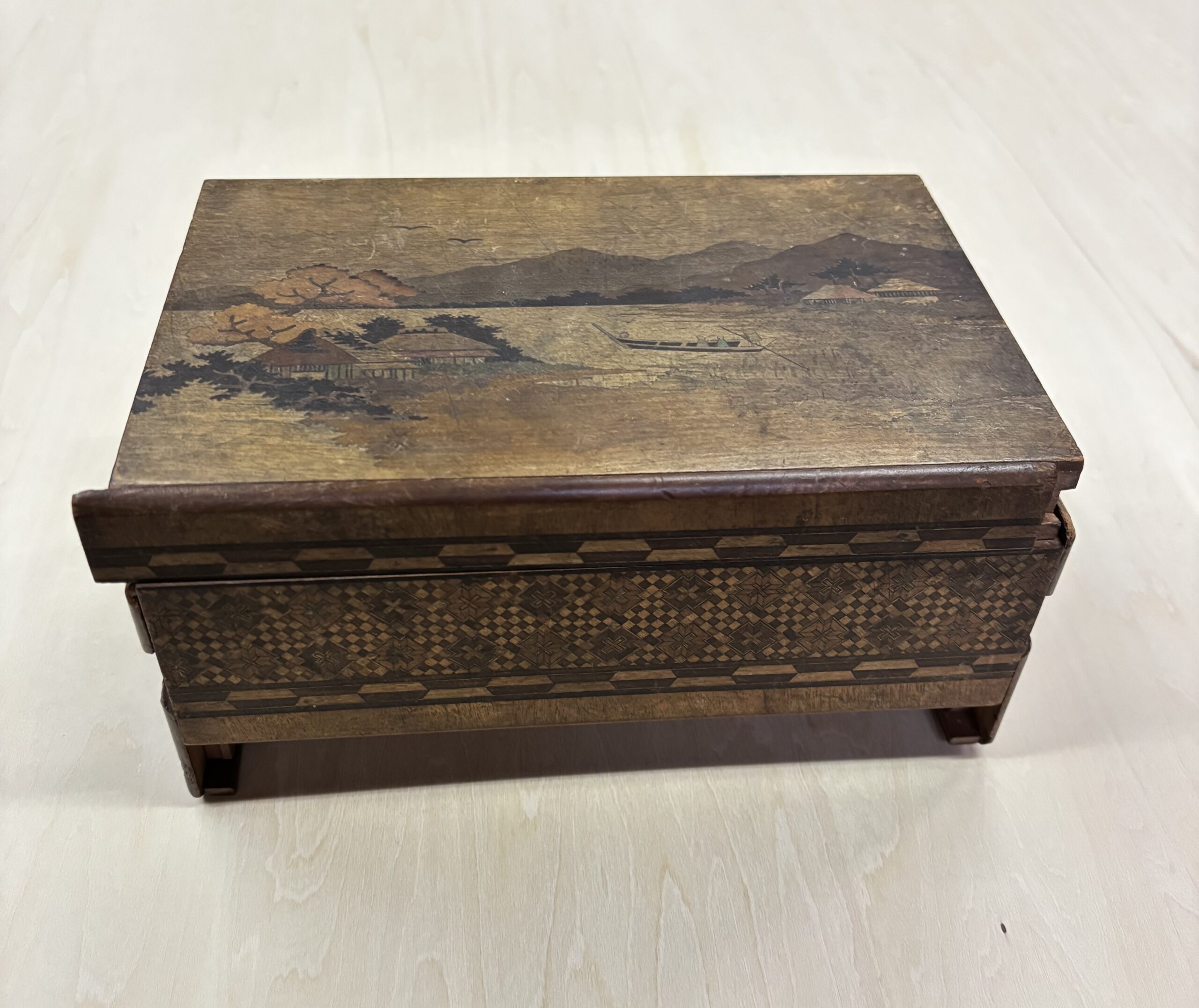
Now, about the decoration. The colors have faded quite a lot, but the top lid features a familiar mountain-and-water landscape, while the bottom has a wood inlay picture of a bird perched on a flowering branch. Although the landscape is a familiar theme, this design is more realistic and less simplified than modern examples or those on the old puzzle boxes I have shown on this blog. It looks closer to a natural scene and reminds me of a traditional Japanese painting. It is also more detailed than much of the wood inlay work made today. It may have been made by a craftsman about two generations before those working today. The flowering branch on the bottom also has the realistic style seen in older work. Many modern wood inlay designs are a little more simplified and have a cute appearance, while craftsmen in the past often tried to make their pictures look closer to the real thing. I cannot say for certain, but I think these are camellia flowers. The bird on the branch appears to be a sparrow, a familiar sight in Japan. One interesting detail is that the narrow Yosegi border around the bottom picture extends onto the side Aruki panel. Perhaps the wood inlay was first attached across the entire bottom, and cuts were then made to separate the moving section. Only the side Aruki panel needs to slide down, but on this box, part of the bottom moves down with it. Could this be to protect the Aruki panel from damage, or to make the box more stable when the mechanism is open? I think it was probably done for one of these two reasons.
Yosegi decoration runs all the way around the side panels. It has been carefully positioned so that the boundary between the lid and the box falls exactly where the upper and lower arrow patterns meet. This is very careful and detailed work. Another lovely detail is the black line where the lid separates from the box. The cut follows this line, so the Yosegi pattern does not appear to break off awkwardly. This is a technique used by craftsmen who make very detailed boxes. It reminds me of how the late Yoshiyuki Ninomiya made the sliding key sections of his puzzle boxes. He often said, “It doesn’t look beautiful when the pattern is cut off at the sliding key. By placing a strip of wood within the pattern like this, you can hide the sliding key neatly.” I doubt anyone still does this kind of careful, beautiful work today. I would like to try it myself someday! There is still much I do not know about this box, so I will add more information if I learn anything new. Here are its dimensions and weight.
External dimensions: 23.0 × 15.2 × 8.8 cm (approximately 9.06 × 5.98 × 3.46 inches)
Weight: 540 g (approximately 19.05 oz)