Today marks the start of a three-day weekend in Japan, with next Monday also a holiday. Monday is Sports Day, which used to be called “Health and Sports Day.” It was created to mark the opening of the first Tokyo Olympics on October 10 (the opening ceremony day), 1964. When I was a child, and for many years after that, this holiday was always on October 10. These days, some Japanese holidays fall on Mondays to make a long weekend. Sports Day is now on the second Monday of October, so this year it falls on October 12. As the name suggests, it is a day to enjoy sports and being active. When I was a child, school sports days were always held around this time of year. These days, we have more hot days than we used to, so some schools hold their sports days in the spring instead. The timing now varies from school to school.
Although the holiday began as a way to mark the opening ceremony of the Olympics, the weather is usually pleasant at this time of year, and people are encouraged to enjoy sports. I’m not sure whether people in other countries have had similar experiences, but in the past, the Japanese government often took the lead, and people would join the same events or follow similar ways of living. Japan is a democracy, but people sometimes jokingly called it a “state-led democracy.” Perhaps you could say that people were free to act, but within the direction set by the country, rather than each person choosing their own path. Today, with influences from many different cultures, there seems to be more freedom for people to do things in their own way. Looking back, some of those old customs might seem a little strange to young people today! 🤣
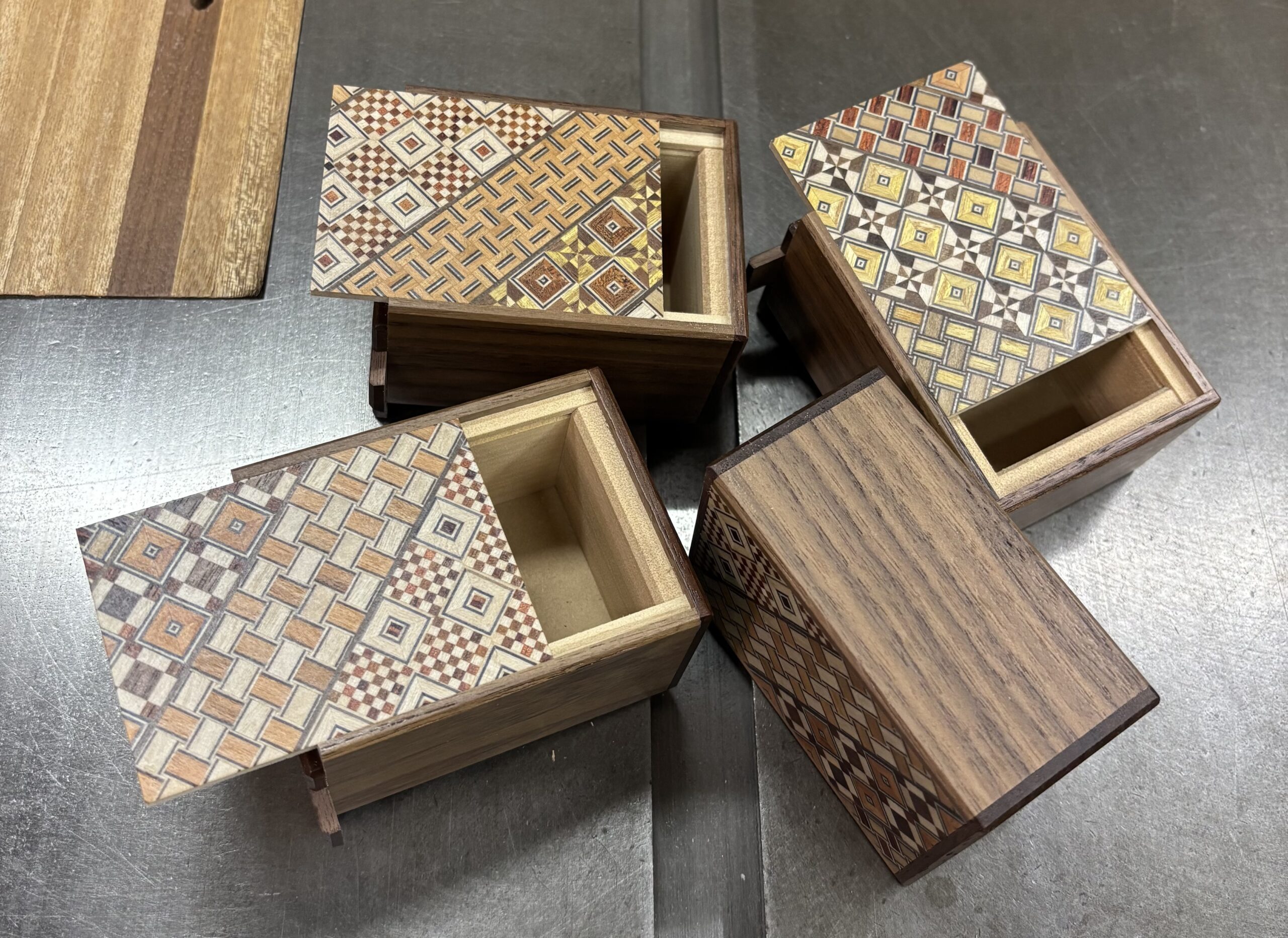
This afternoon, I stopped by the workshop for a little while and finished the 3-sun 7-steps puzzle boxes. This model combines traditional Yosegi with Walnut. I received requests for these boxes early this year, but I had other models to make first, so I have only now been able to make them. With these boxes ready, I can ship several models together to two shops overseas. These boxes are mainly for wholesale orders, and I haven’t decided yet whether I will make them again next year.
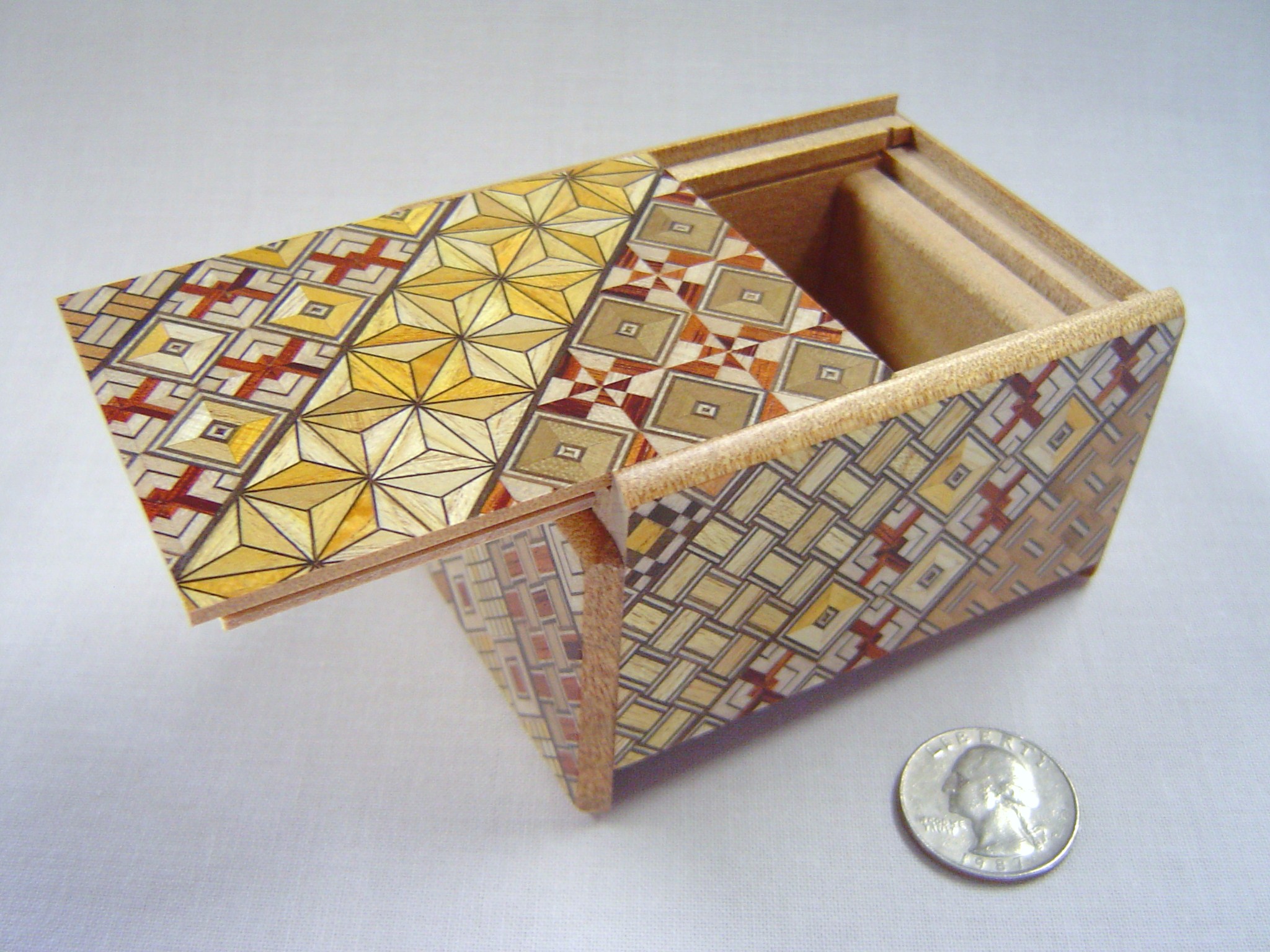
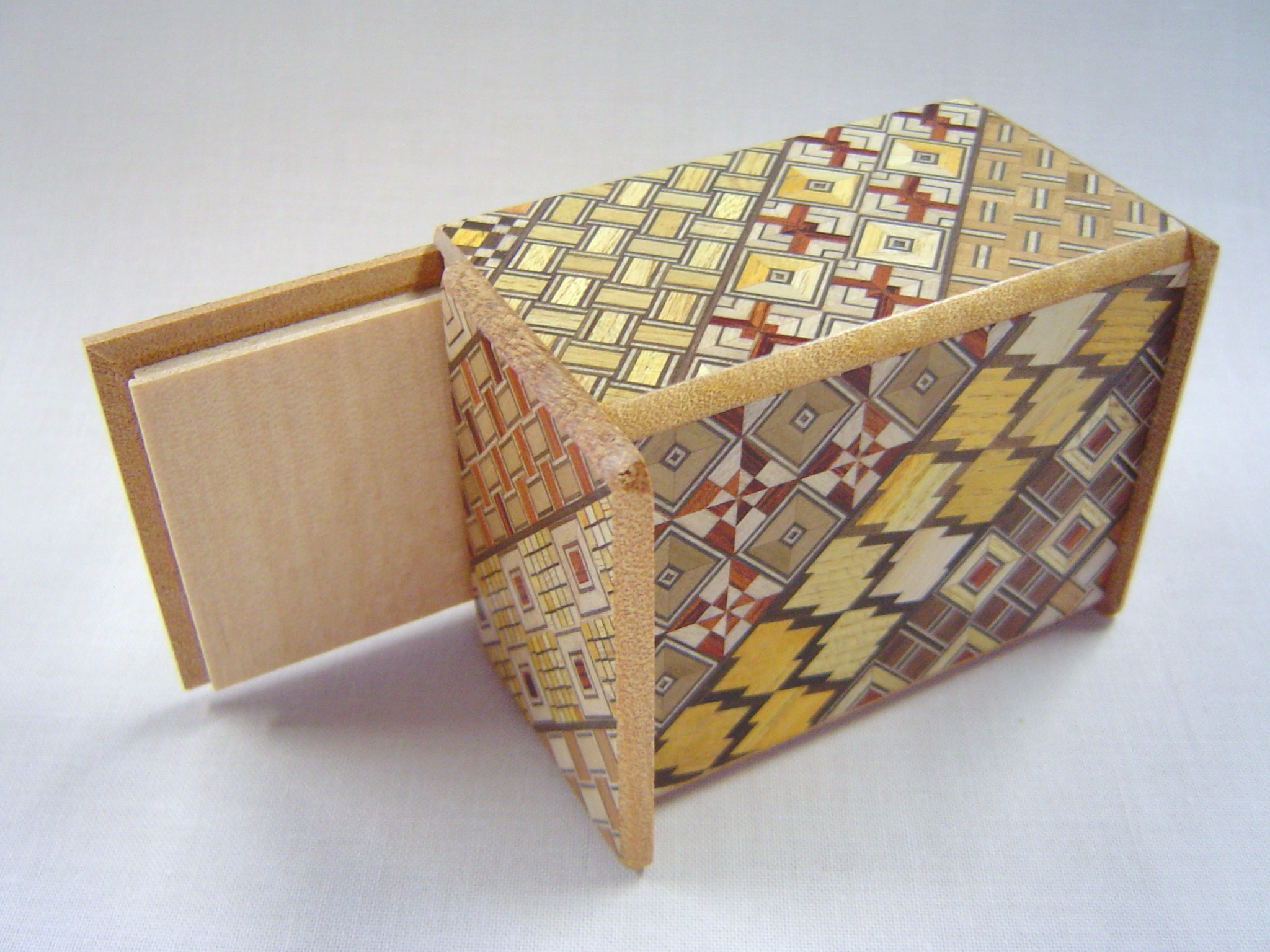
For my current 3-sun puzzle boxes, I cut a large Yosegi sheet into smaller pieces for the top and bottom panels. This gives each box a different arrangement of patterns. There are about five or six variations, depending on where each piece is cut from the sheet. I do the same for the 4-sun boxes, so the pattern arrangement varies from box to box. Until about 15 years ago, however, I used just one pattern arrangement for each batch of 3-sun boxes. For example, if I made 30 boxes, all 30 had the same pattern. At that time, I had special Yosegi sheets made just for the 3-sun size—one type for the top and bottom panels, and another for the side panels. I first started making the 3-sun size in 2003. Before then, this size had not been part of the Japanese puzzle box tradition. As I have written before, when I started my own workshop, I felt it would be impolite to make the same boxes as the more experienced craftsmen, so I decided to create a different size. Well, some of my other sizes were the same as theirs! 😅 Today, there are fewer Yosegi craftsmen, and they are too busy for me to ask them to make special sheets for the 3-sun size. Instead, I order large Yosegi sheets and use them for both my 3-sun and 4-sun boxes. Finally, I’ll share a photo of a 3-sun box I made back then. This is a 4-steps puzzle box. Its special feature is the pattern in the center of each panel: “Asanoha,” or hemp leaf, on the top, and “Matsukawabishi,” or pine bark diamond, on the bottom.