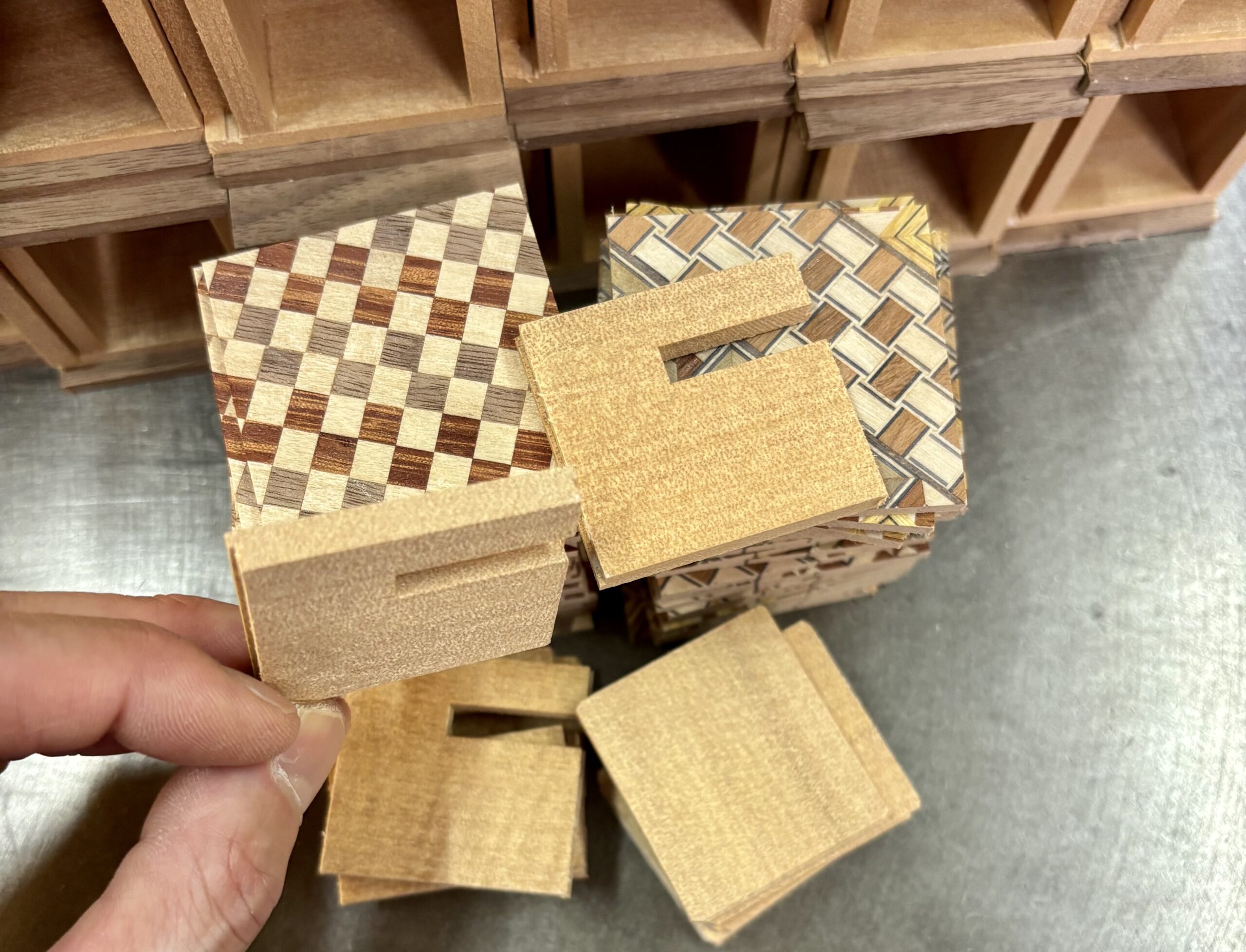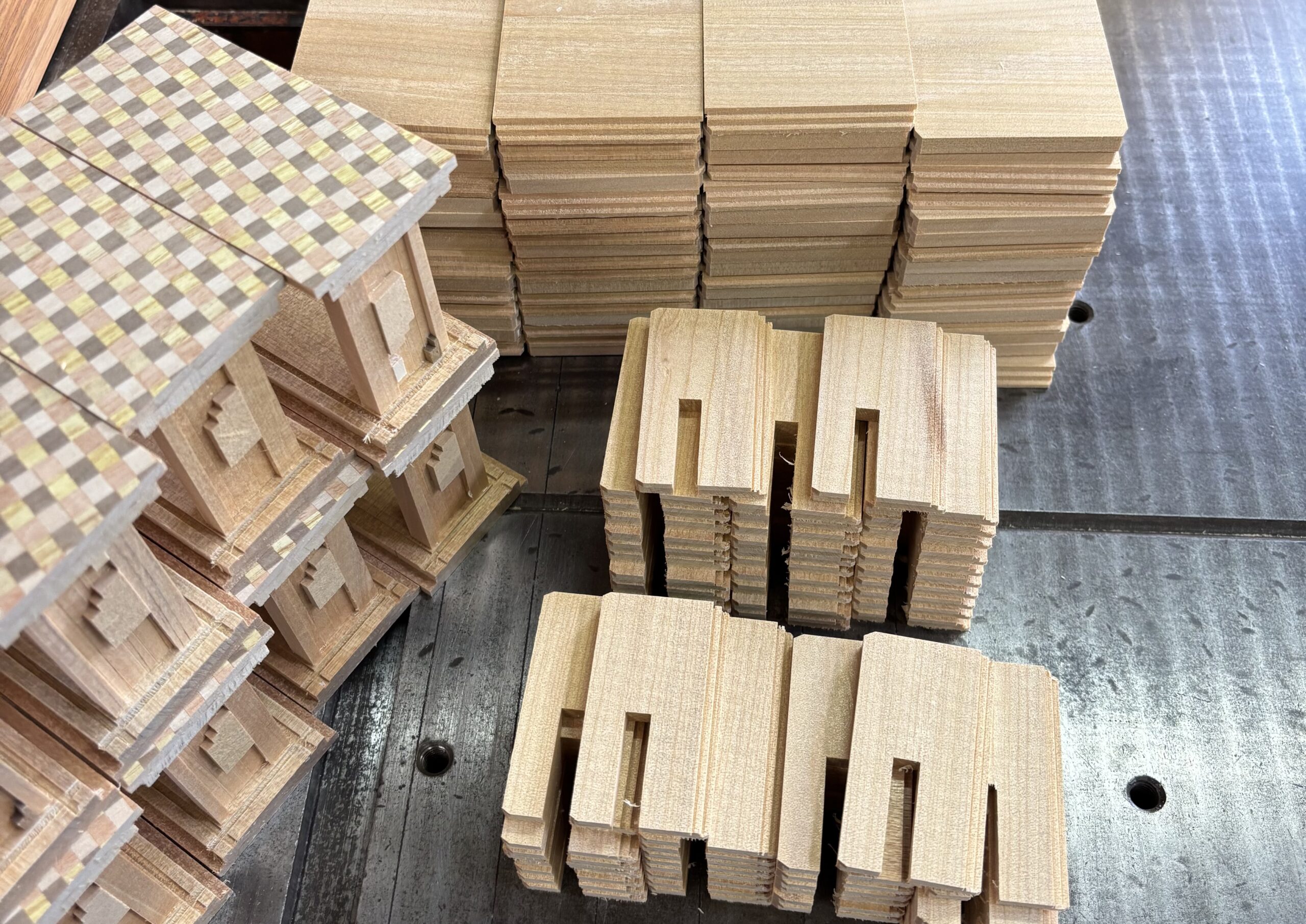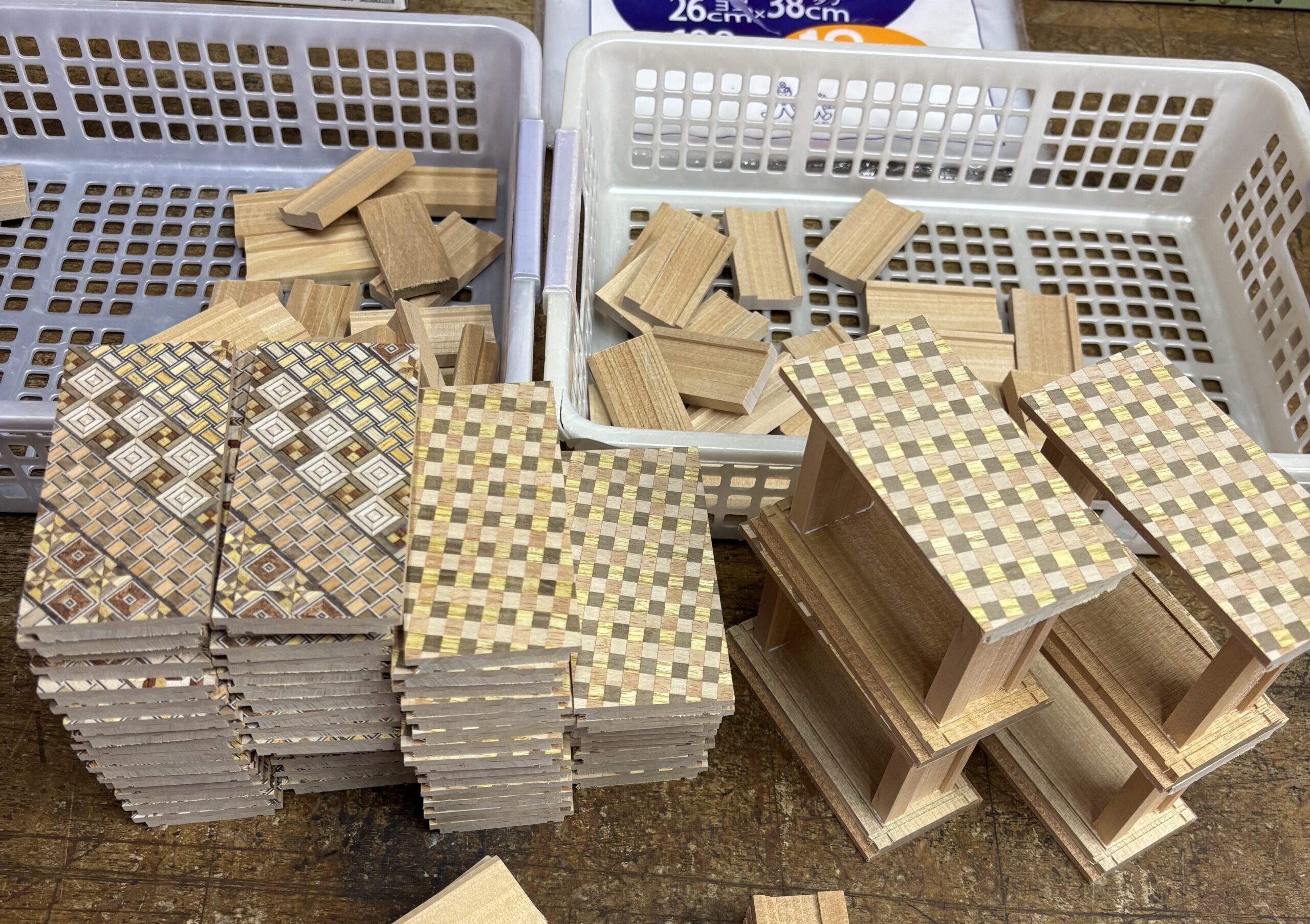
The rain that started last night continued through today, so it rained all day. The extreme heat from the past few days eased a little, and because of the big change in temperature, it even felt a bit cold. I had some things to do in the morning, so I only started working in the workshop in the afternoon. Since it was raining, I avoided doing any work that required very high precision, and instead mainly worked on the 4-sun 21-steps Japanese puzzle boxes.
I had already made the frame panels, and when I cut the grooves for those panels, I first prepare the actual Aruki sliding panel material for the side surfaces by shaving it down to the correct thickness and matching the grooves to that size. So the material for the side Aruki panels had already been prepared and adjusted to the proper thickness. For puzzle boxes with 18 steps or more, the top Aruki panels use the same thickness as the side panels, so once the side panel material is ready, I can also cut the grooves for the top and bottom panels at the same time. So today I prepared the material for the top and bottom Aruki panels and shaved them down to the required thickness. As I wrote before, for these top and bottom Aruki panels I intentionally join together several narrow wooden boards to help reduce warping. So this time as well, I joined together two or three narrow wooden boards to make one panel. I first did the gluing process, then waited several hours for the glue to dry, and this evening I shaved them down to the proper thickness. After about three hours, the glued sections are usually strong enough that they will not come apart.
While waiting for the glue to dry, I assembled the frame panels that I made yesterday (photo). The assembly process is basically the same as for the 18-step puzzle boxes, since the size and the thickness of the Aruki panels are the same. The difference is in the shape of the internal parts that will be attached inside. To attach those parts, there is a lowered groove cut into the axis panel, and that groove is also the same 18 mm width used in the 18-step boxes. This 18 mm size comes from adding together the 7 mm size of the internal wooden piece (Botchi) and the actual movement distance of the mechanism, which in this case is 11 mm. On these boxes (both the 21-step and 18-step versions), one of the Aruki panels moves 11 mm, and then the lid can finally open. But if the other Aruki panel also moved 11 mm, the bottom panel would fall out completely. So I attach a stopper part inside, which intentionally limits the movement to only 7 mm. I plan to attach these internal parts tomorrow.