It is relatively nice weather again today, although it is sometimes cloudy. It feels quite warm. I stop by the workshop for a while in the afternoon. I have some visitors scheduled later and need to go out for a bit, so I am not doing much work today, but I am preparing for shipping and doing some packing.
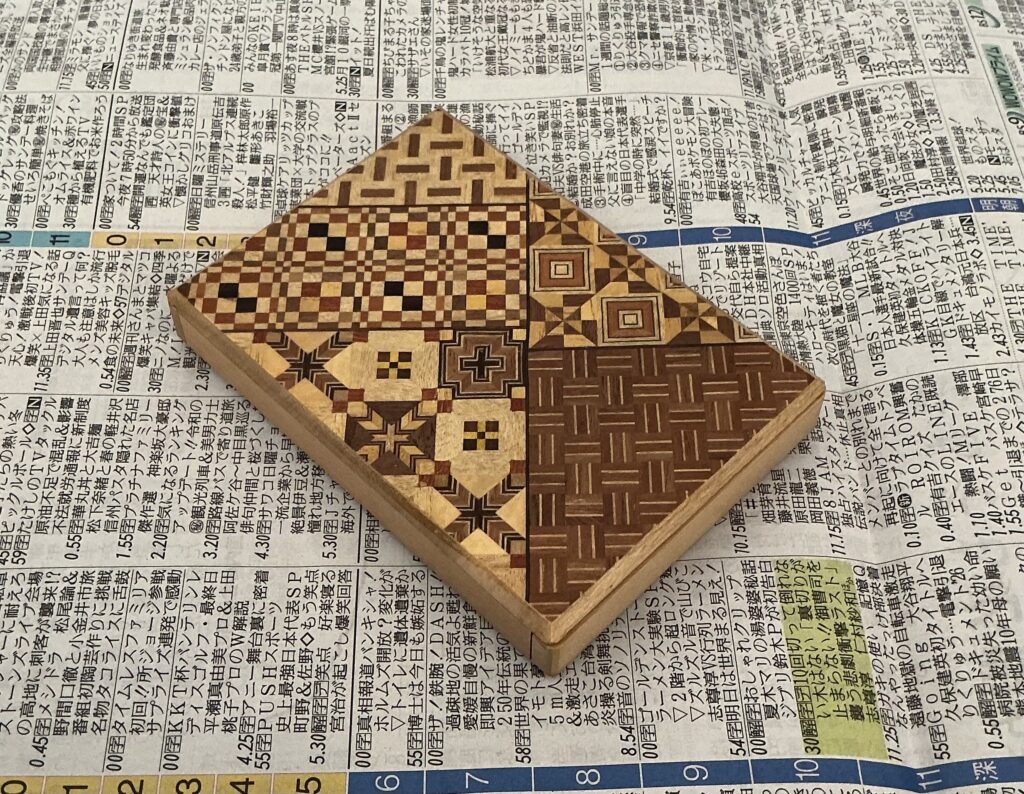
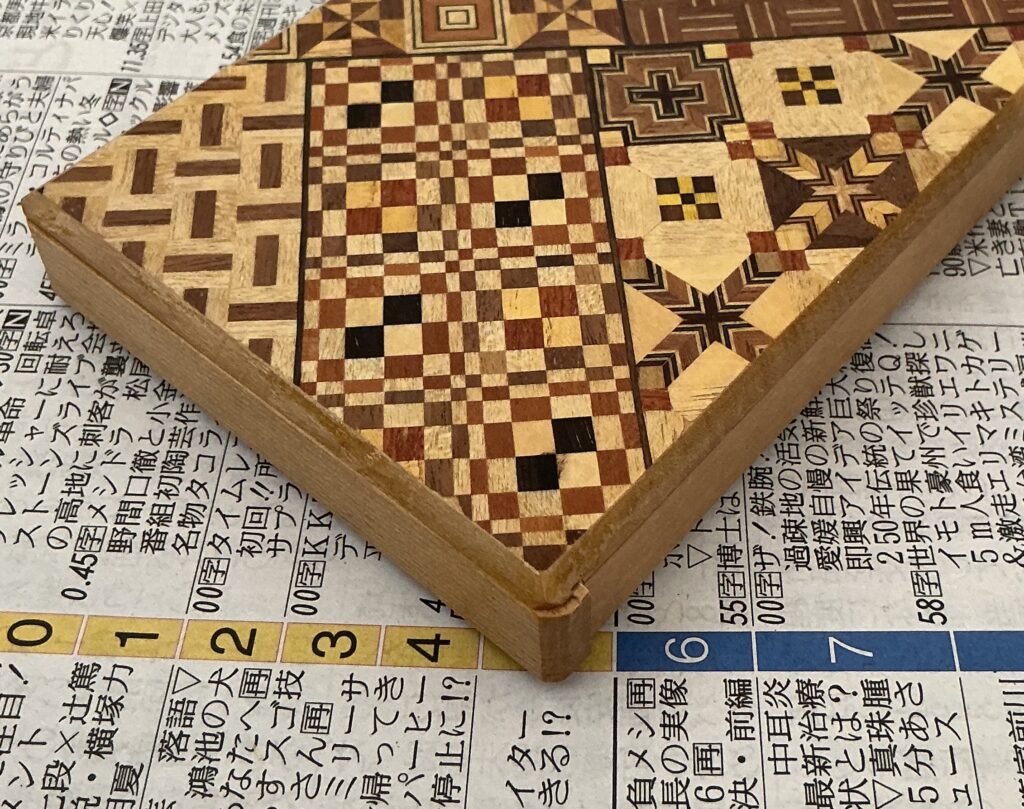
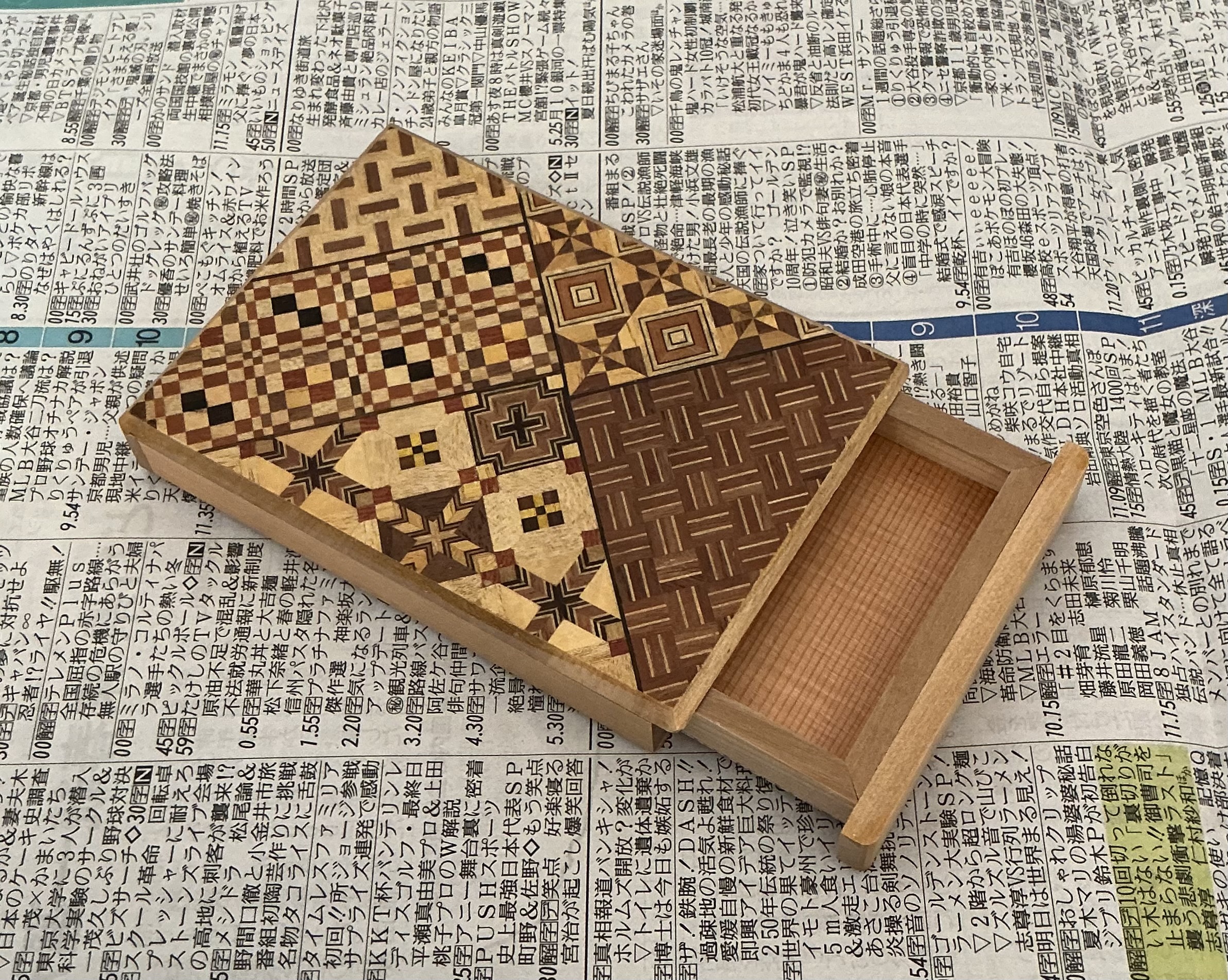
Continuing from yesterday, I would like to introduce another card magic box. I think this one was also made around the same time as the one from yesterday. The top panel is decorated with traditional yosegi, and the quality of the work feels quite high. Since it uses the same materials and is made in the same size as yesterday’s box, I think it may have been made by the same maker—at least for the box itself. In Hakone craft, the box and the decoration are often made by different craftsmen. They are generally divided into box makers, wood inlay craftsmen, and yosegi craftsmen. Sometimes, a craftsman makes a box using their own yosegi, but it seems rare for the same person to handle both wood inlay and box making.
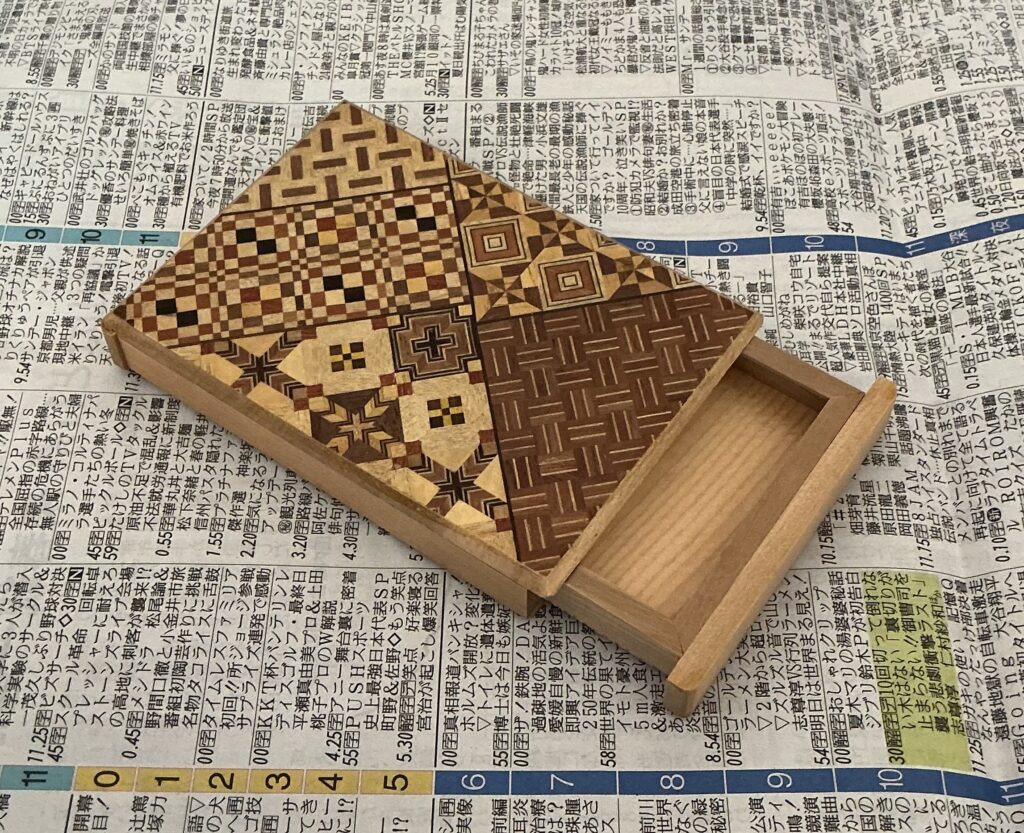
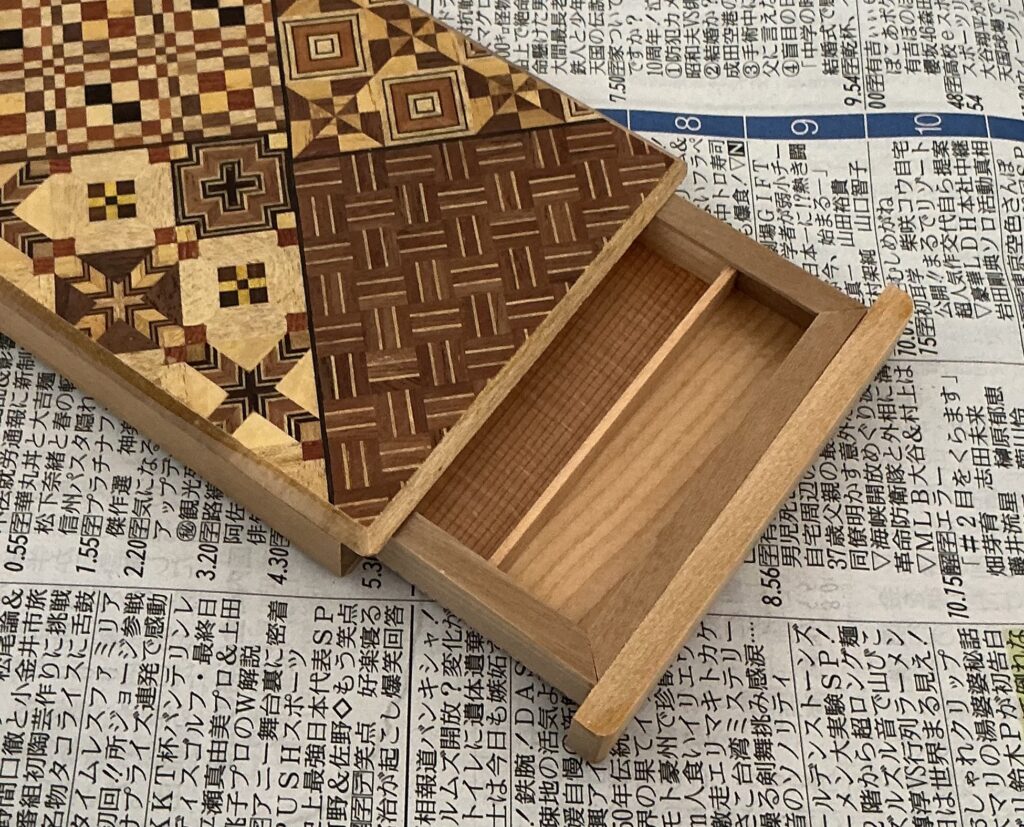
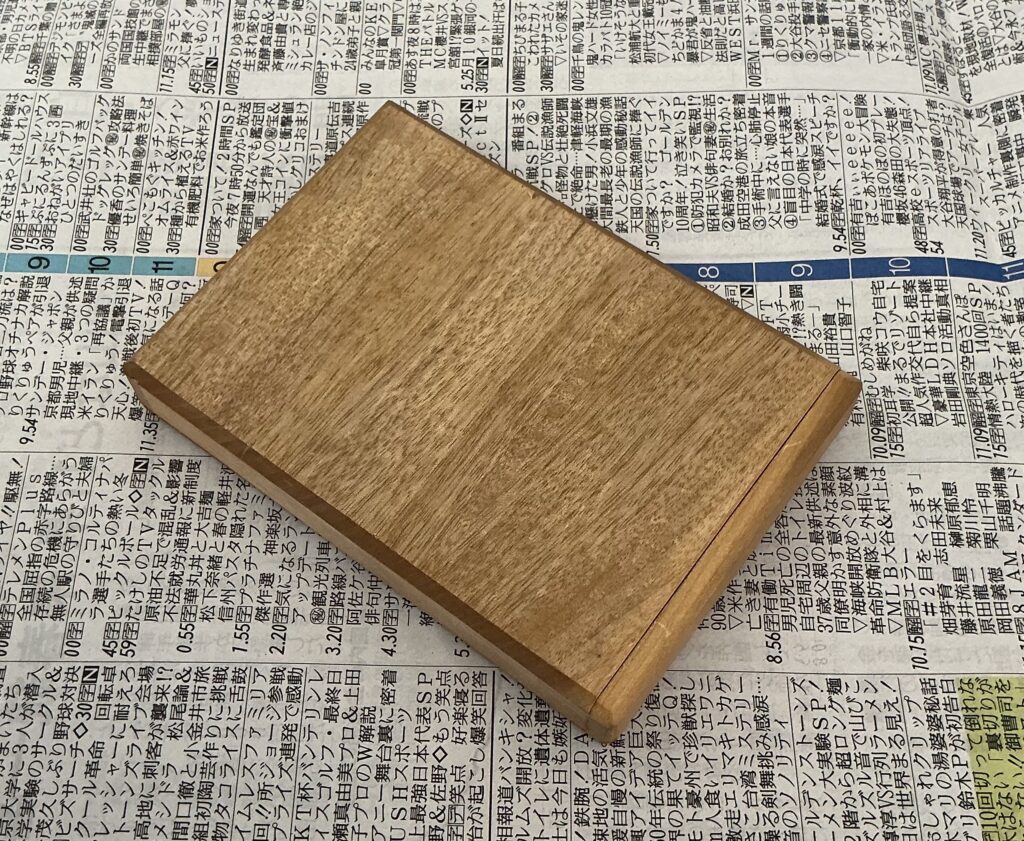
Looking at the back side, this one also has a camphor wood (Kusu) sheet applied over magnolia wood. This kind of detail does not happen by accident—it is something done intentionally—so it is one of the reasons I think it may be made by the same person. As I mentioned yesterday, magnolia wood itself is already quite beautiful, so it would be fine as it is. But choosing to add camphor on top shows the craftsman’s attention to detail. The internal structure is also the same as yesterday’s box. One interesting feature of this type of magic box is that softwoods like cedar or cypress are used inside. I’m not sure if this is because the inner box needs to be as light as possible, or simply because these woods were more easily available, but this gives the box a light and gentle feeling.
In Japan, there is something called kyogi – thin sheets made from softwood. These sheets have been used for a long time to wrap foods like rice balls, sashimi, and traditional sweets, because they have natural antibacterial properties, absorb moisture, and allow air to pass through. Woods like cedar and pine have compounds that help prevent decay while maintaining a good level of humidity. The inside of this box reminds me of that kyogi feeling. It has a very Japanese sense of craftsmanship. I also feel that this kind of light construction is a special characteristic of traditional Hakone craft. I once heard from a local shop that heavy items are not very popular as souvenirs, so this lightness may also be part of its appeal. At the same time, it gives a simple, nostalgic feeling. Even Japanese puzzle boxes (himitsubako) in the past, when they were made entirely from Japanese katsura wood, had this same lightness. Looking at them now, they feel very nostalgic.
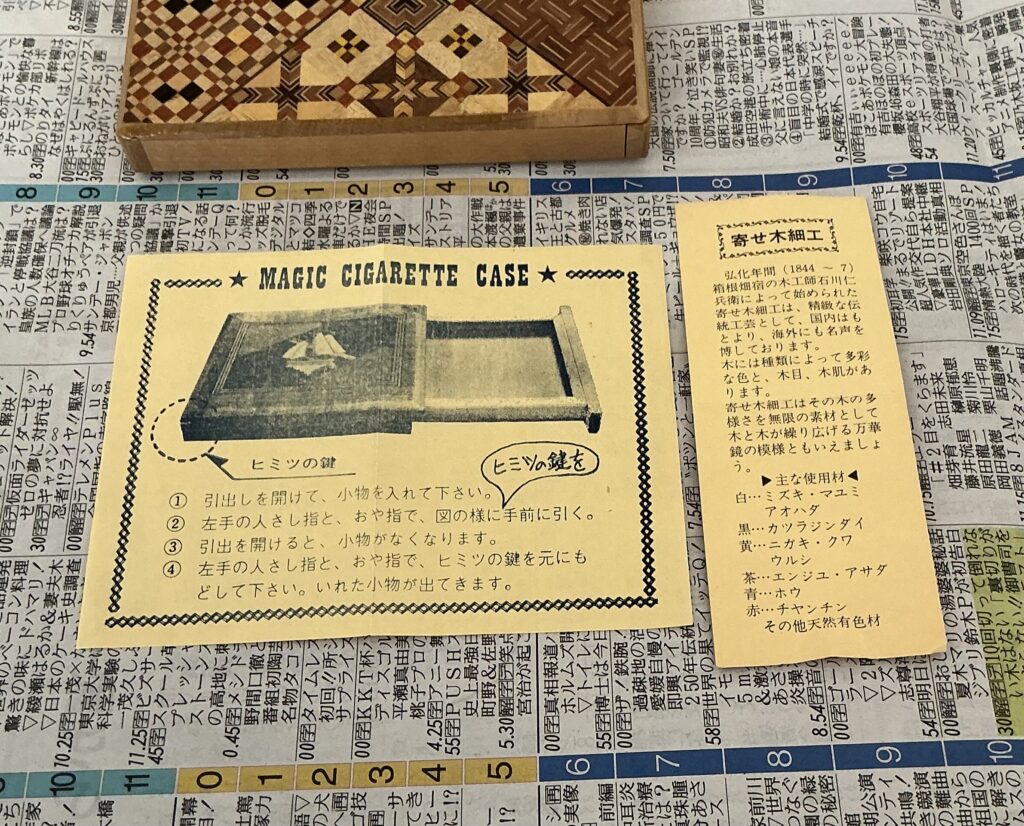
And there is one more reason that makes me feel this was made by the same maker as yesterday’s piece. This box still had an instruction sheet inside. The illustration on that sheet shows the same yacht-design card magic box from yesterday. I think this instruction sheet was probably made by the shop that sold it. Usually, a shop (or a wholesaler) asks a craftsman to make the products, so it’s quite possible that both of these boxes were ordered from the same maker. What surprised me was the name written on the instruction sheet: “Magic Cigarette Case.” I was quite surprised 😅 So at that time, it was sold as a cigarette case! When I entered this field, no one called it that anymore. It was always called “card magic,” so I thought it was meant for things like business cards. Back then, the smoking rate was much higher than it is now, so it may have sold better that way. It was an interesting discovery for me 😊