It was a sunny Saturday today. I came to the workshop in the afternoon and took care of a few small tasks and some work. Today, I mainly worked on the 3-sun 18-steps puzzle boxes. To be ready to attach the side panels at the beginning of next week, I finished attaching the top and bottom panels today.
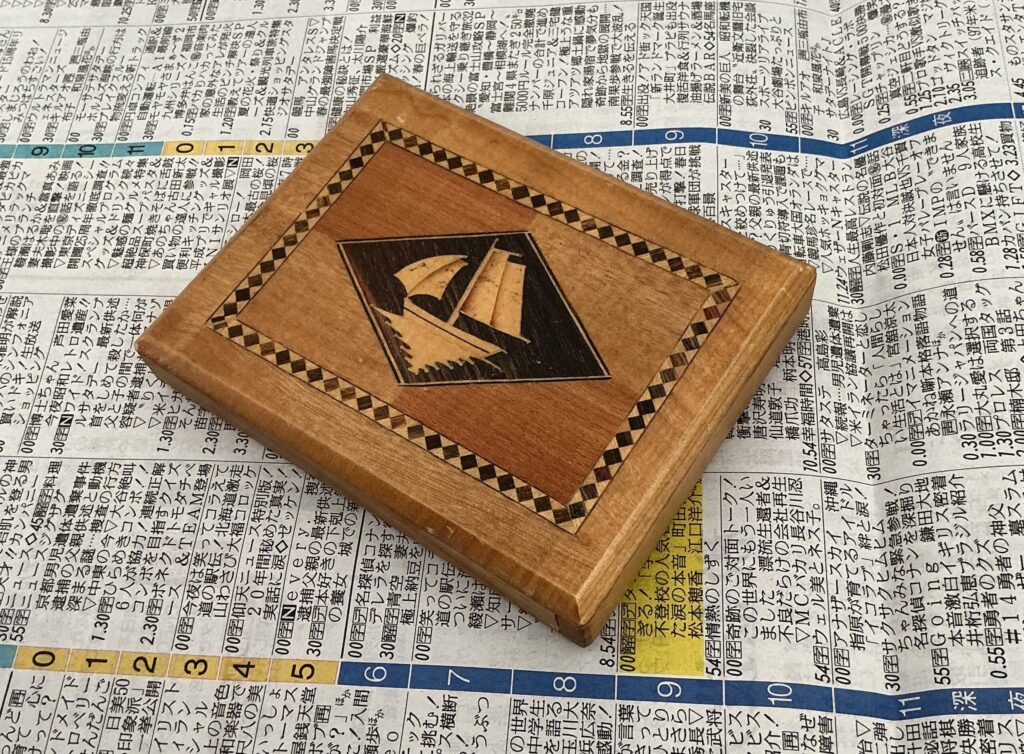
As I posted on Instagram and Facebook yesterday, some of you may already know, but I came across a slightly older magic box. It is sold as a “magic box,” but in our area, it is often called a “card magic box”. This type of simple trick box currently comes in two types: the “coin magic box,” where a coin disappears, and this “card magic box.” It is called “card magic” to distinguish it from the coin magic version.
To be honest, there is no direct connection between the maker (or workshop) of this box and our Japanese puzzle box (himitsubako) workshops. In the Hakone and Odawara area, these karakuri boxes have long been divided into two main types: “trick boxes” like this card magic box, and the “Himitsubako” that I make. I once spent a short time working together with a craftsman from a trick box workshop. He said he generally understood how Himitsubako are made, but he didn’t actually make them. The reason is simply that the methods are completely different. In the past, many kinds of trick boxes were made, but now it seems that mainly these two types remain.
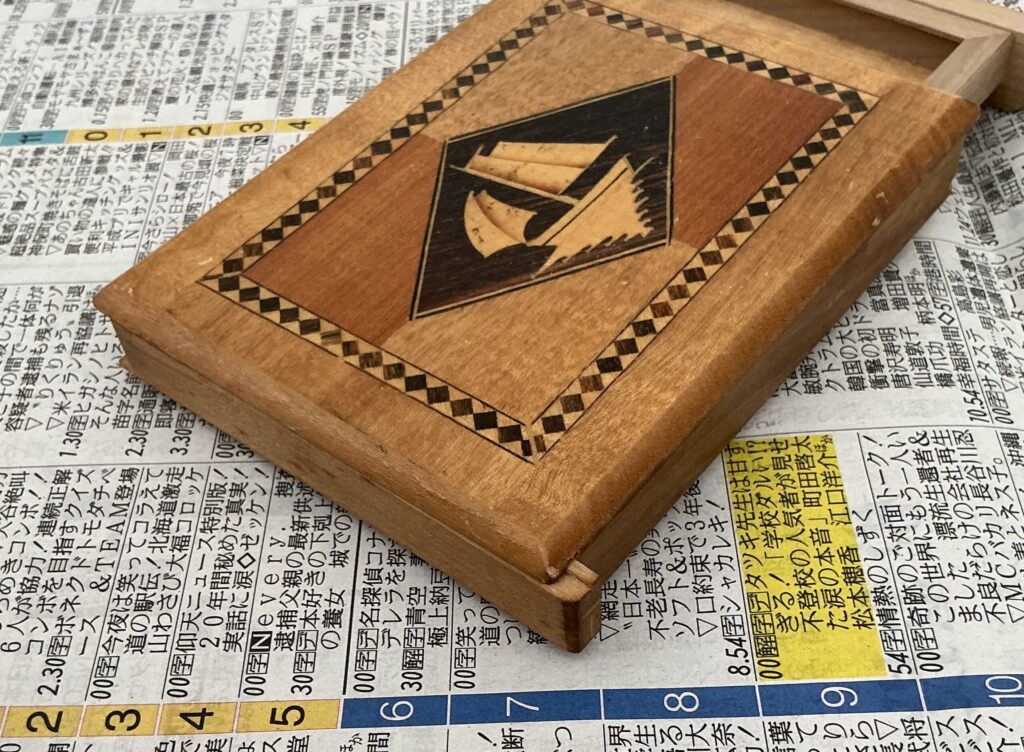
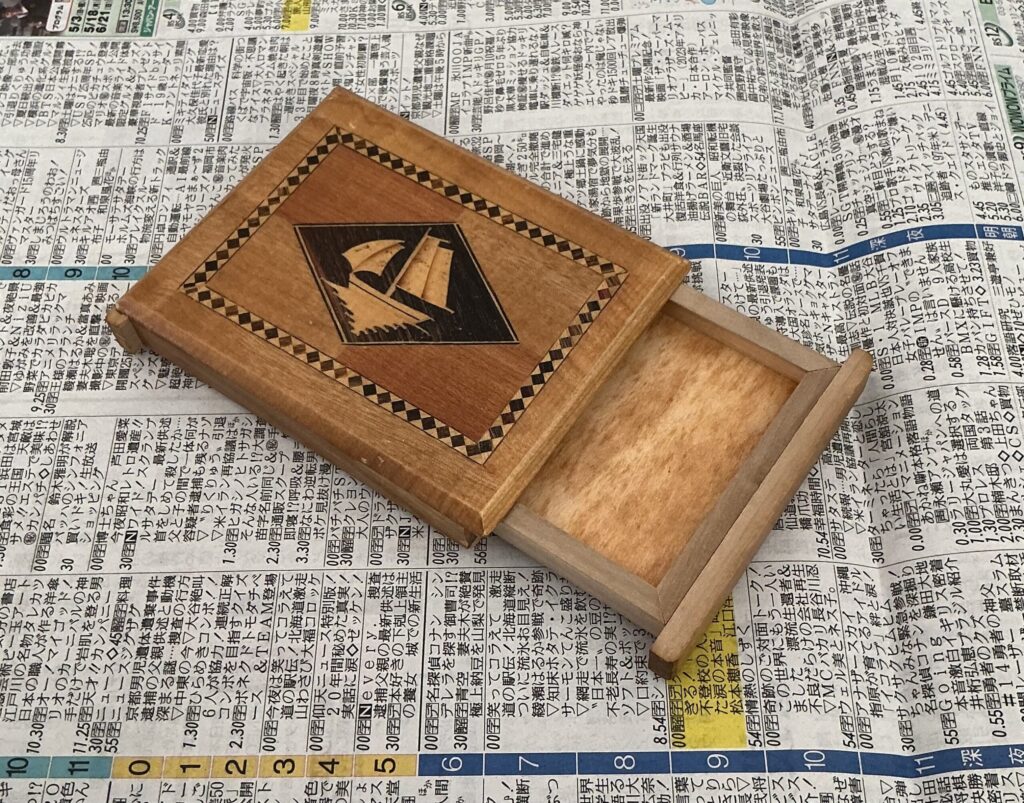
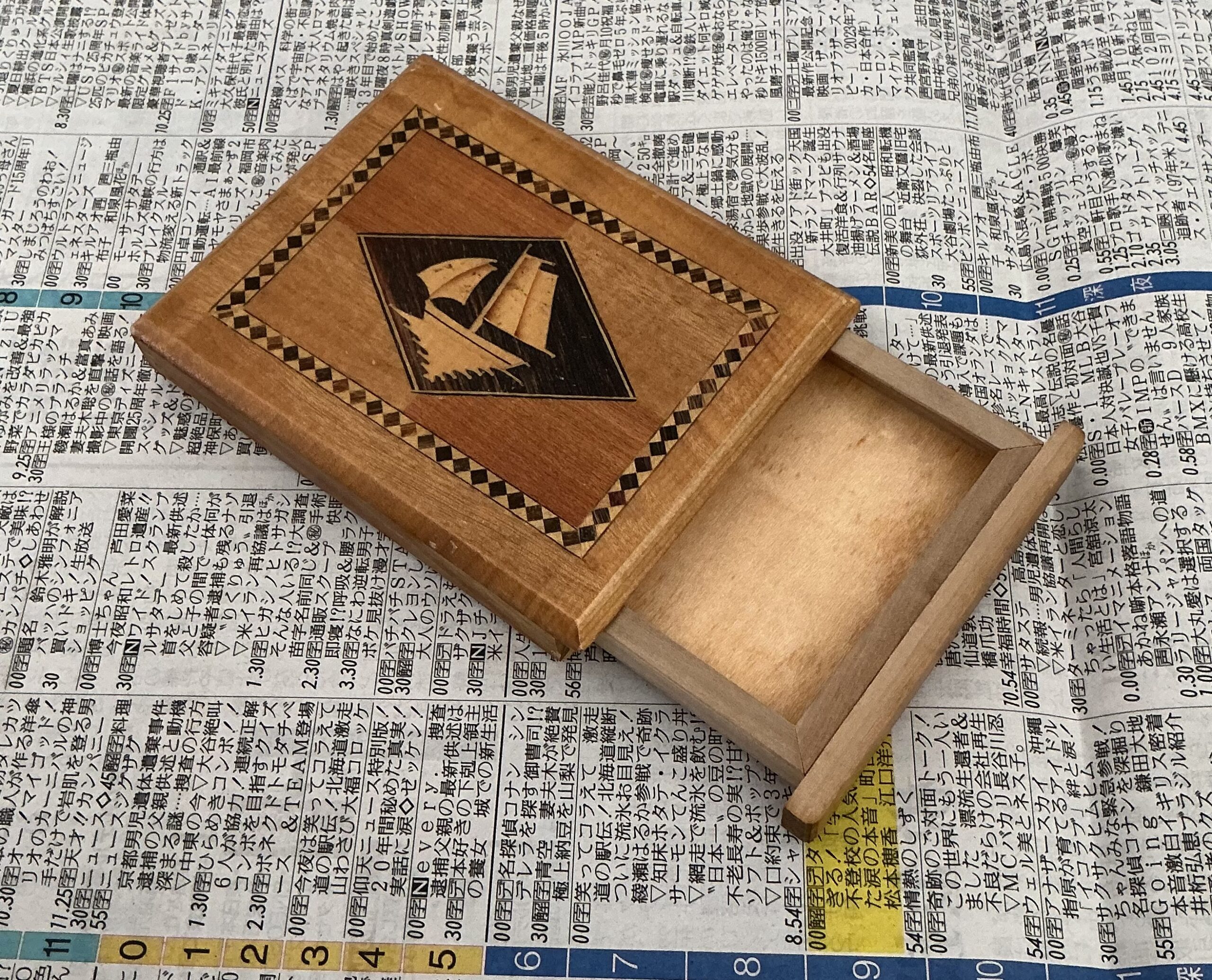
Most card magic boxes made today usually have traditional yosegi on the top. However, this one has a yacht wood inlay. It’s a very nice design. At that time, many trick boxes were decorated with wood inlay. They were not always traditional patterns, but often had more stylish or decorative designs. I think this is one of those examples. Not only does it have a yacht design, but it also has a diamond-pattern inlay around it. It’s a small detail, but today it would probably be made with a simple line pattern instead. I feel that nowadays there is a stronger focus on efficiency rather than the time and effort put into such details.
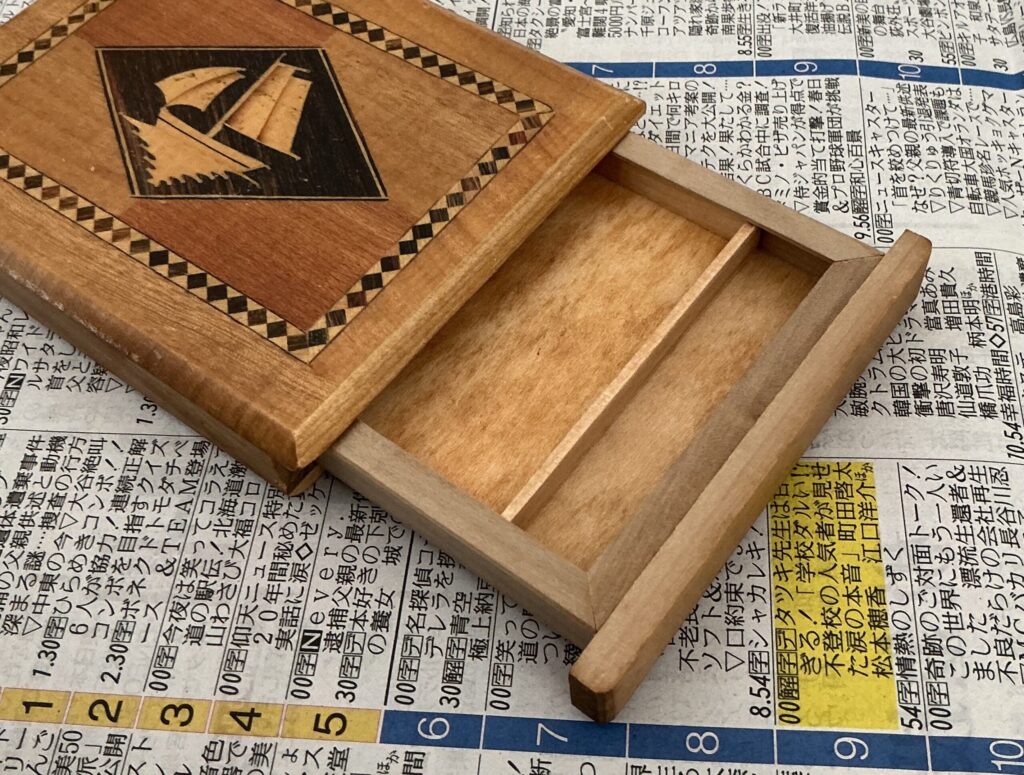
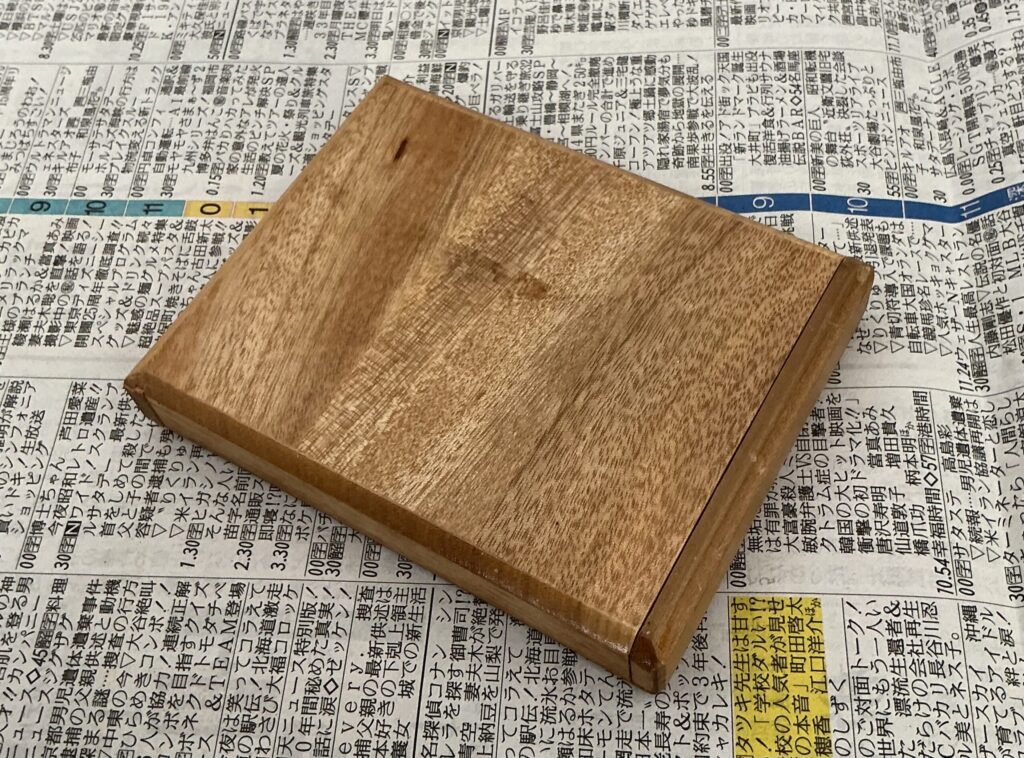
The mechanism is that when you put something like a card inside, it disappears the next time you open it. The structure is double-layered inside. When you slide the key on the back of the box, the inner box stays inside the outer box, and only the outer part comes out. In other words, moving the sliding key hooks the inner box in place. Because of this double structure, the wood used for the inner box is very thin—probably around 2 mm. You can see this in the photo. It’s a very delicate mechanism, and because the material is so thin, it requires careful and precise craftsmanship. In many cases, card magic boxes were made using Japanese magnolia wood (Ho wood). This box has also discolored over time, but it is made of the same material. Nowadays, magnolia wood is not especially cheap, but this box even has an extra layer of camphor wood (kusu) sliced and attached on the back. It was probably attached because camphor wood is also considered a high-quality material for decorative use. It really shows how much effort was put into it! You can feel the pride of the craftsmen from that time. At the moment, I don’t have enough information, so I don’t know who made it.
Today, this kind of card magic box is sold at souvenir shops in Hakone for about 2,500 yen (about 17 USD / 16 EUR). The maker probably receives only about half to a quarter of that price. Because of its convenient size (small enough to fit in a pocket) and affordable price, it seems to sell very well as a souvenir. Both the price and the quality are made possible by the hard work of anonymous craftsmen.