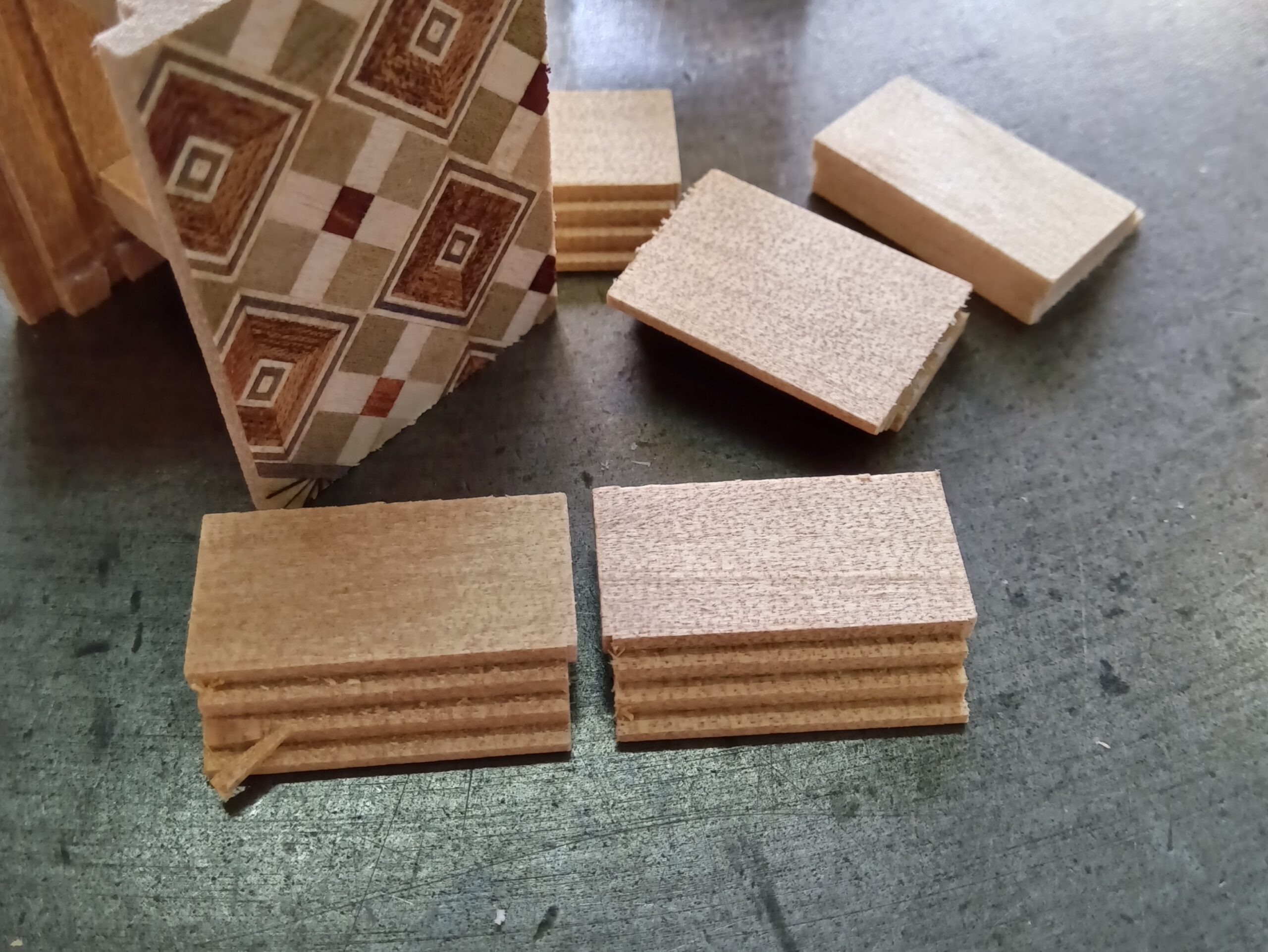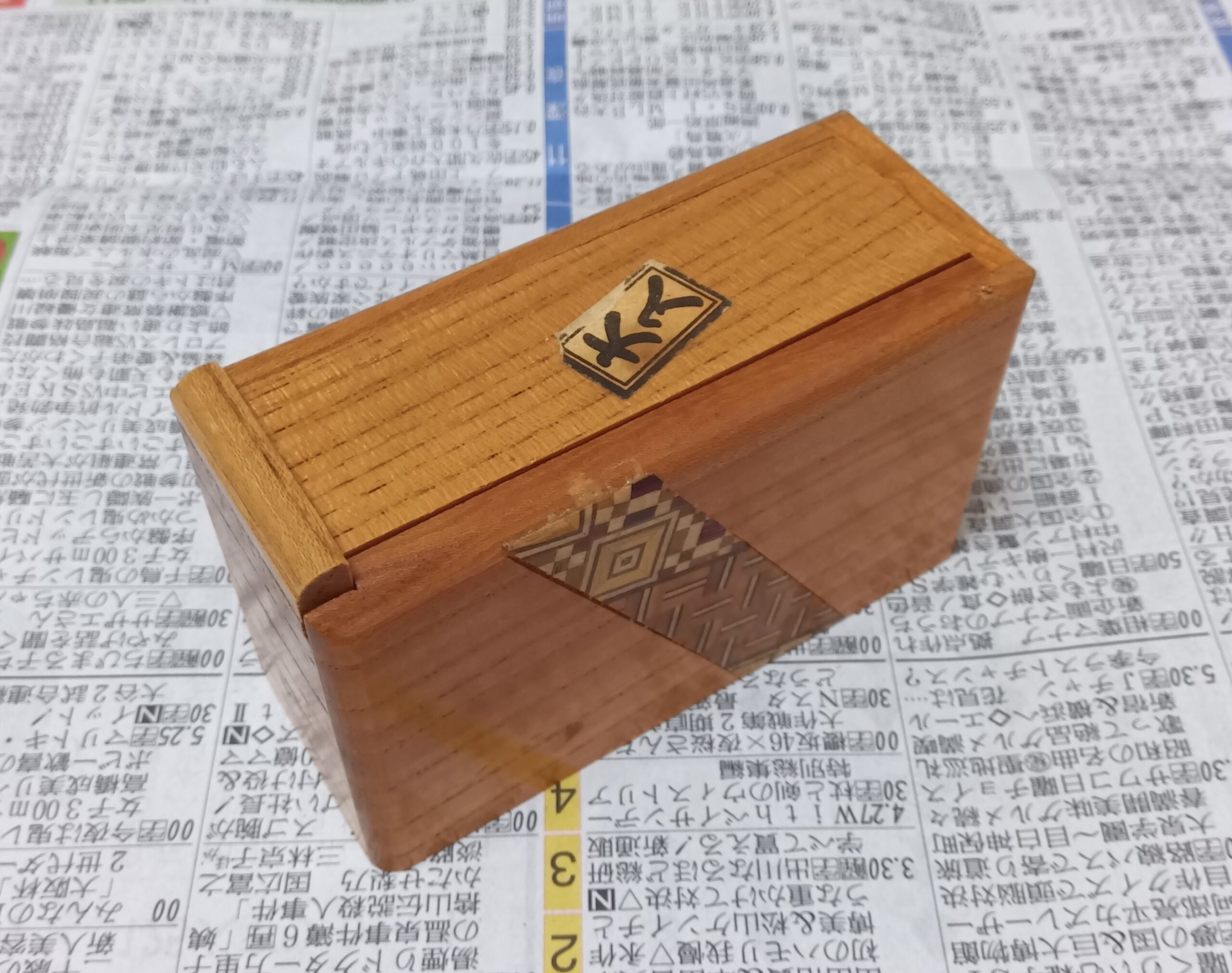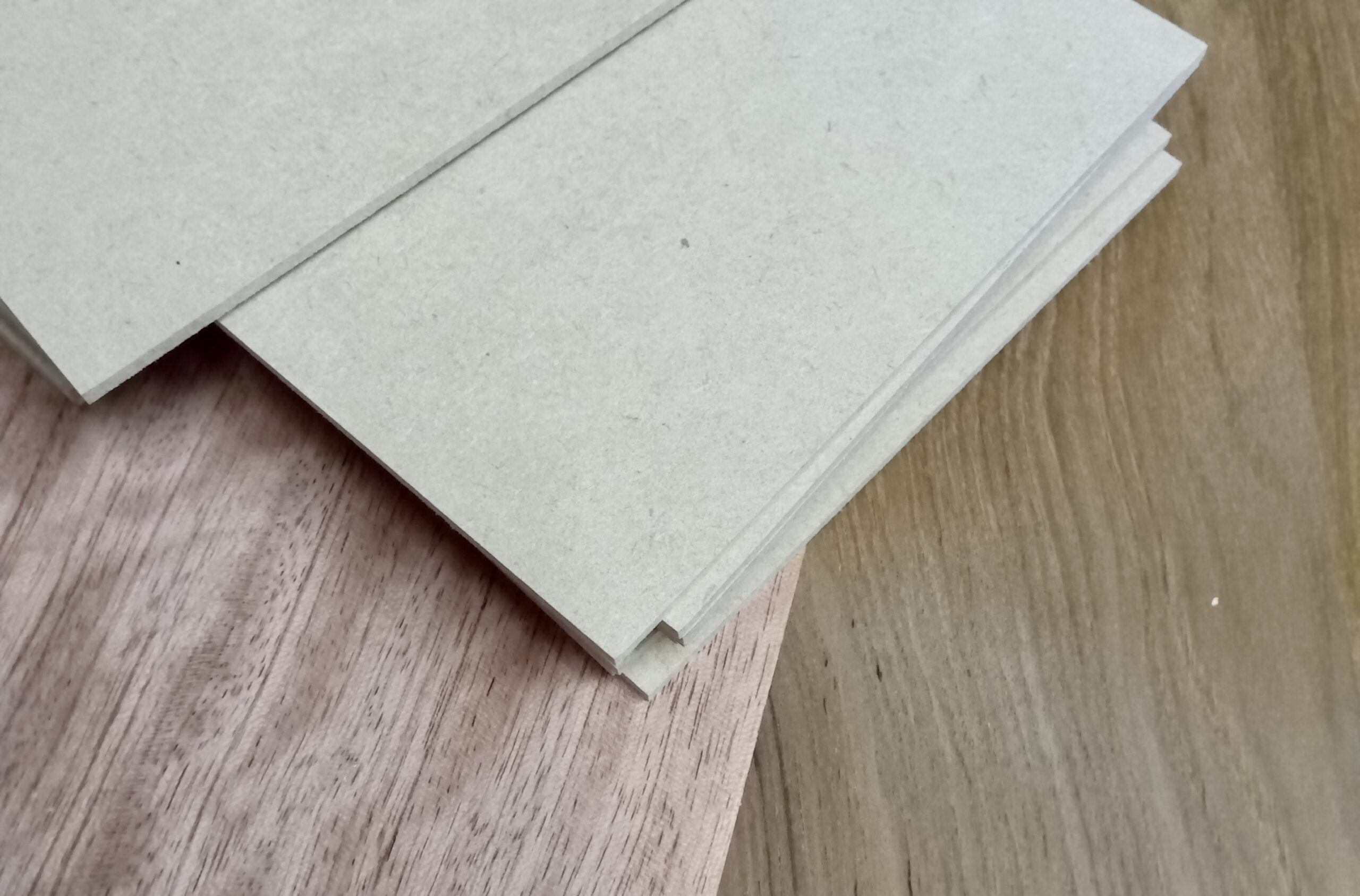
It was cloudy in the morning today, but it started to rain before noon. So I worked quickly to make and attach the top and bottom panels for the Mame puzzle boxes. By the evening, the humidity had risen again, so I placed the boxes with the attached panels into a humidity-controlled case for storage. I would also like to attach the panels for the 4-sun puzzle boxes, but not all of them are ready yet. The traditional yosegi and walnut panels are prepared, but the random wood grain panels are not finished yet. I had run out of 2.5 mm MDF boards, so I went to the lumber shop yesterday to get more. Today, I cut them and started preparing for the next steps, but the panels are not finished yet.
The photo shows the materials for this random wood grain design. I will attach these two types of wood to slightly oversized panels. The wood on the left is bubinga, which I am using for the first time. It is a wood from Africa. When I was choosing materials at the wood shop, I found the color interesting, so I decided to try it this time. The color is a little lighter than I expected, but after finishing, it should become just right. If the color is too dark at this stage, it can turn almost black after finishing, and the texture of the wood becomes hard to see. This often happens with woods like rosewood or ebony. When I looked at this bubinga, the first thing I noticed was that the grain looked quite complex. Even though it is sliced into a clean sheet, you can see that the grain is interlocked. This is called interlocked grain, where the direction of the grain changes and runs in different directions. If this wood were used as solid wood for making a box, it would be quite difficult to work with. I have used karin wood in the past, which has a similar character. However, woods like this often have a unique richness and are usually very hard. Bubinga is also quite hard and is considered a hardwood. I also found that in its place of origin, it is sometimes called a “sacred tree,” which shows its special character. It may be treated in a similar way to trees like Keyaki or Kusu in Japan, which are often regarded as sacred.
The teak wood on the right is also considered one of the world’s three most famous woods, and it is a high-quality material. These types of wood have a very distinctive presence once finished. Teak is also used in Hakone yosegi patterns, and its unique color is quite popular. However, I remember that when I worked at a yosegi workshop, teak was sometimes avoided because it contains silica, which can damage cutting tools and makes it more difficult to work with. It seems that woods known as “famous” or “premium” often have their own challenging characteristics as well…haha🤣 At first, when I tried combining these two woods, I felt there was not much contrast in color and it might not be very interesting. However, for now, I plan to use these two woods for the top panels.