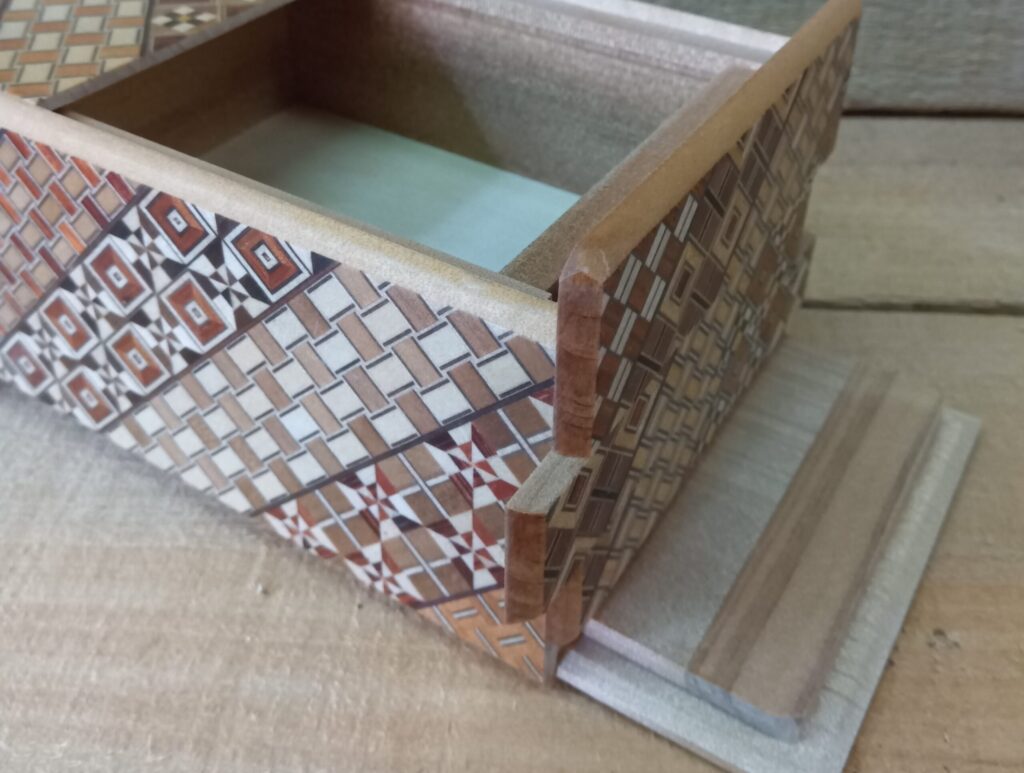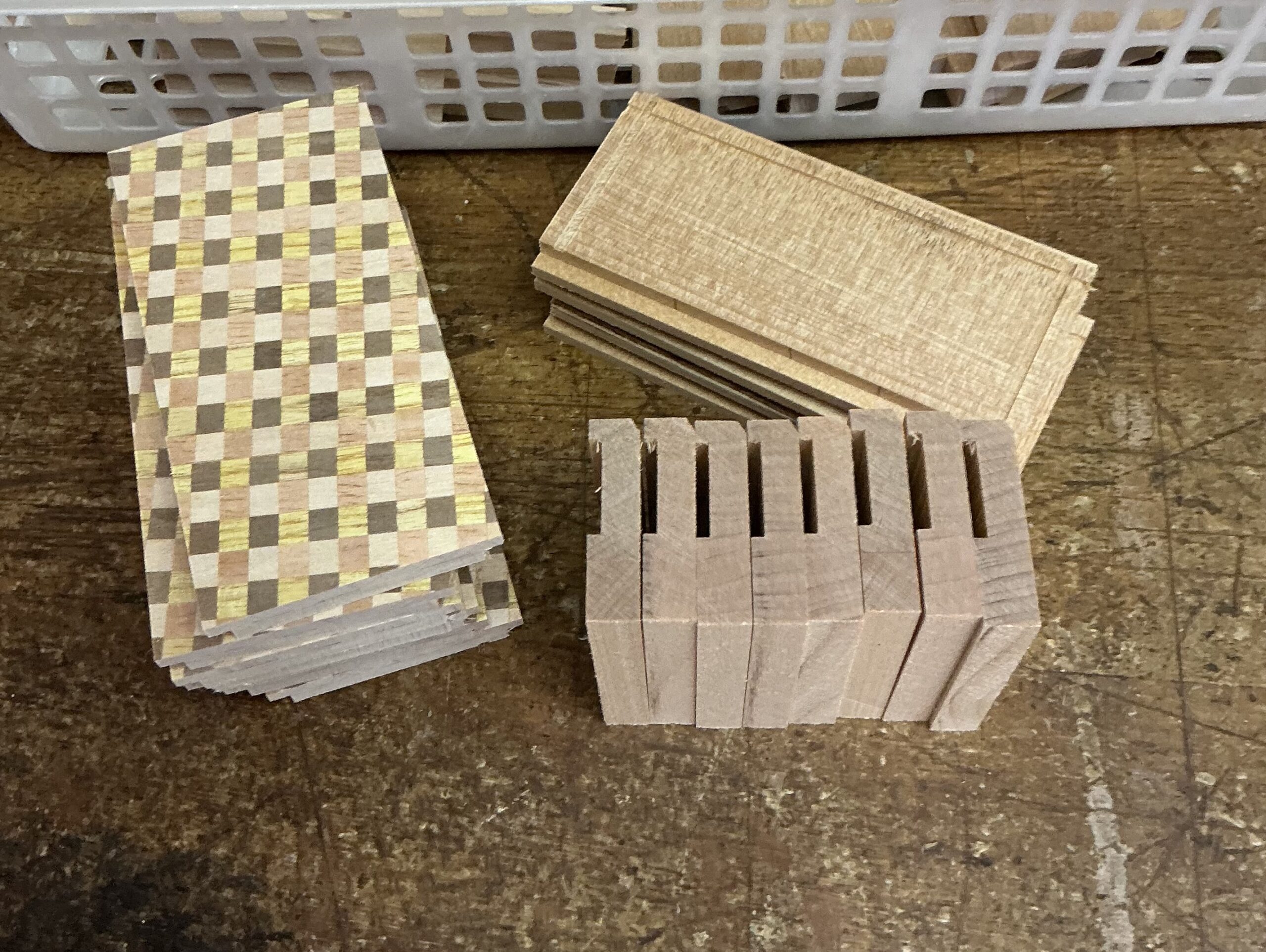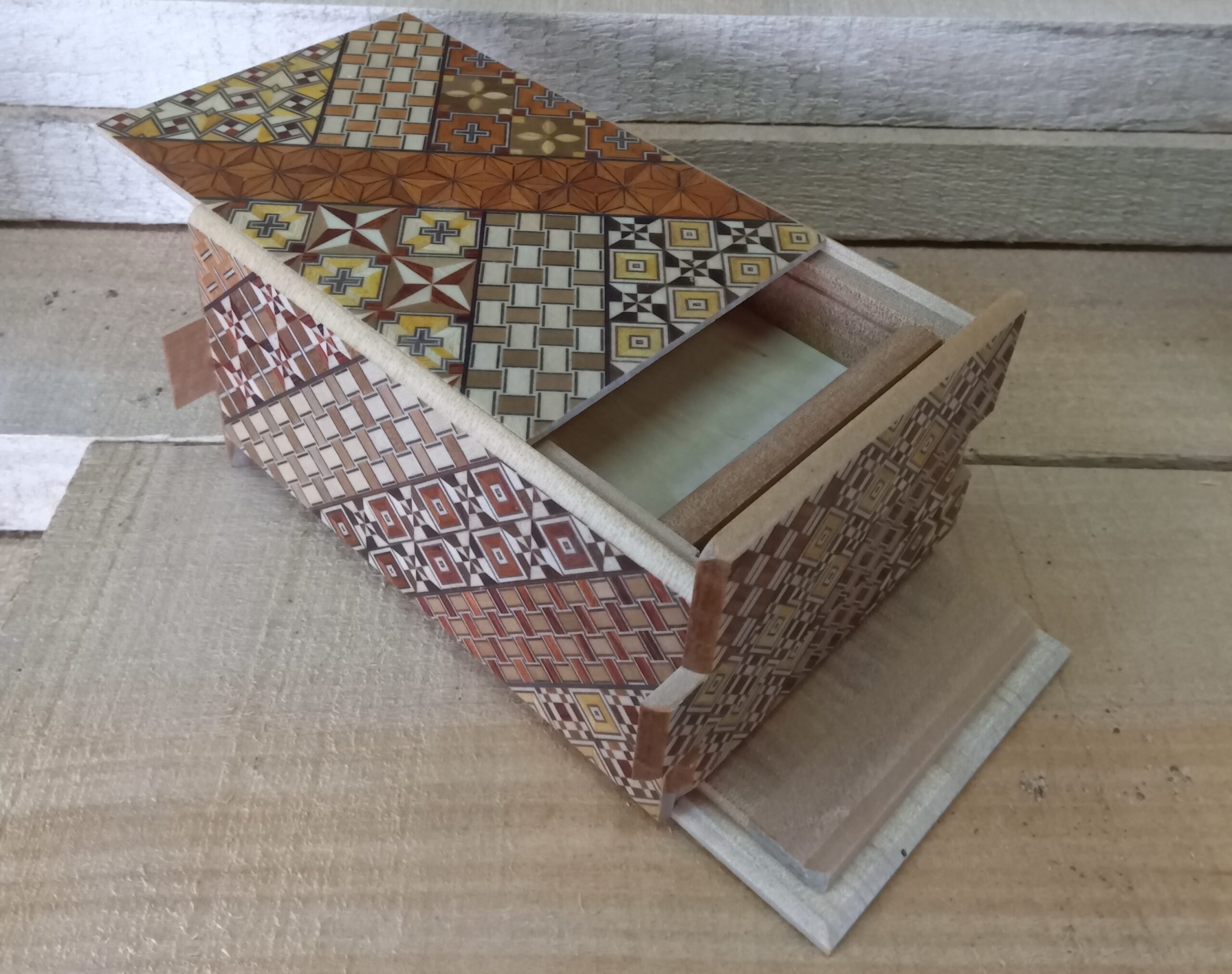
It’s the start of a new week, and this week will also be the end of March. It has become much warmer, and I have started to see cherry blossoms here and there. It looks like there will be some rainy and windy days this week, so I hope the blossoms can last a little longer. I worked in the workshop all day today. I am currently making 14-steps Mame puzzle boxes and 4-sun 14-steps puzzle boxes. The Mame puzzle boxes have already entered the finishing stage, and they are getting close to completion. I think they will be ready to list sometime this week. Work on the 4-sun puzzle boxes has slowly started. Today, I prepared the base for the Aruki panels for the top and bottom (the process where I join two or three boards together to make one panel), and also prepared the side panels. The yosegi panels for this box have already been attached, but I have not yet worked on the top panels for the “random wood grain” design, which will make up more than half of this batch. I am still choosing the color combinations (types of wood) for these.
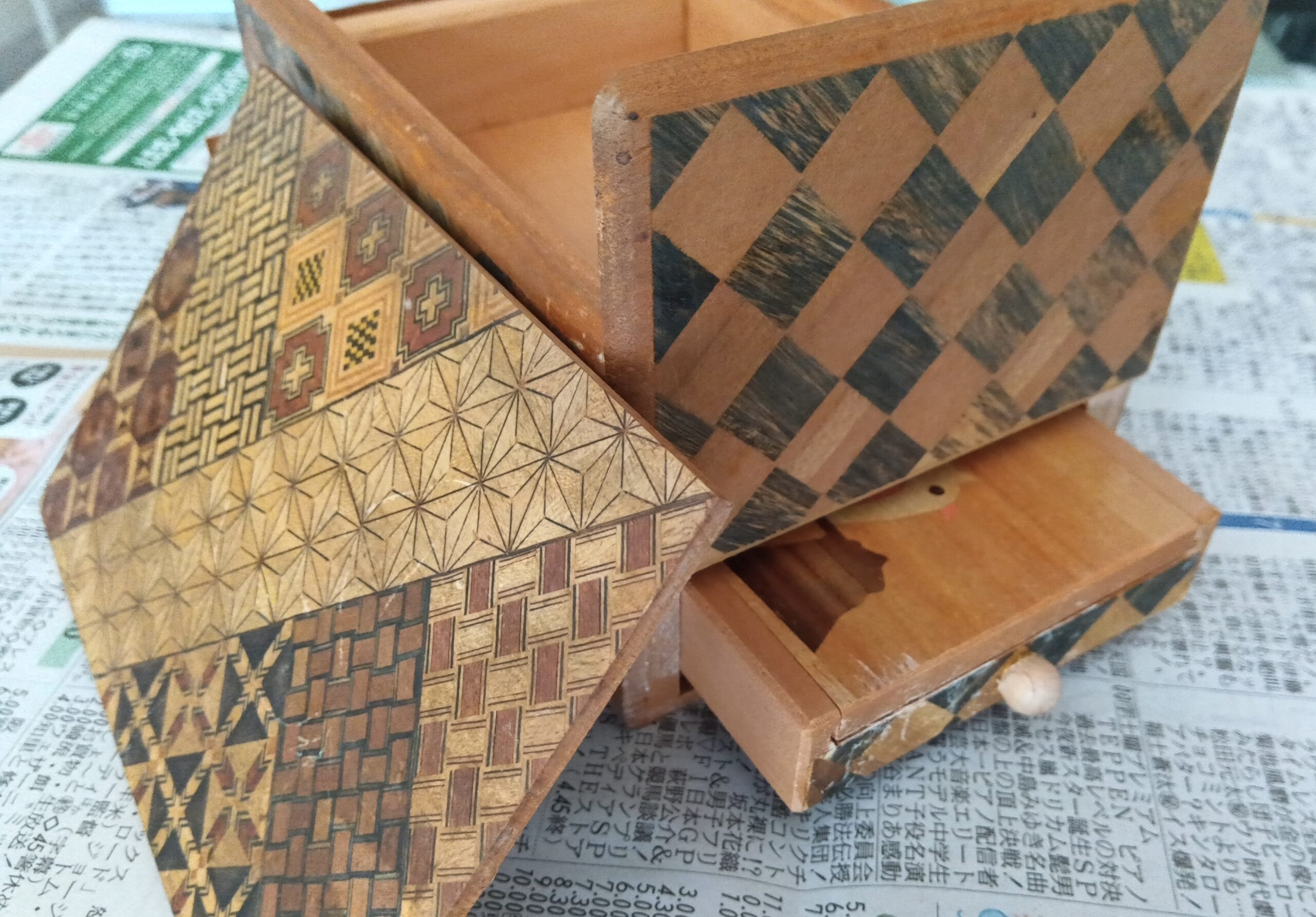
The work is going a little ahead of schedule, but while I was organizing my storage today, I found an old puzzle box I made. The one in the photo is a 5-sun double puzzle box that I made quite a long time ago, maybe around 15 years ago or more. I don’t make double puzzle boxes very often now, but I used to make them quite often back then. Compared to my current work, I felt that this one might have been made with more detailed effort, but that was not really the case 🤣 The boxes I make today have been improved based on designs like this, so I believe the current way of making them is, for now, the best.
One of the first things I noticed is that at that time, the top and bottom yosegi panels were still made from solid agathis wood. Now I use plywood instead. This box was kept in a plastic bag and stored in a place away from sunlight, so there is almost no shrinkage in the panels. However, if it had been kept in a drier environment, small gaps might have appeared between the panels and the side panels. Even though the wood is well dried, it can still shrink in a very dry environment. Another difference is that the internal partition was set slightly to one side. In this case, the inner space on the top side is larger, and the bottom side is smaller. This box can be opened from either side, each with seven steps, so there is no strict top or bottom. However, the “asanoha” pattern on the yosegi panels is usually used to indicate orientation. The side with lighter colors such as white or yellow is considered the front, while the darker brown side is the back. Of course, this is a matter of preference, but many people tend to prefer the lighter side.
Other than that, it is not very different from my current work. The corners of the box are rounded a bit more, with a larger 6R radius. Now I use a slightly smaller and consistent radius for all my boxes. It has only been about 15 years, but looking at it again feels nostalgic and also quite interesting. I also have a solid wood version with a similar design that I have kept for some time, so I hope I can introduce it another day.