I came to my workshop early this morning. Since it is Saturday, I usually don’t need to come so early, but as I mentioned yesterday, Japan is currently in a three-day weekend, and it is also spring break for students, so the roads tend to get crowded during the day. The direction from my home to the workshop is the same as the route to popular tourist areas like Hakone, Atami, and Izu, so it gets busy with traffic heading there. That’s why I came before the traffic started.
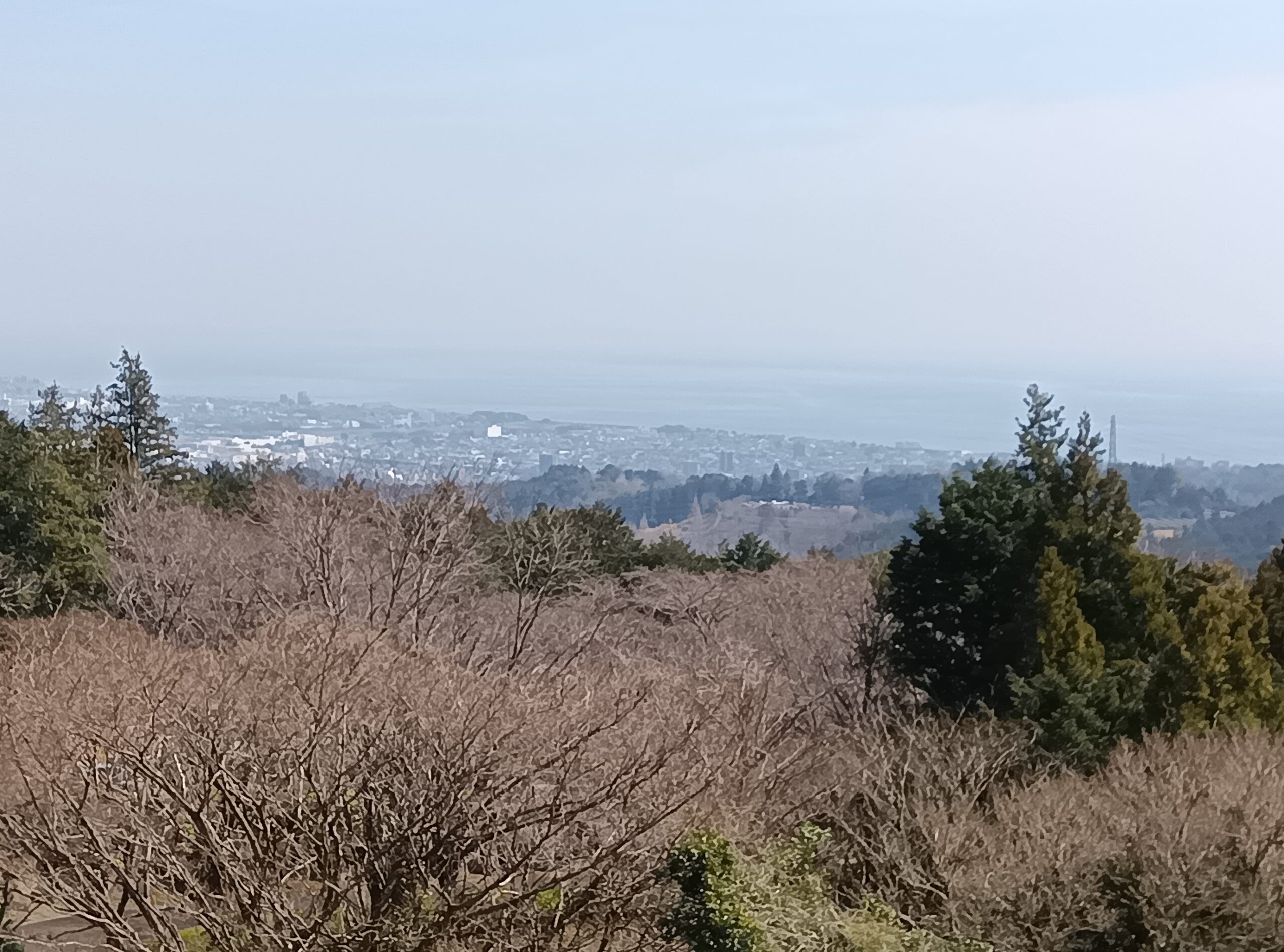
Although I came to the workshop, I had plans in the morning to visit my family grave, so I closed the workshop for a while and went out. Our family grave is nearby, in the mountains, and from there you can see the town below, like in the photo. The view in the photo shows Odawara City, where my workshop is located, and Sagami Bay in front of it. Hakone is in the direction to the right side of this view. As I mentioned recently, Japan is now in a period called Ohigan, a time to honor our ancestors, which continues until the 23rd. Because of this, the cemetery, which is usually quiet, was quite busy today, with many people visiting even from outside the prefecture.
In Japan, there are generally two main ways to have a family grave. One is to have a grave at a cemetery attached to a temple, and the other is to have a grave at a private or public cemetery. If you choose a temple cemetery, there is a head priest at the temple, and they take care of various ceremonies and manage the cemetery. When a family member passes away, the funeral is usually held at that temple. Also, during occasions like Ohigan or memorial services held at certain intervals, the priest can chant sutras for the family. Families connected to a temple in this way are called “danka,” which means they are like members or supporters of that temple. On the other hand, in private or public cemeteries that are not connected to a temple, if you want a sutra to be chanted, you need to arrange for a monk yourself. While this is not always the case, it is often said that having a grave at a temple can be more expensive. Temples may recommend holding memorial services at certain times, while with private or public cemeteries, you can simply purchase the grave and only pay maintenance fees, without holding formal ceremonies if you choose. In that case, families visit from time to time, like we did today, to clean and take care of the grave. My family follows this style (a public cemetery run by the local government). People can choose the approach that best fits their family.
However, in recent years, more people feel that both options are a burden. Because of this, some families are giving up their graves and instead placing their ancestors in shared graves, which are then managed by a company. This trend is often called “haka-jimai (closing a family grave)” in Japan. With the declining birthrate, there are many families who do not have someone to take care of the grave in the future, which is one reason for this change. Also, regardless of the style, maintaining a grave requires a certain amount of cost, and many people feel that this is a burden.
Today, we did a simple cleaning at the grave, placed some flowers, and lit incense. After that, we had lunch, and then I returned to the workshop.