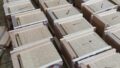
Yesterday’s rain has completely stopped, and today it was sunny with warmer temperatures. At this time of year, many people in Japan suffer from hay fever. Especially on warm and sunny days like today, a lot of pollen is in the air, so people need to take precautions. The humidity was still a little high in the morning, so while waiting for it to go down, I worked on assembling the frame parts of the 3-sun 12-steps puzzle boxes that I had prepared earlier. By around noon, the conditions had become much better, so I started making the Aruki sliding panels for these 3-sun 12-steps puzzle boxes. Today I only made the panels, but I did not attach them yet. I will wait for a day when the humidity is clearly lower before installing them.
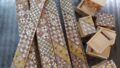
After that, I prepared the boards for the yosegi panels for the boxes I plan to make next. For now, I prepared boards for the yosegi panels for the 14-steps Mame puzzle boxes and for attaching ichimatsu yosegi sheets for the 4-sun boxes. I have not yet decided which 4-sun box I will make, but it may be the 18-steps version. I will choose from the models using ichimatsu yosegi that I have received requests for. For now, I only prepared the boards, and I will glue the panels from tomorrow onward.
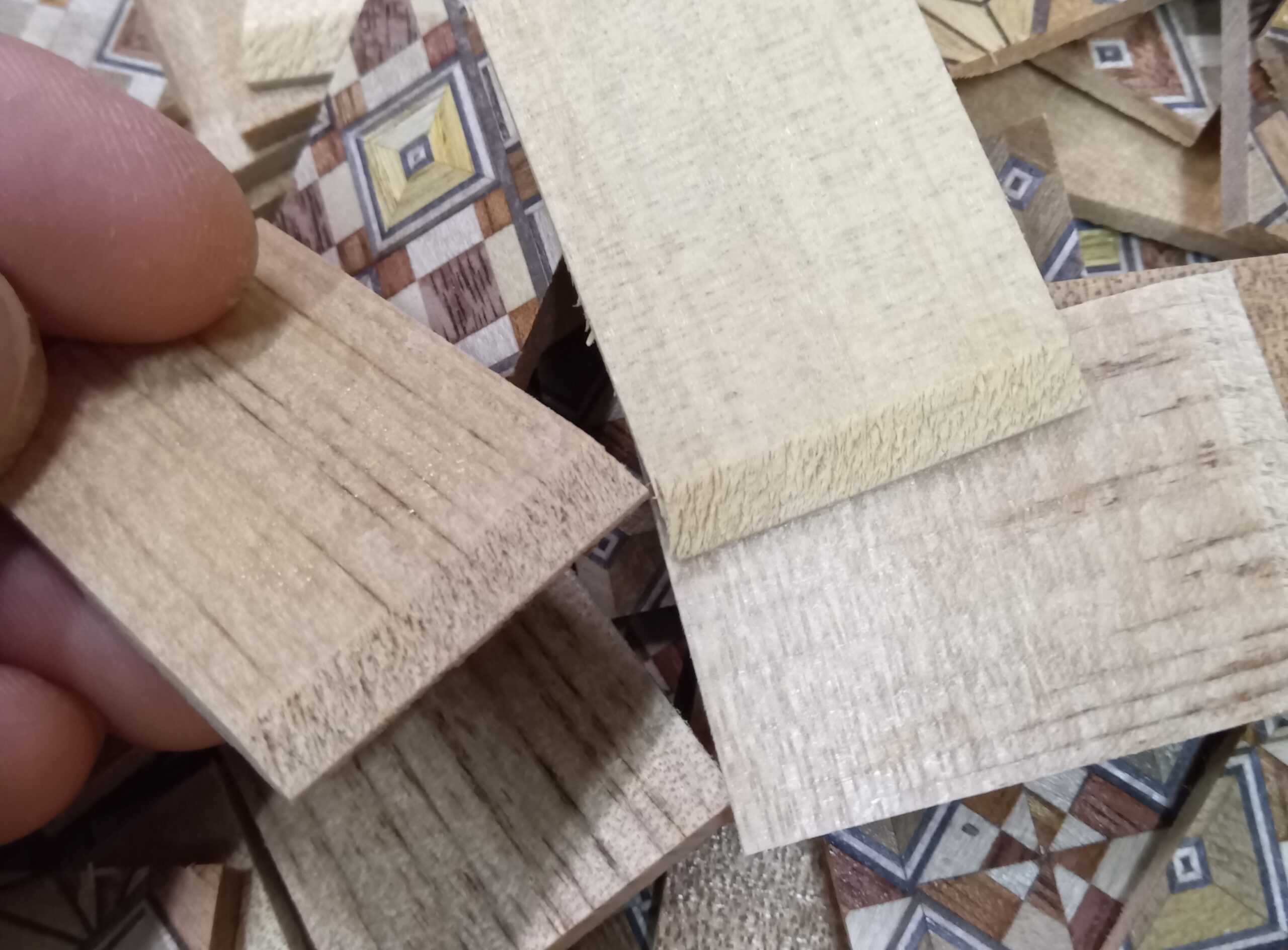
Later in the afternoon, after the weather became completely sunny and dry, I worked on making the top and bottom panels for the Mame puzzle boxes I am currently producing. Since the boards are very thin, I judged that they had dried enough and it would be safe to work with them. The photo shows them after they were finished. This time they are for the 10-steps puzzle boxes, so one side of the back of each panel is shaved at an angle. The way this is shaved is slightly different depending on the mechanism of the Mame puzzle box. In the photo, the panel held in my left hand is from the 18-steps puzzle box I made previously. It may be difficult to see, but the 18-steps version is shaved a little more, making the tip thinner and sharper. This is because the movement of each step in the 18-steps mechanism is smaller. If the panel is not made thinner, it will not pass through the narrow gap created by the mechanism. In contrast, the 10-steps mechanism has slightly larger movement in each step, so the panel does not need to be shaved as thinly in order to move. This shaving work is done only for the first and the fourth moves of each Mame puzzle box. However, making the panel thinner also means that the shaved area becomes larger, so it must be done carefully. The width of the shaved section must always be smaller than the thickness of the Aruki panel in the box. If it becomes larger than that, the mechanism will not work properly. Because of this, I must carefully adjust the angle of the cut and decide the right amount to shave.