It was cold in the morning today, but during the day it became a little warmer and quite comfortable. Today is “Risshun”, one of the 24 seasonal divisions, and it is considered the first day of spring. This calendar system was originally created in China and divides the year based on the seasons and climate. In Japan, these 24 seasonal divisions are still commonly used and often seen or heard. Around this time, the weather often starts to feel a little more like spring.
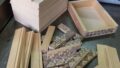
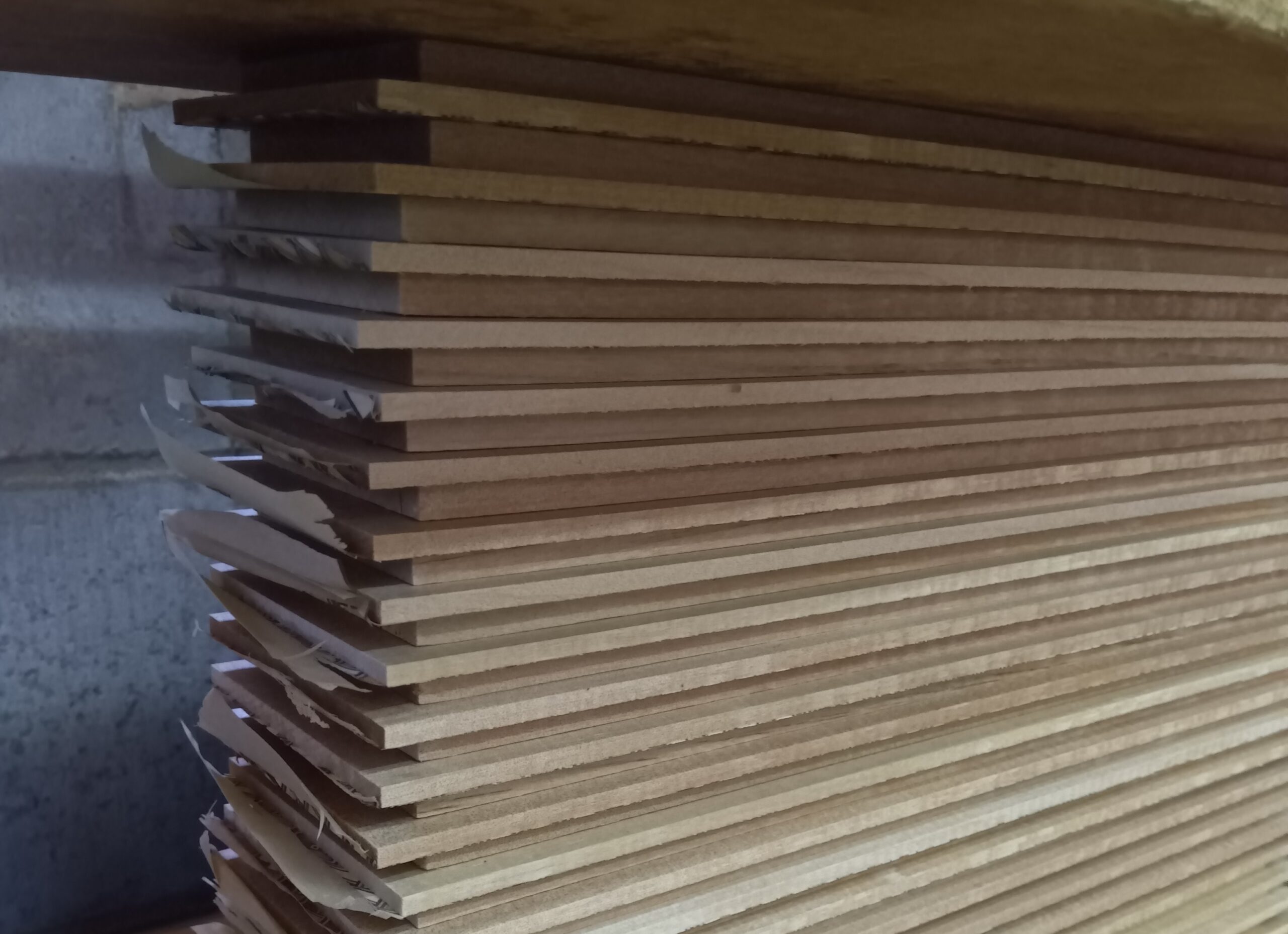
Today, I continued from yesterday and attached the sliding key panels for the 3-sun boxes. After that, I moved on to preparations for the next project: 5-sun 10-step drawer puzzle boxes. The yosegi sheets for this production were already glued on yesterday, and they still need some time to dry, so today I worked on preparing the boards for the side panels. As part of the preparation, it is better to apply pressure with clamps to help stabilize the boards (as shown in the photo). This time, I plan to make a total of 34 boxes in two different designs. As I wrote the other day, the lineup of drawer puzzle boxes has increased to two types, so I need to keep a bit more stock than before. The stock has become very low, which is why I am making them now. This time as well, all of the boxes will use sliced yosegi sheets or solid wood sheets that are glued on, and there will be no versions made entirely from solid wood.
This side panel is made by combining the inner structural board and the outer yosegi board. The inner board is 6 mm thick. This is the same size I have used since I first started making puzzle boxes about 30 years ago, using old boxes as references. The first box I carefully studied was a 5-sun, 10-step drawer puzzle box, and the inner board of that box was 6 mm thick.
At that time, I could not yet make the drawer part, so I copied only one side of the box without the drawer and made a 7-step puzzle box. I remember that the outer yosegi board on the old box was a little thicker than what I use now, but today I use boards that are about 4 mm thick. In the past, I used slightly thicker boards. However, during the finishing process, I round the corners of the box using a round cutting blade, and I now use a smaller blade with a 3R radius. Because I use this same blade for everything—from small 3-sun boxes to 5-sun boxes—I adjust the board thickness to match it. If the board is too thick, this smaller blade cannot cut it properly. Before, I used smaller blades for small boxes and larger blades for big boxes, but I felt there was not much benefit in changing blades so often. So I decided to standardize and use just one type.