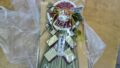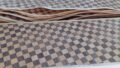
Today I came to my workshop a little later and continued my work. For the square puzzle boxes, I continued attaching the sliding key panels, just like yesterday. It rained last night, and the humidity rose a little, but since we had almost no rain recently and the humidity had been very low, the small amount of rain did not raise it too much. So today I attached the panel on the other side as well. With that, the assembly of the square boxes is finished. I plan to do the finishing work tomorrow, but I have something to do, so if that takes time, I will move the finishing work to the next day.
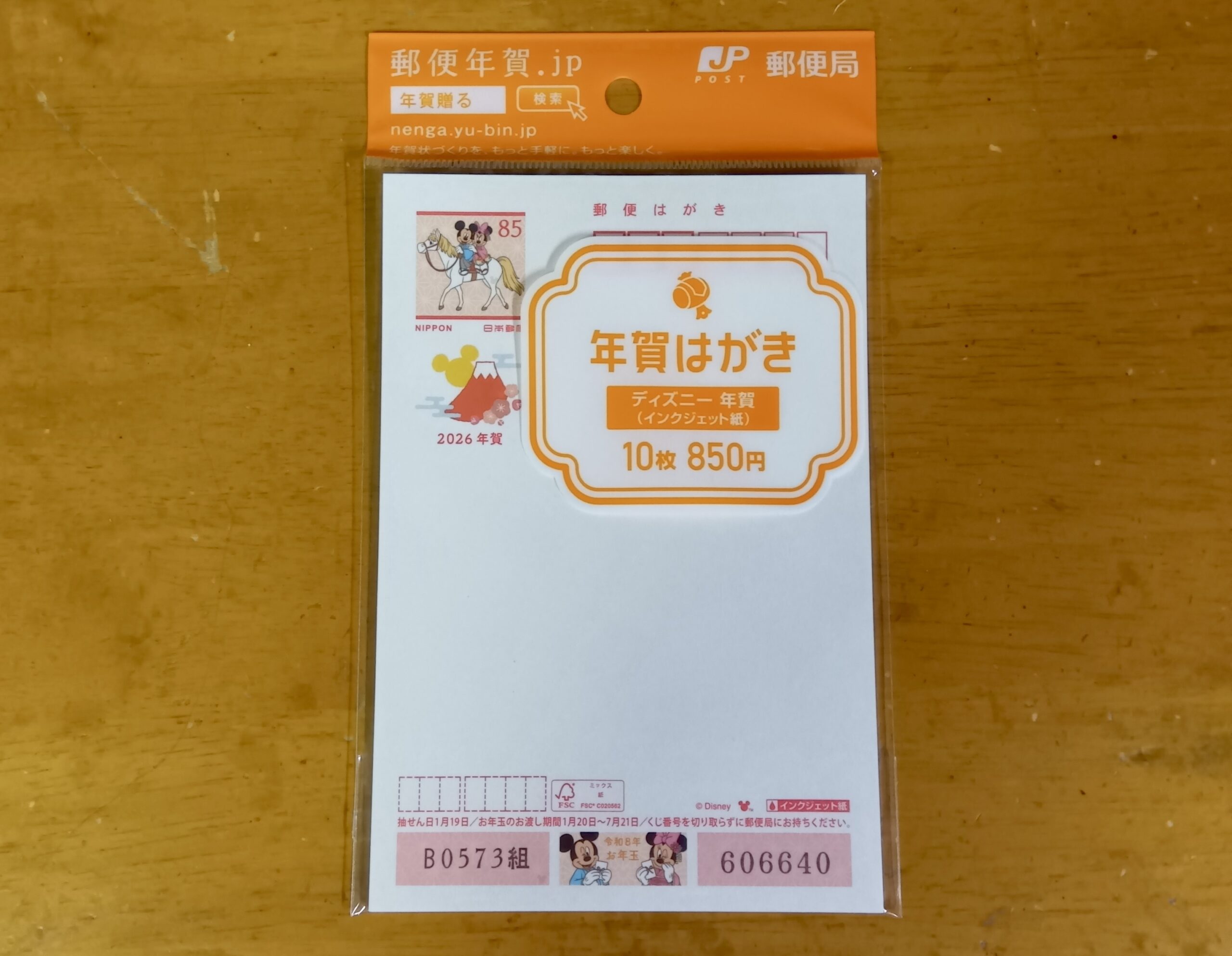
Following yesterday, here is another thing I recently bought. At the end of the year, many people buy New Year postcards called nengajō. In the past, receiving nengajō used to be one of the enjoyable parts of the New Year. During the holiday, letters arrived from close friends and also from people you hadn’t seen for a long time. The original purpose is to send New Year greetings, but getting a message once a year from someone you have not met for a long time feels very nice. These postcards are delivered to homes by the post office on January 1. To make sure they arrive on January 1, you must put them in the mailbox by around December 25. (They are held and not delivered until January begins.) If you miss that deadline, they will arrive on January 3 instead. But since the New Year period is considered to last until around January 7, it is still fine if they arrive by then. Even if you post them on January 1, they will still arrive in two or three days within Japan. The photo shows the nengajō I bought. You can buy them one by one, but they are usually sold in packs of ten like this. Many designs are available depending on the region. In my area, there are ones showing the famous port city of Yokohama or Mt. Fuji. Nengajō are postcards made specially for New Year greetings, but if you have some left over, the post office can exchange them for stamps of the same value, or you can use them as normal postcards.
However, the number of nengajō has been decreasing in recent years because of higher postal costs and the spread of social media. At their peak, 4.4 billion cards were issued, but now the number is around 700 million. In the past, you could send one for about 50 yen, but now it costs 85 yen. My family used to receive dozens of cards, but now we only get about ten to twenty. The nengajō I bought this time has a blank back, so I can print any design I like. Every year, I print my own design on the back and send them. There are many free design materials available online, and during this season bookstores sell magazines with DVD-ROMs full of templates for making nengajō. It is fun to take one of these designs and add your own touch to make a personal card. In the past, some people carved woodblock prints and stamped each card by hand. Many people also painted their own illustrations, and everyone put a lot of effort into their cards. They were full of personality, and receiving them in the New Year was something to look forward to. But in recent years, many people feel it is too much trouble. More people now send their New Year greetings by email or chat. My family also sends fewer cards than before, and this year I bought only about twenty. If you look closely at the photo, you can see that the stamp area on the card shows Disney characters—that’s the version I bought this time 😊
I always write a personal message on the printed design before sending my nengajō. A common thing these days is receiving a New Year card that is only machine-printed, with no handwritten message. In Japan, this feels very impersonal and is sometimes considered disrespectful. So for me, writing a message to someone I haven’t seen for a long time is enjoyable, and it also feels meaningful. There are many relationships that continue for decades only through nengajō. For example, I often hear stories about people who exchanged New Year cards with their school teachers for many years. I think relationships like that are wonderful, and I hope this culture will continue in the future.